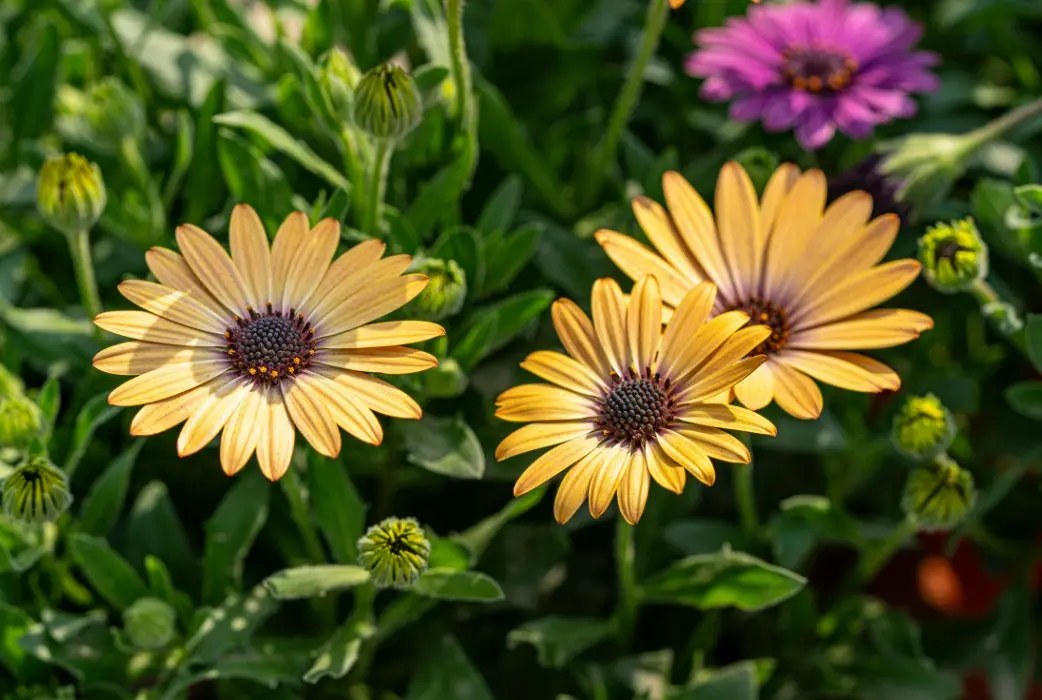
African Daisy
African Daisy
Osteospermum ecklonis (syn. Dimorphotheca ecklonis)
African Daisy is a colorful ornamental commonly sold under the Osteospermum name, though the classic species is now classified as Dimorphotheca ecklonis. It gives bright white, pink, purple, yellow, or bi-color blooms and can grow well in Malaysia, but it is usually happier in breezy, brighter sites that are not heat-trapped or constantly wet.
Care Guide
Light Requirements
Full sun is essential for strong flowering. In Malaysia lowlands, performance improves in open sites with good airflow rather than enclosed hot courtyards.
Temperature
18°C - 32°C. African Daisy tolerates warmth, but flowering quality is often better where nights are a bit cooler or where the site is not holding heavy afternoon heat.
Humidity
Moderate humidity with strong airflow is best. Persistent damp foliage and stagnant humid air can weaken plants quickly in tropical conditions.
🌧️ Good news for Malaysia: Your home's natural humidity is already helping. Focus on airflow instead to prevent fungal issues.
Soil Preference
Well-drained sandy or loose fertile soil. The roots are sensitive to prolonged saturation, so raised beds or free-draining containers are often the safest choice in Malaysia.
Watering & Fertilizer
Water deeply but let the soil surface dry slightly between waterings. Feed every 3-4 weeks with a balanced flowering fertilizer, but avoid overwatering after any dry spell because the roots can rot suddenly.
💭 Still unsure? Stick your finger 2 cm into the soil. If it feels dry, water. If it's moist, wait. You'll get it right.
General Care
Pinch young plants to encourage bushiness and trim lightly after a flush to keep shape. In Malaysia, this plant is better treated as a seasonal or short-cycle ornamental than a permanent all-weather shrub.
Propagation
Seeds and soft cuttings both work. Named cultivars are usually best propagated by cuttings to preserve flower colour and form.
Pet Friendly?
African Daisy is best treated as not pet-safe. Literature on Dimorphotheca ecklonis reports hydrocyanic compounds, and the plant is considered poisonous to some animals.
Medicinal Benefits
No significant medicinal role in normal home use; it is grown mainly for ornamental display.
Other Uses
Useful for bright bedding displays, pots, and mixed flowering borders where unusual daisy colors are wanted.
Pests & Diseases
Root rot, aphids, whiteflies, and mildew can occur. In Malaysia, the main challenge is not pests but keeping the plant dry enough at the root zone and airy enough above ground.
Smart Tanam Tip
"African Daisy can work in Malaysia, but it is the least forgiving of these three daisy types. Use it in breezy balconies, raised planters, or slightly cooler locations rather than wet, enclosed garden corners."
Common Mistakes in Malaysia
- Overwatering due to high humidity: Malaysia's moisture-rich air means soil dries slower. Most plant deaths come from root rot, not underwatering.
- Poor airflow: High humidity + still air = fungal issues. Move plants where air circulates naturally (near windows, not in corners).
- Ignoring the monsoon season: During heavy rain, reduce watering. Your plant is already getting moisture from the environment.
- Direct afternoon sun: Malaysian midday sun is intense. Even sun-loving plants can scorch. Morning sun is best.
Tips for Malaysia's Climate
- Use well-draining soil: Add perlite or cocopeat. Heavy soil + humidity = rot. Your soil should dry out between waterings.
- Water in the morning: Wet foliage at night is a recipe for fungal problems in humid climates. Early morning watering lets leaves dry quickly.
- Repot in spring: Before the dry season, refresh soil to prevent salt buildup and improve drainage.
- Watch for pests during monsoon: Wet season brings aphids, spider mites, and scale insects. Check undersides of leaves weekly.
- Increase airflow: Place a small fan nearby if the plant is indoors. Circulating air prevents humidity-related issues.
© 2026 Tanam Je. All rights reserved.
Disclaimer: Tanam Je is an educational resource. Plant care outcomes vary by environment, weather, and handling. Tanam Je is not liable for plant loss or related damages.