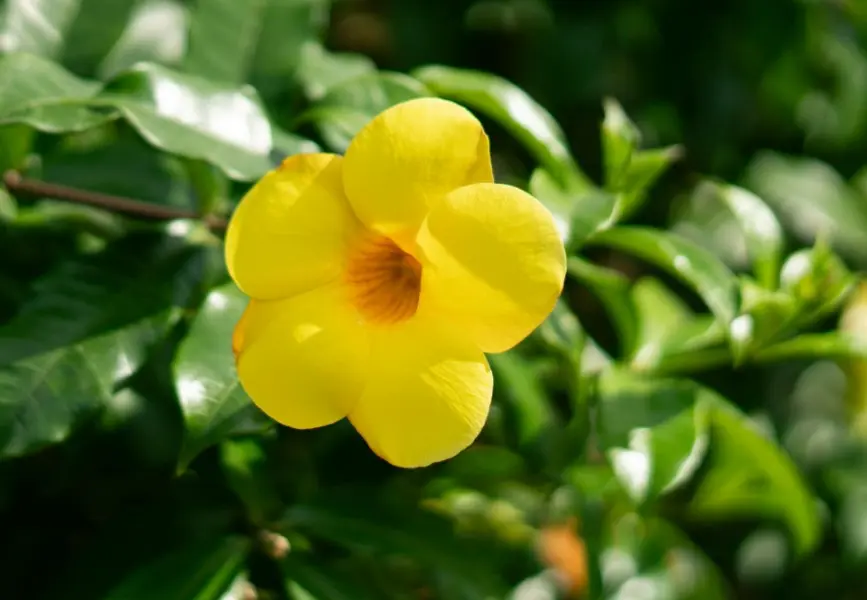
Allamanda / Loceng Kuning
Golden Trumpet
Allamanda cathartica
A vigorous tropical climber with waxy, bright yellow flowers. It is an excellent choice for covering fences or creating privacy screens in Malaysian gardens.
Care Guide
Light Requirements
Needs at least 6 hours of direct full sun daily. Allamanda is a tropical vine that evolved growing up tall trees in full sunlight. In shade, it produces long, green, leafy growth with almost no flowers. Direct sun triggers the hormonal switch that moves the plant from vegetative growth (making leaves) to reproductive mode (making flowers).
Temperature
20°C - 35°C. Very heat-tolerant and perfectly suited to Malaysia year-round climate. Cold below 10°C causes leaf drop and can kill the plant entirely.
Humidity
60% - 90%. Allamanda loves high tropical humidity. The thick, waxy leaves with their high cuticle content help it manage even direct Malaysian sun without wilting.
🌧️ Good news for Malaysia: Your home's natural humidity is already helping. Focus on airflow instead to prevent fungal issues.
Soil Preference
Well-draining, fertile soil slightly acidic to neutral. Allamanda needs good drainage despite loving moisture. Waterlogged roots will rot quickly. Raised planting beds or coarse sand added to the planting hole significantly improves drainage.
Watering & Fertilizer
Water deeply then allow the top 2-3cm of soil to dry before the next watering. This "deep and infrequent" pattern encourages roots to grow deep and strong, making the vine more drought-resilient. Fertilise monthly with a balanced NPK fertiliser during the growing season.
💭 Still unsure? Stick your finger 2 cm into the soil. If it feels dry, water. If it's moist, wait. You'll get it right.
General Care
Always wear gloves when pruning. Allamanda produces milky-white latex sap containing iridoid compounds that cause contact dermatitis (skin rash) and severe eye irritation on contact. This sap is a separate chemical defence mechanism of the plant, independent of its toxicity when consumed.
Propagation
Stem cuttings (10-15cm) root easily in water or moist cocopeat within 2-3 weeks in Malaysia warmth. Allow the cut end to dry for one hour before placing in rooting medium. This lets the sap seal the wound and reduces rot risk.
Pet Friendly?
Toxic if ingested. All parts contain alkaloids and iridoid glycosides that can cause vomiting, diarrhea, and potentially serious symptoms. Keep away from pets and children.
Medicinal Benefits
Historically used as a purgative and to treat jaundice in traditional South American and African medicine. All medicinal uses carry serious risks due to high toxicity. Do NOT attempt without professional medical guidance.
Other Uses
One of the most popular hedging and ornamental vines in Malaysia for fences, pergolas, and trellises. The bright yellow flowers make it one of the most cheerful fence plants in tropical gardens.
Pests & Diseases
Generally pest-resistant because the toxic sap deters most insects. Scale insects can occasionally colonise woody stems. Fungal leaf spots appear when drainage is poor and soil stays constantly wet.
Smart Tanam Tip
"Prune Allamanda regularly by removing the growing tip of each stem (called "pinching back") every 4-6 weeks. Removing the tip forces the plant to branch out sideways. More branches = more stem tips = exponentially more flowers. An unpruned Allamanda grows long and leggy with flowers only at the very ends."
Common Mistakes in Malaysia
- Overwatering due to high humidity: Malaysia's moisture-rich air means soil dries slower. Most plant deaths come from root rot, not underwatering.
- Poor airflow: High humidity + still air = fungal issues. Move plants where air circulates naturally (near windows, not in corners).
- Ignoring the monsoon season: During heavy rain, reduce watering. Your plant is already getting moisture from the environment.
- Direct afternoon sun: Malaysian midday sun is intense. Even sun-loving plants can scorch. Morning sun is best.
Tips for Malaysia's Climate
- Use well-draining soil: Add perlite or cocopeat. Heavy soil + humidity = rot. Your soil should dry out between waterings.
- Water in the morning: Wet foliage at night is a recipe for fungal problems in humid climates. Early morning watering lets leaves dry quickly.
- Repot in spring: Before the dry season, refresh soil to prevent salt buildup and improve drainage.
- Watch for pests during monsoon: Wet season brings aphids, spider mites, and scale insects. Check undersides of leaves weekly.
- Increase airflow: Place a small fan nearby if the plant is indoors. Circulating air prevents humidity-related issues.
© 2026 Tanam Je. All rights reserved.
Disclaimer: Tanam Je is an educational resource. Plant care outcomes vary by environment, weather, and handling. Tanam Je is not liable for plant loss or related damages.