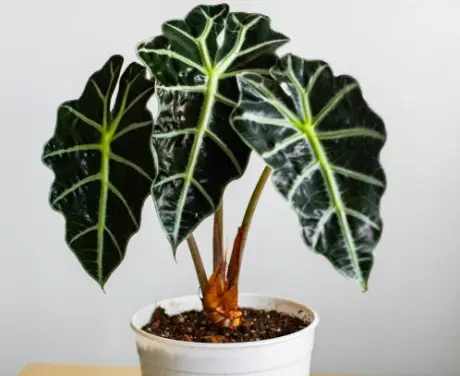
Alocasia
Elephant Ear
Alocasia spp.
Alocasia, commonly called Elephant Ear, is a bold tropical plant with large, dramatic arrow or heart-shaped leaves on tall upright stems. Native to the tropical rainforests of Southeast Asia, including the Malaysian jungle understory, it grows naturally in humid shade and makes a powerful garden statement.
Care Guide
Light Requirements
Bright indirect light. The large arrowhead-shaped leaves are thin-walled and photosynthesize intensely. Strong light is needed to support their huge surface area. However, direct sun scorches them. A north-facing window or filtered east/west light is ideal.
Temperature
18°C - 27°C. Alocasia is sensitive to cold below 18°C. Leaves yellow and drop if exposed to cool air conditioning vents. Keep away from drafts and temperature fluctuations.
Humidity
60% - 80%. Alocasia evolved in humid rainforest environments and requires consistent moisture in the air. In dry conditions, the leaf edges brown and crisp. Use a pebble tray or humidifier.
🌧️ Good news for Malaysia: Your home's natural humidity is already helping. Focus on airflow instead to prevent fungal issues.
Soil Preference
Loose, well-draining aroid mix: cocopeat + perlite + some orchid bark. Alocasia roots are sensitive to waterlogging despite loving humidity. They need oxygen between waterings.
Watering & Fertilizer
Keep soil evenly moist but not waterlogged. The large leaves transpire (lose water) rapidly, so consistent soil moisture supports the water demand. Fertilise every 2 weeks at half-strength during growing season.
💭 Still unsure? Stick your finger 2 cm into the soil. If it feels dry, water. If it's moist, wait. You'll get it right.
General Care
Alocasia plants naturally have a dormancy period. Some varieties drop all leaves during the cooler or drier months and regrow from the tuber. This is normal, not death. Stop watering during dormancy and resume when new shoots appear. Wipe leaves monthly to keep pores clear.
Propagation
Division of the rhizome/tuber at repotting time. Each division must have at least one "eye" (growing point). Leaf cuttings do not work for Alocasia.
Pet Friendly?
Highly toxic due to calcium oxalate crystals. All parts contain these needle-shaped crystals that cause severe mouth and throat pain, swelling, and drooling in pets and children. Keep completely away from curious animals.
Medicinal Benefits
Not recommended for medicinal use due to toxicity.
Other Uses
Prized by plant collectors for the dramatic, architectural leaf shapes. Popular in modern interior design and tropical garden aesthetics.
Pests & Diseases
Spider mites thrive in hot, dry air. Check undersides of leaves for fine webbing. Scale insects can colonise leaf stems. Both respond to neem oil spray.
Smart Tanam Tip
"Alocasia petioles (leaf stems) can grow incredibly long. A single plant can stretch to 1-2 metres tall! This is normal. Shorter, bushier growth happens with brighter light. If your Alocasia gets leggy and tall, increase the light intensity."
Common Mistakes in Malaysia
- Overwatering due to high humidity: Malaysia's moisture-rich air means soil dries slower. Most plant deaths come from root rot, not underwatering.
- Poor airflow: High humidity + still air = fungal issues. Move plants where air circulates naturally (near windows, not in corners).
- Ignoring the monsoon season: During heavy rain, reduce watering. Your plant is already getting moisture from the environment.
- Direct afternoon sun: Malaysian midday sun is intense. Even sun-loving plants can scorch. Morning sun is best.
Tips for Malaysia's Climate
- Use well-draining soil: Add perlite or cocopeat. Heavy soil + humidity = rot. Your soil should dry out between waterings.
- Water in the morning: Wet foliage at night is a recipe for fungal problems in humid climates. Early morning watering lets leaves dry quickly.
- Repot in spring: Before the dry season, refresh soil to prevent salt buildup and improve drainage.
- Watch for pests during monsoon: Wet season brings aphids, spider mites, and scale insects. Check undersides of leaves weekly.
- Increase airflow: Place a small fan nearby if the plant is indoors. Circulating air prevents humidity-related issues.
© 2026 Tanam Je. All rights reserved.
Disclaimer: Tanam Je is an educational resource. Plant care outcomes vary by environment, weather, and handling. Tanam Je is not liable for plant loss or related damages.