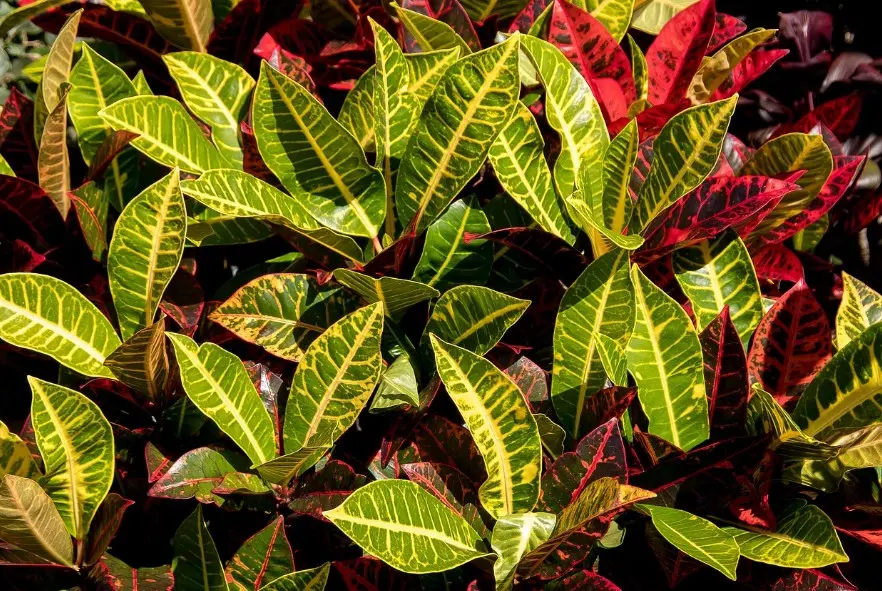
Pokok Anak Puding
Croton
Codiaeum variegatum
A vibrant ornamental plant known for its multicoloured leaves in shades of red, yellow, and green. It is a sunlight-responsive plant, meaning its leaf color intensity increases with more direct sun exposure.
Care Guide
Light Requirements
Full sun to partial shade. For Croton, stronger light usually means steadier sugar production, so leaves, flowers, or fruit can be maintained without stress.
Temperature
24°C - 32°C. Croton performs best in stable warmth; sudden swings can interrupt active growth and delay flowering or fruit set.
Humidity
High. Croton tolerates local humidity better when air movement is good; stale humid air is where fungal trouble usually starts.
🌧️ Good news for Malaysia: Your home's natural humidity is already helping. Focus on airflow instead to prevent fungal issues.
Soil Preference
Well-draining garden loam enriched with compost or organic matter. For Croton, loose structure prevents root suffocation; compact wet soil traps water and cuts off root oxygen.
Watering & Fertilizer
Keep soil moist. Use moisture checks for Croton instead of routine overwatering. Root systems need fresh oxygen between watering cycles to stay healthy.
💭 Still unsure? Stick your finger 2 cm into the soil. If it feels dry, water. If it's moist, wait. You'll get it right.
General Care
Sudden changes in environment can cause leaf drop. For Croton, timely pruning and hygiene are preventive care: better airflow, fewer weak shoots, and steadier growth quality.
Propagation
Stem cuttings. Croton establishes faster when propagation material is fresh and disease-free, with gentle humidity and no waterlogging.
Pet Friendly?
Toxic sap.
Medicinal Benefits
Limited.
Other Uses
Ornamental landscaping.
Pests & Diseases
Spider mites. Croton is easier to protect with routine scouting and airflow management, because pests and fungal spots spread fast in stagnant humid conditions.
Smart Tanam Tip
"Avoid moving the plant frequently."
Common Mistakes in Malaysia
- Overwatering due to high humidity: Malaysia's moisture-rich air means soil dries slower. Most plant deaths come from root rot, not underwatering.
- Poor airflow: High humidity + still air = fungal issues. Move plants where air circulates naturally (near windows, not in corners).
- Ignoring the monsoon season: During heavy rain, reduce watering. Your plant is already getting moisture from the environment.
- Direct afternoon sun: Malaysian midday sun is intense. Even sun-loving plants can scorch. Morning sun is best.
Tips for Malaysia's Climate
- Use well-draining soil: Add perlite or cocopeat. Heavy soil + humidity = rot. Your soil should dry out between waterings.
- Water in the morning: Wet foliage at night is a recipe for fungal problems in humid climates. Early morning watering lets leaves dry quickly.
- Repot in spring: Before the dry season, refresh soil to prevent salt buildup and improve drainage.
- Watch for pests during monsoon: Wet season brings aphids, spider mites, and scale insects. Check undersides of leaves weekly.
- Increase airflow: Place a small fan nearby if the plant is indoors. Circulating air prevents humidity-related issues.
© 2026 Tanam Je. All rights reserved.
Disclaimer: Tanam Je is an educational resource. Plant care outcomes vary by environment, weather, and handling. Tanam Je is not liable for plant loss or related damages.