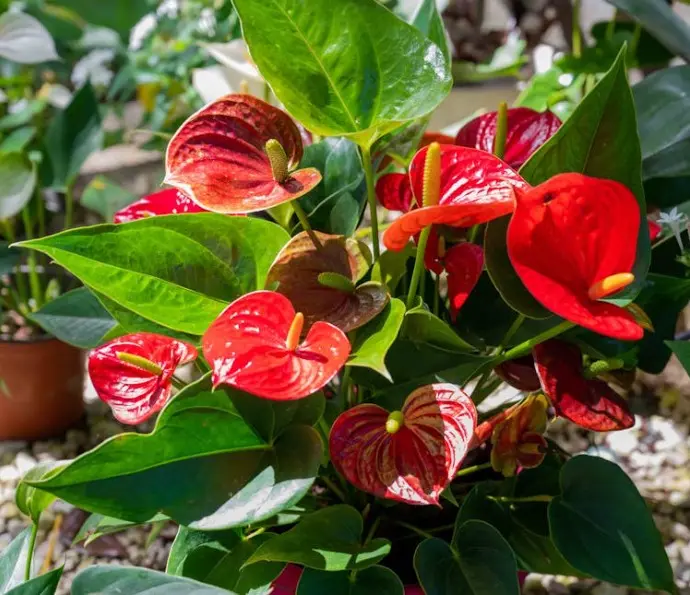
Anthurium
Flamingo Flower
Anthurium andraeanum
Anthurium is prized for its glossy heart-shaped spathes (modified leaves) in vibrant red, pink, and white colors. It's a symbol of hospitality and brings tropical elegance indoors.
Care Guide
Light Requirements
Bright indirect light is best because Anthurium needs enough energy to keep both glossy leaves and colorful spathes going. Harsh direct sun burns the soft surface quickly.
Temperature
20°C - 27°C keeps growth steady. It dislikes cold because it comes from warm tropical forests where temperatures stay fairly stable year-round.
Humidity
High humidity helps leaves stay smooth and flowers last longer. Dry air often causes brown edges or poor unfurling, especially in air-conditioned rooms.
🌧️ Good news for Malaysia: Your home's natural humidity is already helping. Focus on airflow instead to prevent fungal issues.
Soil Preference
Use airy, chunky soil that drains fast. Anthurium roots like moisture, but they also need oxygen, so heavy compact soil is a fast route to rot.
Watering & Fertilizer
Water when the top inch is dry. This keeps the root zone evenly moist without turning it sour. Feed lightly every month because flowering takes more energy than leaf growth alone.
💭 Still unsure? Stick your finger 2 cm into the soil. If it feels dry, water. If it's moist, wait. You'll get it right.
General Care
Remove old spathes and wipe the leaves often. This keeps the plant tidy and redirects energy toward new growth instead of fading flowers.
Propagation
Division is easiest because mature plants form separate crowns with roots. Each healthy division already has the parts needed to restart quickly.
Pet Friendly?
Contains calcium oxalate crystals that act like tiny needles. Chewing the plant irritates the mouth, throat, and stomach.
Medicinal Benefits
Very limited documented medicinal value. Its main value is ornamental rather than therapeutic.
Other Uses
A favorite for indoor display and cut flowers because the colorful spathes can last much longer than many softer blooms.
Pests & Diseases
Spider mites, aphids, mealybugs, and thrips target soft tissue. Bacterial and root problems show up faster when humidity is high but airflow is poor.
Smart Tanam Tip
"If it grows leaves but refuses to flower, the plant usually wants brighter filtered light and a more regular feeding routine."
Common Mistakes in Malaysia
- Overwatering due to high humidity: Malaysia's moisture-rich air means soil dries slower. Most plant deaths come from root rot, not underwatering.
- Poor airflow: High humidity + still air = fungal issues. Move plants where air circulates naturally (near windows, not in corners).
- Ignoring the monsoon season: During heavy rain, reduce watering. Your plant is already getting moisture from the environment.
- Direct afternoon sun: Malaysian midday sun is intense. Even sun-loving plants can scorch. Morning sun is best.
Tips for Malaysia's Climate
- Use well-draining soil: Add perlite or cocopeat. Heavy soil + humidity = rot. Your soil should dry out between waterings.
- Water in the morning: Wet foliage at night is a recipe for fungal problems in humid climates. Early morning watering lets leaves dry quickly.
- Repot in spring: Before the dry season, refresh soil to prevent salt buildup and improve drainage.
- Watch for pests during monsoon: Wet season brings aphids, spider mites, and scale insects. Check undersides of leaves weekly.
- Increase airflow: Place a small fan nearby if the plant is indoors. Circulating air prevents humidity-related issues.
© 2026 Tanam Je. All rights reserved.
Disclaimer: Tanam Je is an educational resource. Plant care outcomes vary by environment, weather, and handling. Tanam Je is not liable for plant loss or related damages.