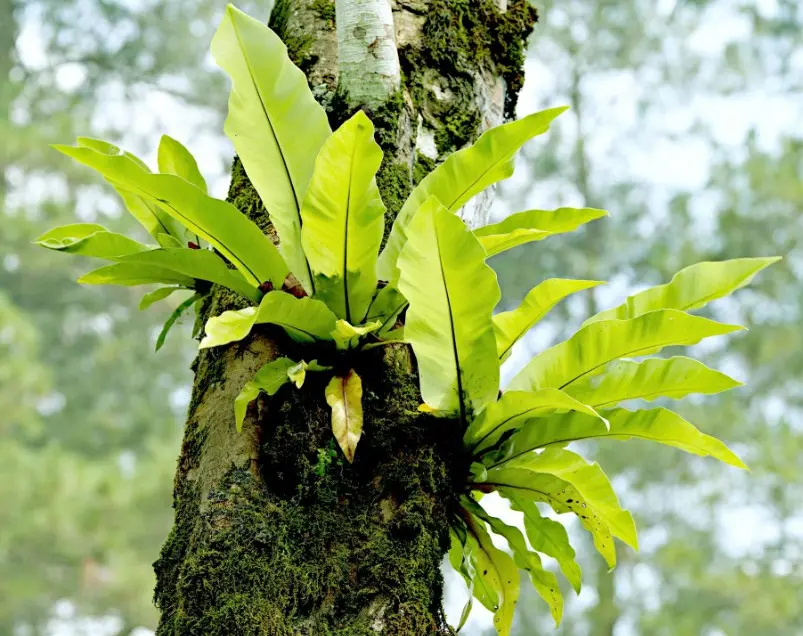
Pakis Langsuir
Bird's Nest Fern
Asplenium nidus
An epiphytic fern native to Malaysian rainforests that grows naturally on tree trunks and branches. Its broad, glossy fronds form a funnel-shaped "nest" that collects fallen leaves and rainwater, feeding the plant naturally. Low-maintenance and adaptable, it grows well in shaded Malaysian gardens and indoors.
Care Guide
Light Requirements
Bright filtered light or dappled shade. This fern evolved growing on tree branches in the middle canopy. It receives reflected and filtered light, not full direct sun. Harsh afternoon Malaysian sun scorches the frond tips within hours.
Temperature
20°C - 30°C. Perfectly suited to Malaysian indoor and outdoor temperatures. Avoid positioning it directly under cold AC vents. The fronds will yellow and turn brown at the edges from the cold, dry draft.
Humidity
High humidity (60%+) is preferred. As an epiphyte (a plant that grows on trees rather than in ground soil), this fern naturally absorbs significant moisture directly through its fronds from the surrounding humid air. Not only through its roots.
🌧️ Good news for Malaysia: Your home's natural humidity is already helping. Focus on airflow instead to prevent fungal issues.
Soil Preference
Loose, moisture-retentive but very airy epiphytic mix: coco chips + orchid bark + compost. The growing medium must have plenty of air gaps for both circulation and water movement. In nature, this fern grows in the organic debris that collects in tree forks. Not dense, compacted soil.
Watering & Fertilizer
Water the soil around the base. NEVER pour water into the central "nest" rosette. Water sitting in the nest reaches the growing crown at the very bottom of the cup. If that growing tip stays wet too long, it rots and the entire plant dies from the inside out. Monthly half-strength liquid fertiliser during growing season.
💭 Still unsure? Stick your finger 2 cm into the soil. If it feels dry, water. If it's moist, wait. You'll get it right.
General Care
In the wild, the "nest" centre naturally collects fallen leaves and organic matter from the tree above. This decomposes slowly and feeds the fern. In pots, place a small amount of slow-release fertiliser pellets near the base of the nest. The plant enjoys being slightly root-bound, so only repot when roots are visibly escaping the drainage holes.
Propagation
Spore propagation is the only natural method. Extremely slow and requires a very humid, enclosed environment to germinate. Not beginner-friendly at all. Commercial plants are grown via tissue culture. For home gardeners, simply buy a new plant.
Pet Friendly?
Non-toxic to both cats and dogs. A genuinely safe choice for homes with curious, plant-chewing pets.
Medicinal Benefits
Traditionally used in Malaysia and parts of Indonesia to reduce fever. Young fronds are boiled and the warm liquid used as a compress applied to the forehead. Some research indicates anti-inflammatory compounds in the fronds.
Other Uses
Widely used in vertical "green walls" and interior landscaping because it tolerates indoor shade and high humidity. The broad, flat fronds also provide a degree of sound absorption in indoor spaces.
Pests & Diseases
Relatively pest-resistant compared to most indoor plants. Scale insects can appear as hard, brownish bumps on fronds. Outdoors, slugs and snails eat ragged holes in frond edges at night. Check with a torch after rain.
Smart Tanam Tip
"In the wild, mature ferns of this species can grow so massive that their "nests" trap hundreds of kilograms of organic debris over decades. Other plants even start growing inside the nest! A reminder that this slow-growing plant becomes truly spectacular given time and consistent care."
Common Mistakes in Malaysia
- Overwatering due to high humidity: Malaysia's moisture-rich air means soil dries slower. Most plant deaths come from root rot, not underwatering.
- Poor airflow: High humidity + still air = fungal issues. Move plants where air circulates naturally (near windows, not in corners).
- Ignoring the monsoon season: During heavy rain, reduce watering. Your plant is already getting moisture from the environment.
- Direct afternoon sun: Malaysian midday sun is intense. Even sun-loving plants can scorch. Morning sun is best.
Tips for Malaysia's Climate
- Use well-draining soil: Add perlite or cocopeat. Heavy soil + humidity = rot. Your soil should dry out between waterings.
- Water in the morning: Wet foliage at night is a recipe for fungal problems in humid climates. Early morning watering lets leaves dry quickly.
- Repot in spring: Before the dry season, refresh soil to prevent salt buildup and improve drainage.
- Watch for pests during monsoon: Wet season brings aphids, spider mites, and scale insects. Check undersides of leaves weekly.
- Increase airflow: Place a small fan nearby if the plant is indoors. Circulating air prevents humidity-related issues.
© 2026 Tanam Je. All rights reserved.
Disclaimer: Tanam Je is an educational resource. Plant care outcomes vary by environment, weather, and handling. Tanam Je is not liable for plant loss or related damages.