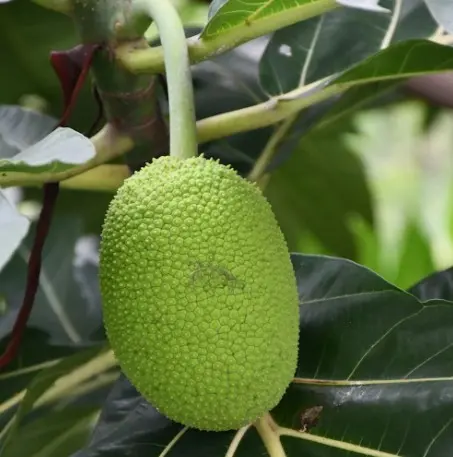
Sukun
Breadfruit
Artocarpus altilis
Breadfruit (Artocarpus altilis) is a large, productive tropical tree producing starchy, melon-sized fruits that cook like potato when unripe and become sweet when fully ripe. A traditional food tree across Southeast Asia, it is highly productive in Malaysia and requires very little care once established.
Care Guide
Light Requirements
Full sun. Breadfruit demands strong light for photosynthesis to support the massive fruit production. Even partial shade reduces yields significantly.
Temperature
22°C - 32°C. A true tropical tree requiring consistent warmth. Below 15°C, growth stops and stress occurs.
Humidity
70% - 90%. Breadfruit thrives in high humidity. Malaysia maintains monsoon-driven humidity that is ideal. Dry air reduces fruit set.
🌧️ Good news for Malaysia: Your home's natural humidity is already helping. Focus on airflow instead to prevent fungal issues.
Soil Preference
Deep, fertile, well-draining soil rich with organic matter. Breadfruit can tolerate less-perfect soils than many tropical fruits. It is famous for growing in marginal soils in island communities across the Pacific.
Watering & Fertilizer
Keep soil consistently moist during growing/flowering/fruiting phases. Drought stress causes immature fruit drop. Fertilise every 3-4 weeks with balanced NPK during the season. Potassium increases fruit sweetness and starch content.
💭 Still unsure? Stick your finger 2 cm into the soil. If it feels dry, water. If it's moist, wait. You'll get it right.
General Care
Breadfruit trees grow large (8-15m height naturally). Support heavy fruit branches with props or bracing during heavy fruit seasons to prevent limb breakage. Thin excessive flowers to direct energy into fewer, larger fruits. Prune annually after harvest to maintain size and shape. The tree can produce 100-200 fruits per season from a mature tree.
Propagation
Air layering (marcotting) is preferred for true-to-type fruiting. Root cuttings and sucker offshoots also work. Seed-grown trees take longer to produce fruit (4-6 years vs 2-3 years from vegetative propagation).
Pet Friendly?
The cooked fruit is safe. Avoid latex sap contact as it can cause skin irritation. The raw seeds are not toxic but are commonly consumed only when cooked.
Medicinal Benefits
Rich in carbohydrates and fiber. Seeds are nutritious. Traditionally eaten throughout the Pacific as a dietary staple to prevent malnutrition.
Other Uses
Primary food source in tropical regions (staple starch crop similar to potato in temperate zones). All parts used: fruit for cooking, seeds for roasting, leaves for livestock fodder, wood for timber.
Pests & Diseases
Fruit borers (Zeuzera) tunnel through developing fruit. Bagging fruit clusters prevents damage. Leaf spots and anthracnose can appear in wet seasons; good air circulation prevents fungal disease.
Smart Tanam Tip
"Breadfruit fruits are incredibly large and heavy (2-5kg each). Mature trees need strong structure. A single medium-sized tree can feed a family for months. The fruit is starchy (like potato or taro) and is steamed, fried, roasted, or boiled. One tree produces abundance for 6-8 weeks, then rests. This cyclical pattern is typical. In Pacific island cultures, breadfruit preservation (fermentation into masi) allowed food security year-round."
Common Mistakes in Malaysia
- Overwatering due to high humidity: Malaysia's moisture-rich air means soil dries slower. Most plant deaths come from root rot, not underwatering.
- Poor airflow: High humidity + still air = fungal issues. Move plants where air circulates naturally (near windows, not in corners).
- Ignoring the monsoon season: During heavy rain, reduce watering. Your plant is already getting moisture from the environment.
- Direct afternoon sun: Malaysian midday sun is intense. Even sun-loving plants can scorch. Morning sun is best.
Tips for Malaysia's Climate
- Use well-draining soil: Add perlite or cocopeat. Heavy soil + humidity = rot. Your soil should dry out between waterings.
- Water in the morning: Wet foliage at night is a recipe for fungal problems in humid climates. Early morning watering lets leaves dry quickly.
- Repot in spring: Before the dry season, refresh soil to prevent salt buildup and improve drainage.
- Watch for pests during monsoon: Wet season brings aphids, spider mites, and scale insects. Check undersides of leaves weekly.
- Increase airflow: Place a small fan nearby if the plant is indoors. Circulating air prevents humidity-related issues.
© 2026 Tanam Je. All rights reserved.
Disclaimer: Tanam Je is an educational resource. Plant care outcomes vary by environment, weather, and handling. Tanam Je is not liable for plant loss or related damages.