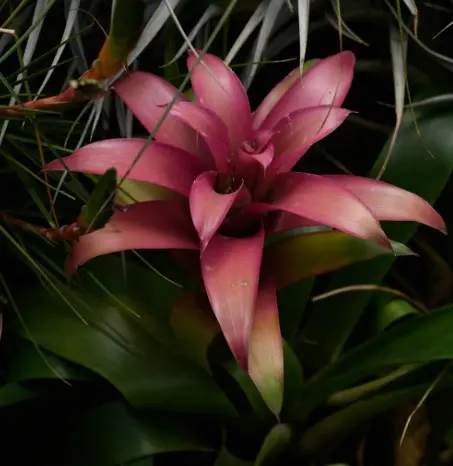
Bromeliad
Bromeliad
Bromeliaceae
Bromeliads are tropical epiphytic plants closely related to pineapple, producing bold, long-lasting colored bracts in red, orange, yellow, or pink above a central water-holding rosette. Drought-tolerant, long-flowering, and air-purifying, they are ideal for Malaysian gardens and bright indoor spaces.
Care Guide
Light Requirements
Bright indirect light. The colorful bracts (modified leaves) develop their vivid pigments in response to strong light. In low light, bracts remain green or pale.
Temperature
18°C - 27°C. Most bromeliads prefer consistent, warm temperatures. Avoid cold below 15°C. Bromeliad handles Malaysian warmth well, but sudden cold drafts or heat spikes can shock tissues and slow recovery.
Humidity
50% - 70%. Bromeliads naturally grow as epiphytes (on trees) where they are exposed to air circulation and high humidity. Provide good air flow around the plant.
🌧️ Good news for Malaysia: Your home's natural humidity is already helping. Focus on airflow instead to prevent fungal issues.
Soil Preference
Loose, well-draining, airy mix: cocopeat + perlite + orchid bark. The roots are primarily for anchoring, not absorption. Bromeliads gather moisture through their central cup and leaf base.
Watering & Fertilizer
Water the CENTRAL CUP (the rosette center), not the pot soil. Keep the cup filled with fresh water. This is where the plant absorbs moisture and nutrients in nature. Water the pot soil lightly but allow it to dry slightly between waterings. Fertilise every 4-6 weeks by adding fertiliser to the central cup.
💭 Still unsure? Stick your finger 2 cm into the soil. If it feels dry, water. If it's moist, wait. You'll get it right.
General Care
The central cup is the living water storage system. Empty and refill it every few days to prevent mosquito breeding (especially important in Malaysia). After the main flower spike blooms and fades (weeks to months), the mother rosette gradually dies and is replaced by baby "pups" growing from the base.
Propagation
Pups (baby offsets) appear as the mother plant ages. Once pups are 1/3 the size of the mother and have their own roots visible, carefully separate them and pot individually in airy, well-draining mix. Pups root faster than starting from seed.
Pet Friendly?
Generally safe for cats and dogs. The leaf edges can be sharp, so place where pets won't brush against them accidentally.
Medicinal Benefits
No proven medicinal use, though some varieties have been used traditionally in folk medicine.
Other Uses
Prized for tropical interior design. The long-lasting colorful bracts make them popular in floral arrangements and living room displays.
Pests & Diseases
Generally pest-free if the central cup water is changed regularly (preventing mosquito breeding). Scale insects can occasionally appear on leaf bases.
Smart Tanam Tip
"Bromeliad flowers are called "inflorescences". The colorful parts you see are modified leaves (bracts), not true flowers. The actual tiny flowers emerge from the center. The entire flower display lasts weeks to months, then the mother plant completes its life cycle. Its pups are ready to continue the cycle."
Common Mistakes in Malaysia
- Overwatering due to high humidity: Malaysia's moisture-rich air means soil dries slower. Most plant deaths come from root rot, not underwatering.
- Poor airflow: High humidity + still air = fungal issues. Move plants where air circulates naturally (near windows, not in corners).
- Ignoring the monsoon season: During heavy rain, reduce watering. Your plant is already getting moisture from the environment.
- Direct afternoon sun: Malaysian midday sun is intense. Even sun-loving plants can scorch. Morning sun is best.
Tips for Malaysia's Climate
- Use well-draining soil: Add perlite or cocopeat. Heavy soil + humidity = rot. Your soil should dry out between waterings.
- Water in the morning: Wet foliage at night is a recipe for fungal problems in humid climates. Early morning watering lets leaves dry quickly.
- Repot in spring: Before the dry season, refresh soil to prevent salt buildup and improve drainage.
- Watch for pests during monsoon: Wet season brings aphids, spider mites, and scale insects. Check undersides of leaves weekly.
- Increase airflow: Place a small fan nearby if the plant is indoors. Circulating air prevents humidity-related issues.
© 2026 Tanam Je. All rights reserved.
Disclaimer: Tanam Je is an educational resource. Plant care outcomes vary by environment, weather, and handling. Tanam Je is not liable for plant loss or related damages.