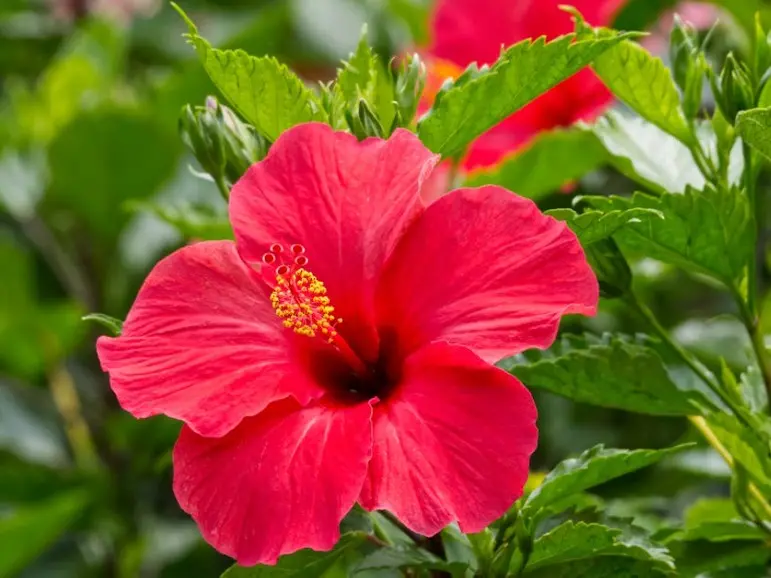
Bunga Raya
Hibiscus
Hibiscus rosa-sinensis
The Bunga Raya is Malaysia’s national flower, celebrated for its large, bell-shaped blooms. It is a hardy tropical shrub that thrives in the Malaysian climate, symbolizing courage and vitality.
Care Guide
Light Requirements
Full direct sunlight (6+ hours daily). Sun triggers flower bud formation by activating hormones in the plant. No sun = no flowers, just green leaves. Watch it grow in shade and you'll see it stretch tall and skinny looking for light.
Temperature
20°C - 35°C. Bunga Raya loves Malaysian heat because warm temperatures speed up the chemical reactions that make flowers bloom. Cold (below 15°C) puts the plant to sleep.
Humidity
High humidity (60% - 80%) is normal in Malaysia, but add airflow to prevent fungal infections. High moisture + still air = rot.
🌧️ Good news for Malaysia: Your home's natural humidity is already helping. Focus on airflow instead to prevent fungal issues.
Soil Preference
Well-draining, fertile soil rich in organic matter. Imagine the plant's roots need oxygen too. Heavy soil = waterlogged roots = dead plant.
Watering & Fertilizer
Water daily during hot spells because heat increases transpiration (plant sweating). Potassium (K) in fertilizer is the flower-making nutrient. It tells the plant to invest energy in blooms instead of just growing leaves.
💭 Still unsure? Stick your finger 2 cm into the soil. If it feels dry, water. If it's moist, wait. You'll get it right.
General Care
Prune 1/3 of the plant yearly. New young branches produce more flowers than old wood. That's why pruning boosts blooms dramatically.
Propagation
Stem cuttings root easily because the cutting already has the genetic blueprint to grow roots. Rooting hormone speeds this up by mimicking natural plant hormones.
Pet Friendly?
Hibiscus rosa-sinensis is generally considered low-risk for dogs and cats, though any plant material can still cause mild stomach upset if eaten in large amounts.
Medicinal Benefits
Rich in vitamin C and antioxidants. Traditionally used to support cardiovascular health and as a scalp treatment because its compounds can improve circulation.
Other Uses
Flowers are edible and often used in salads, teas, and as natural pH indicators in science experiments.
Pests & Diseases
Aphids love new soft growth (tender shoots have less protective waxes). Mealybugs hide under leaves where it's humid. Spray underneath.
Smart Tanam Tip
"Pruning 1/3 of the plant once a year forces the plant to branch more, and more branches = more flower buds. It's the most powerful technique for getting more blooms."
Common Mistakes in Malaysia
- Overwatering due to high humidity: Malaysia's moisture-rich air means soil dries slower. Most plant deaths come from root rot, not underwatering.
- Poor airflow: High humidity + still air = fungal issues. Move plants where air circulates naturally (near windows, not in corners).
- Ignoring the monsoon season: During heavy rain, reduce watering. Your plant is already getting moisture from the environment.
- Direct afternoon sun: Malaysian midday sun is intense. Even sun-loving plants can scorch. Morning sun is best.
Tips for Malaysia's Climate
- Use well-draining soil: Add perlite or cocopeat. Heavy soil + humidity = rot. Your soil should dry out between waterings.
- Water in the morning: Wet foliage at night is a recipe for fungal problems in humid climates. Early morning watering lets leaves dry quickly.
- Repot in spring: Before the dry season, refresh soil to prevent salt buildup and improve drainage.
- Watch for pests during monsoon: Wet season brings aphids, spider mites, and scale insects. Check undersides of leaves weekly.
- Increase airflow: Place a small fan nearby if the plant is indoors. Circulating air prevents humidity-related issues.
© 2026 Tanam Je. All rights reserved.
Disclaimer: Tanam Je is an educational resource. Plant care outcomes vary by environment, weather, and handling. Tanam Je is not liable for plant loss or related damages.