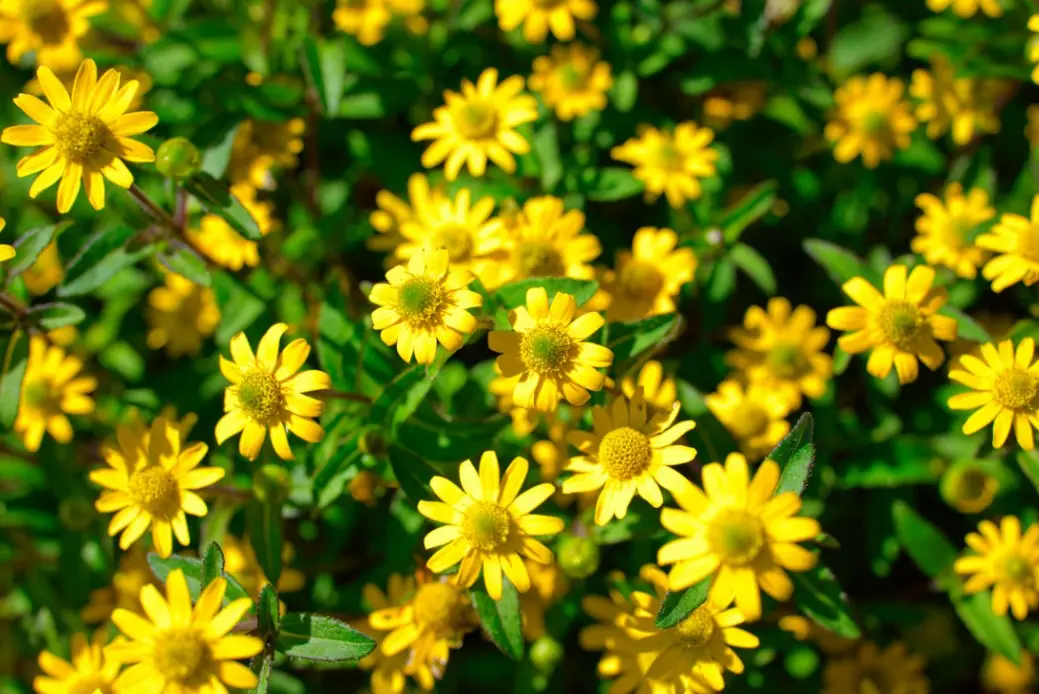
Butter Daisy
Butter Daisy
Melampodium divaricatum
Butter Daisy (Melampodium divaricatum) is a heat-tolerant tropical-to-subtropical daisy relative that fits Malaysia especially well. It forms bushy, free-flowering mounds covered in many small yellow blooms, making it one of the easiest daisy-type plants for hot, bright gardens.
Care Guide
Light Requirements
Full sun is best for compact growth and nonstop flowering. It tolerates strong Malaysian heat better than most daisy types when drainage is good.
Temperature
22°C - 35°C. Butter Daisy is comfortable in hot tropical weather and continues flowering through warm periods that would stress cooler-climate daisies.
Humidity
Moderate to high humidity is acceptable. Good spacing still helps keep foliage dry and reduces fungal spotting after rain.
🌧️ Good news for Malaysia: Your home's natural humidity is already helping. Focus on airflow instead to prevent fungal issues.
Soil Preference
Average to fertile well-draining soil. It is adaptable and less fussy than gerbera, but still performs best when roots are not trapped in heavy wet soil.
Watering & Fertilizer
Water regularly during establishment, then moderately once rooted. Feed lightly every 4-6 weeks; too much fertilizer can push soft leafy growth instead of flowers.
💭 Still unsure? Stick your finger 2 cm into the soil. If it feels dry, water. If it's moist, wait. You'll get it right.
General Care
Trim lightly if plants sprawl or become untidy. Deadheading is helpful but not always necessary because the plant flowers so freely on new growth.
Propagation
Seeds are easy and reliable, and warm conditions speed up germination. Soft cuttings can also root readily in humid weather.
Pet Friendly?
Melampodium is not commonly listed as toxic to cats and dogs, though it is still best to prevent routine chewing of ornamental plants.
Medicinal Benefits
No major medicinal role in common use; it is valued mainly as a durable ornamental flower.
Other Uses
Excellent for sunny borders, roadside beds, school gardens, and low-maintenance public plantings where constant color is needed.
Pests & Diseases
Usually quite trouble-free. Aphids, whiteflies, or fungal leaf spots can appear in crowded plantings, but serious losses are uncommon when plants stay sunny and airy.
Smart Tanam Tip
"If you want the easiest daisy-type plant for Malaysia, choose Butter Daisy. It is tougher and less finicky than Gerbera and keeps flowering with minimal fuss."
Common Mistakes in Malaysia
- Overwatering due to high humidity: Malaysia's moisture-rich air means soil dries slower. Most plant deaths come from root rot, not underwatering.
- Poor airflow: High humidity + still air = fungal issues. Move plants where air circulates naturally (near windows, not in corners).
- Ignoring the monsoon season: During heavy rain, reduce watering. Your plant is already getting moisture from the environment.
- Direct afternoon sun: Malaysian midday sun is intense. Even sun-loving plants can scorch. Morning sun is best.
Tips for Malaysia's Climate
- Use well-draining soil: Add perlite or cocopeat. Heavy soil + humidity = rot. Your soil should dry out between waterings.
- Water in the morning: Wet foliage at night is a recipe for fungal problems in humid climates. Early morning watering lets leaves dry quickly.
- Repot in spring: Before the dry season, refresh soil to prevent salt buildup and improve drainage.
- Watch for pests during monsoon: Wet season brings aphids, spider mites, and scale insects. Check undersides of leaves weekly.
- Increase airflow: Place a small fan nearby if the plant is indoors. Circulating air prevents humidity-related issues.
© 2026 Tanam Je. All rights reserved.
Disclaimer: Tanam Je is an educational resource. Plant care outcomes vary by environment, weather, and handling. Tanam Je is not liable for plant loss or related damages.