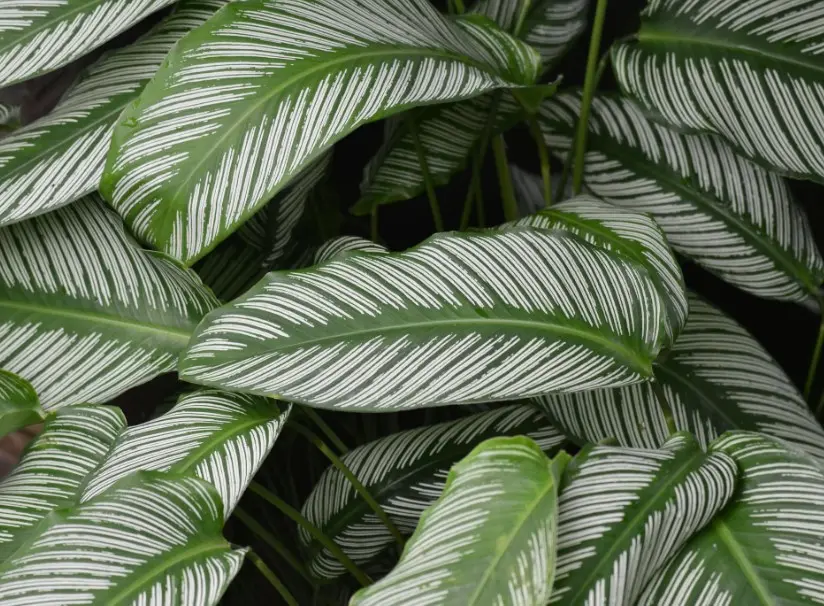
Pokok Doa
Prayer Plant
Goeppertia spp. (formerly Calathea)
Famous for "Nyctinasty". the movement where leaves fold up at night. They are the divas of the plant world but stunningly beautiful.
Care Guide
Light Requirements
Bright filtered light only. No direct sun at any time. Calathea evolved on the forest floor where barely any direct light penetrates the canopy. Direct Malaysian afternoon sun will bleach the intricate patterns right off the leaves in a matter of days. The patterns are created by specialised cells that reflect light, and direct UV radiation permanently degrades these cells.
Temperature
18°C - 27°C. Calathea is very sensitive to cold drafts from air conditioners. Position it away from direct AC vents. Sudden temperature drops cause leaves to curl inward as a stress response, and prolonged cold exposure turns leaves brown from the edges inward.
Humidity
Minimum 60% at all times. Calathea loses water rapidly through its large, thin leaves. In dry air, the leaf edges turn brown and crispy. Those cells have dried out and died. Use a pebble tray filled with water beneath the pot, or a nearby humidifier. Avoid misting directly on leaves, which can encourage fungal spots.
🌧️ Good news for Malaysia: Your home's natural humidity is already helping. Focus on airflow instead to prevent fungal issues.
Soil Preference
Loose, moisture-retentive but well-draining mix. Unlike succulents, Calathea needs soil that holds some moisture between waterings. A mix of cocopeat + perlite + a little compost works well.
Watering & Fertilizer
Calathea roots are extremely sensitive to the fluoride and chlorine in tap water. These chemicals cause progressive brown leaf tips (essentially chemical burning of leaf cells). Use rain water, filtered water, or leave tap water in an open container overnight so chlorine evaporates. Keep soil evenly damp but never waterlogged. Fertilise lightly at half-strength every 4 weeks.
💭 Still unsure? Stick your finger 2 cm into the soil. If it feels dry, water. If it's moist, wait. You'll get it right.
General Care
The daily leaf movement (folding up at night, opening in the morning) is called nyctinasty. Driven by changes in water pressure inside specialised cells at the leaf base called pulvini. Healthy, well-hydrated plants move vigorously throughout the day. A Calathea that stops moving is a stressed or dehydrated plant.
Propagation
Division only. Carefully separate the rhizome (underground stem) at repotting time. Each division must have at least 2-3 healthy leaves and an intact root section. Calathea cannot be propagated from leaf cuttings the way African violets can.
Pet Friendly?
One of the few large houseplants generally considered non-toxic to both cats and dogs. Usually low risk if chewed in small amounts.
Medicinal Benefits
No proven medicinal use for ornamental Calathea species. The large leaves of some wild Calathea species are used traditionally in South America to wrap food during cooking.
Other Uses
Certain Calathea species (like C. lutea) produce fully waterproof leaves that indigenous communities use for basket weaving and food wrapping. The same waterproofing that protects the leaf in the rainforest also makes it durable for crafts.
Pests & Diseases
Spider mites thrive in hot, dry air. The #1 enemy of Calathea in Malaysian homes with air conditioning. Check the undersides of leaves for tiny moving dots and fine webbing. Increase humidity, wash leaves with neem oil solution, and isolate from other plants immediately to prevent spread.
Smart Tanam Tip
"Brown leaf edges mean either too-dry air (low humidity or under-watering) OR tap water with too many minerals and fluoride. Start by switching to rain water collected from your roof. This single change alone solves the problem in most Calathea cases."
Common Mistakes in Malaysia
- Overwatering due to high humidity: Malaysia's moisture-rich air means soil dries slower. Most plant deaths come from root rot, not underwatering.
- Poor airflow: High humidity + still air = fungal issues. Move plants where air circulates naturally (near windows, not in corners).
- Ignoring the monsoon season: During heavy rain, reduce watering. Your plant is already getting moisture from the environment.
- Direct afternoon sun: Malaysian midday sun is intense. Even sun-loving plants can scorch. Morning sun is best.
Tips for Malaysia's Climate
- Use well-draining soil: Add perlite or cocopeat. Heavy soil + humidity = rot. Your soil should dry out between waterings.
- Water in the morning: Wet foliage at night is a recipe for fungal problems in humid climates. Early morning watering lets leaves dry quickly.
- Repot in spring: Before the dry season, refresh soil to prevent salt buildup and improve drainage.
- Watch for pests during monsoon: Wet season brings aphids, spider mites, and scale insects. Check undersides of leaves weekly.
- Increase airflow: Place a small fan nearby if the plant is indoors. Circulating air prevents humidity-related issues.
© 2026 Tanam Je. All rights reserved.
Disclaimer: Tanam Je is an educational resource. Plant care outcomes vary by environment, weather, and handling. Tanam Je is not liable for plant loss or related damages.