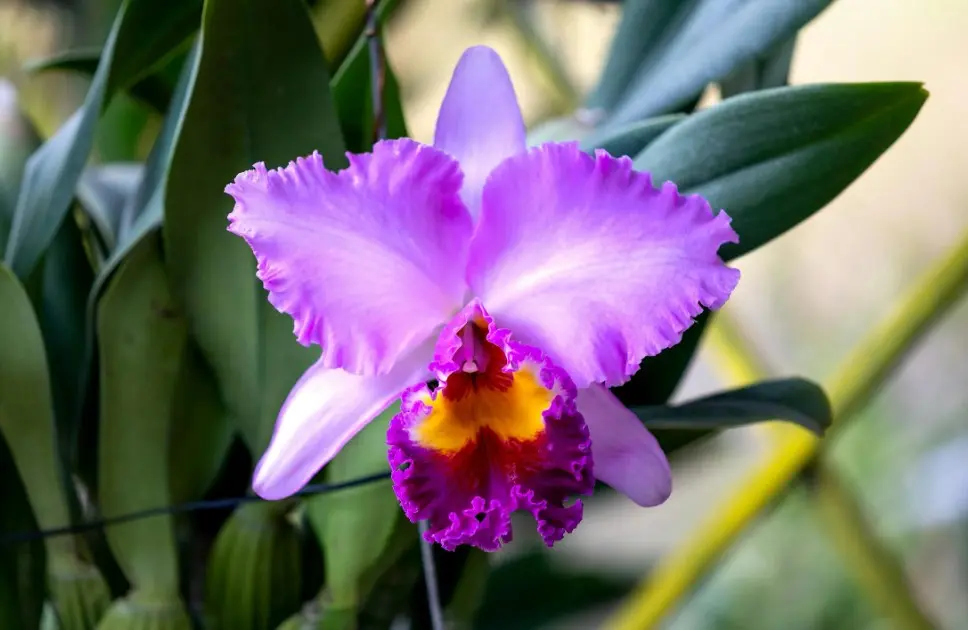
Orkid Cattleya
Cattleya Orchid
Cattleya spp.
Known as the "Queen of Orchids," Cattleyas produce some of the largest and most fragrant blooms in the orchid world. They are epiphytes, meaning in the wild, they grow on trees rather than in soil.
Care Guide
Light Requirements
Bright indirect light is important because Cattleya needs more energy than softer, shade-loving orchids. If the leaves stay very dark green, it often means the plant is too shaded to bloom well.
Temperature
18°C - 30°C works well, and a slightly cooler night can help signal the plant to prepare for blooming.
Humidity
High humidity keeps the pseudobulbs plump. These swollen stems are water-storage organs, so when they wrinkle badly it often means the plant is struggling with water balance.
🌧️ Good news for Malaysia: Your home's natural humidity is already helping. Focus on airflow instead to prevent fungal issues.
Soil Preference
Use only coarse orchid media like bark or charcoal. Cattleya roots want air around them because in nature they cling to trees, not buried soil.
Watering & Fertilizer
Let the medium dry almost fully before watering again. That drying cycle gives the roots air. "Weakly, weekly" means small regular feeding, which is safer than strong fertilizer that can burn orchid roots.
💭 Still unsure? Stick your finger 2 cm into the soil. If it feels dry, water. If it's moist, wait. You'll get it right.
General Care
Repot only when needed and never into regular soil. Orchids fail quickly when roots lose airflow.
Propagation
Divide only strong plants, and keep several pseudobulbs per section so each new division has enough stored energy to recover.
Pet Friendly?
Cattleyas are non-toxic to cats and dogs.
Medicinal Benefits
Primarily ornamental, though some species are used in traditional tonics in South America.
Other Uses
Highly prized as collector plants and for exhibition in orchid shows.
Pests & Diseases
Scale and mealybugs hide under the papery sheaths, so a clean-looking plant can still carry pests in the hidden parts.
Smart Tanam Tip
"If it keeps growing but never flowers, light is the first thing to review. Cattleya often refuses to bloom simply because it is being treated too much like a shade orchid."
Common Mistakes in Malaysia
- Overwatering due to high humidity: Malaysia's moisture-rich air means soil dries slower. Most plant deaths come from root rot, not underwatering.
- Poor airflow: High humidity + still air = fungal issues. Move plants where air circulates naturally (near windows, not in corners).
- Ignoring the monsoon season: During heavy rain, reduce watering. Your plant is already getting moisture from the environment.
- Direct afternoon sun: Malaysian midday sun is intense. Even sun-loving plants can scorch. Morning sun is best.
Tips for Malaysia's Climate
- Use well-draining soil: Add perlite or cocopeat. Heavy soil + humidity = rot. Your soil should dry out between waterings.
- Water in the morning: Wet foliage at night is a recipe for fungal problems in humid climates. Early morning watering lets leaves dry quickly.
- Repot in spring: Before the dry season, refresh soil to prevent salt buildup and improve drainage.
- Watch for pests during monsoon: Wet season brings aphids, spider mites, and scale insects. Check undersides of leaves weekly.
- Increase airflow: Place a small fan nearby if the plant is indoors. Circulating air prevents humidity-related issues.
© 2026 Tanam Je. All rights reserved.
Disclaimer: Tanam Je is an educational resource. Plant care outcomes vary by environment, weather, and handling. Tanam Je is not liable for plant loss or related damages.