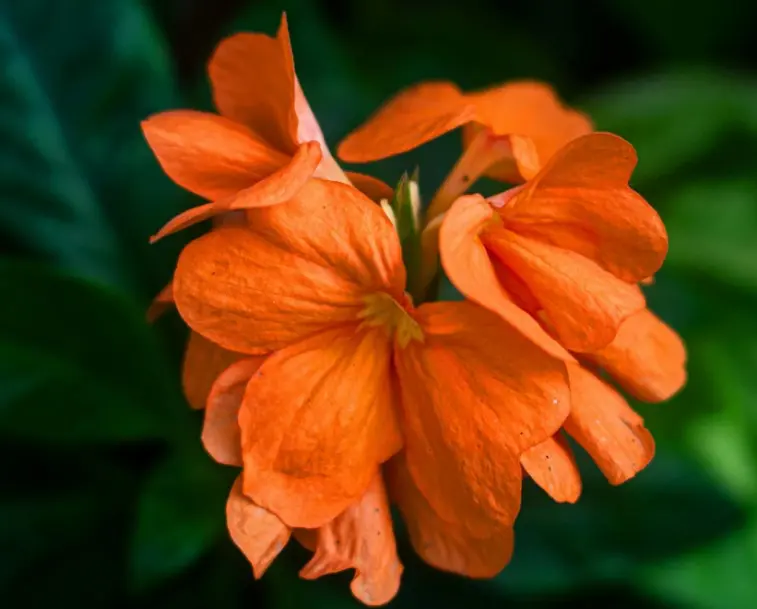
Crossandra
Firecracker Flower
Crossandra infundibuliformis
A tropical evergreen sub-shrub known for its unusual fan-shaped, salmon-orange flowers. It is a "workhorse" in Malaysian gardens because it blooms continuously and handles the intense tropical sun better than most flowering plants.
Care Guide
Light Requirements
Bright indirect light to full sun. Crossandra produces its vivid salmon-orange colour from carotenoid pigments that flourish under strong light. However, direct harsh afternoon sun bleaches these pigments and causes flowers to fade quickly. A little afternoon shade preserves the rich colour for longer.
Temperature
20°C - 35°C. Does not tolerate cold drafts from AC units blowing directly on the plant. Cold exposure causes flowers to shrivel and drop prematurely.
Humidity
60% - 90%. Prefers high humidity. In drier air, the leaves curl upward at the edges. This is the plant physically reducing its surface area to minimise water loss from the leaf surface.
🌧️ Good news for Malaysia: Your home's natural humidity is already helping. Focus on airflow instead to prevent fungal issues.
Soil Preference
Well-draining, fertile soil slightly acidic to neutral (pH 6.0-6.5). Slightly acidic soil dissolves iron and micronutrients that Crossandra needs for the enzymes that build its brilliant flower pigments.
Watering & Fertilizer
Keep soil consistently moist but never waterlogged. Roots need oxygen between waterings. Use a high-phosphorus fertiliser monthly. Phosphorus is the key nutrient for flower bud formation. Without adequate phosphorus, the plant produces mainly leaves and very few flower spikes.
💭 Still unsure? Stick your finger 2 cm into the soil. If it feels dry, water. If it's moist, wait. You'll get it right.
General Care
Deadhead (remove) spent flower spikes to encourage new ones. This works because the plant stops producing flowers once it has set seed. By removing spent spikes before seeds form, you signal the plant that it has not yet reproduced, so it keeps producing more flower spikes. Pinch back stem tips regularly to prevent leggy growth.
Propagation
Propagate from stem cuttings or seeds. Seeds "explode" out of the pods when they get wet. This is ballistic seed dispersal, where the pod wall contracts on contact with water and catapults seeds up to a metre away! Hence the name Firecracker Flower.
Pet Friendly?
Crossandra is generally considered non-toxic to cats and dogs.
Medicinal Benefits
Used in traditional medicine in India for anti-inflammatory properties. Some studies suggest compounds in the flowers have mild antibacterial effects, though this is not yet clinically proven.
Other Uses
Flowers are traditionally used in South Asian hair garlands and religious offerings. The long-lasting blooms remain intact even after cutting, making them ideal for ceremonial use.
Pests & Diseases
Spider mites thrive during dry spells. Check undersides of leaves for fine webbing. Aphids target new growth and flower buds. Both are effectively controlled with neem oil spray applied in the evening.
Smart Tanam Tip
"To collect seeds, wait for the pods to turn brown and completely dry, then hold a container beneath the pod and add a tiny drop of water onto it. The pod will literally "pop" open and launch seeds into the container. Nature designed this mechanism to shoot seeds into new territory!"
Common Mistakes in Malaysia
- Overwatering due to high humidity: Malaysia's moisture-rich air means soil dries slower. Most plant deaths come from root rot, not underwatering.
- Poor airflow: High humidity + still air = fungal issues. Move plants where air circulates naturally (near windows, not in corners).
- Ignoring the monsoon season: During heavy rain, reduce watering. Your plant is already getting moisture from the environment.
- Direct afternoon sun: Malaysian midday sun is intense. Even sun-loving plants can scorch. Morning sun is best.
Tips for Malaysia's Climate
- Use well-draining soil: Add perlite or cocopeat. Heavy soil + humidity = rot. Your soil should dry out between waterings.
- Water in the morning: Wet foliage at night is a recipe for fungal problems in humid climates. Early morning watering lets leaves dry quickly.
- Repot in spring: Before the dry season, refresh soil to prevent salt buildup and improve drainage.
- Watch for pests during monsoon: Wet season brings aphids, spider mites, and scale insects. Check undersides of leaves weekly.
- Increase airflow: Place a small fan nearby if the plant is indoors. Circulating air prevents humidity-related issues.
© 2026 Tanam Je. All rights reserved.
Disclaimer: Tanam Je is an educational resource. Plant care outcomes vary by environment, weather, and handling. Tanam Je is not liable for plant loss or related damages.