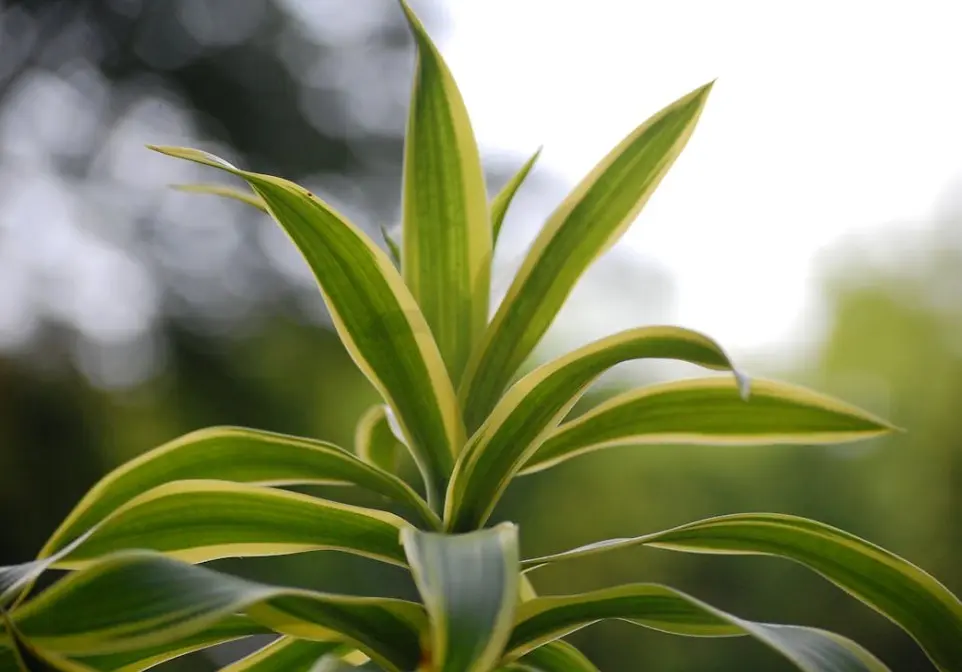
Dracaena
Dragon Tree
Dracaena spp.
Dracaena is a diverse genus of tropical plants with long, strap-like leaves in various colors and patterns. They're excellent air purifiers and very forgiving houseplants.
Care Guide
Light Requirements
Low to bright indirect light works because Dracaena is adaptable, but brighter indirect light gives stronger color and steadier growth. Direct sun can bleach or burn the leaves.
Temperature
18°C - 27°C is comfortable for this plant. Cold drafts shock the leaf tissue and often show up as brown edges or sudden leaf drop.
Humidity
Moderate humidity is enough. It handles indoor air better than fussier tropical plants, which is why it works well in offices and homes.
🌧️ Good news for Malaysia: Your home's natural humidity is already helping. Focus on airflow instead to prevent fungal issues.
Soil Preference
Use loose, draining soil so roots can breathe between waterings. Dracaena prefers moisture around the roots, not constant wetness.
Watering & Fertilizer
Water when the top 2 inches are dry. This rhythm prevents root rot while still giving the plant enough moisture to support new leaves. Feed lightly during active growth because it is steady, not greedy.
💭 Still unsure? Stick your finger 2 cm into the soil. If it feels dry, water. If it's moist, wait. You'll get it right.
General Care
Wipe dust from the leaves, trim tired foliage, and prune the cane if it gets too tall. Cutting the top encourages side shoots, which helps the plant look fuller.
Propagation
Stem and top cuttings root well because the cane stores energy and contains dormant growing points that can wake up and produce fresh shoots.
Pet Friendly?
Contains saponins, natural defense chemicals that can trigger drooling, vomiting, and digestive upset in pets.
Medicinal Benefits
Some species have traditional uses, but for most growers Dracaena is mainly valued as an ornamental and indoor air-tolerant plant.
Other Uses
A popular office and indoor landscaping plant because it stays upright, handles average indoor conditions, and keeps a clean architectural shape.
Pests & Diseases
Spider mites, mealybugs, and scale appear most often when the plant is dusty or stressed. Root rot follows overwatering, especially in low light.
Smart Tanam Tip
"Brown tips often mean a water-quality or watering-pattern issue, not just “low humidity.” Check for fluoride-heavy water, salt buildup, or roots staying too wet."
Common Mistakes in Malaysia
- Overwatering due to high humidity: Malaysia's moisture-rich air means soil dries slower. Most plant deaths come from root rot, not underwatering.
- Poor airflow: High humidity + still air = fungal issues. Move plants where air circulates naturally (near windows, not in corners).
- Ignoring the monsoon season: During heavy rain, reduce watering. Your plant is already getting moisture from the environment.
- Direct afternoon sun: Malaysian midday sun is intense. Even sun-loving plants can scorch. Morning sun is best.
Tips for Malaysia's Climate
- Use well-draining soil: Add perlite or cocopeat. Heavy soil + humidity = rot. Your soil should dry out between waterings.
- Water in the morning: Wet foliage at night is a recipe for fungal problems in humid climates. Early morning watering lets leaves dry quickly.
- Repot in spring: Before the dry season, refresh soil to prevent salt buildup and improve drainage.
- Watch for pests during monsoon: Wet season brings aphids, spider mites, and scale insects. Check undersides of leaves weekly.
- Increase airflow: Place a small fan nearby if the plant is indoors. Circulating air prevents humidity-related issues.
© 2026 Tanam Je. All rights reserved.
Disclaimer: Tanam Je is an educational resource. Plant care outcomes vary by environment, weather, and handling. Tanam Je is not liable for plant loss or related damages.