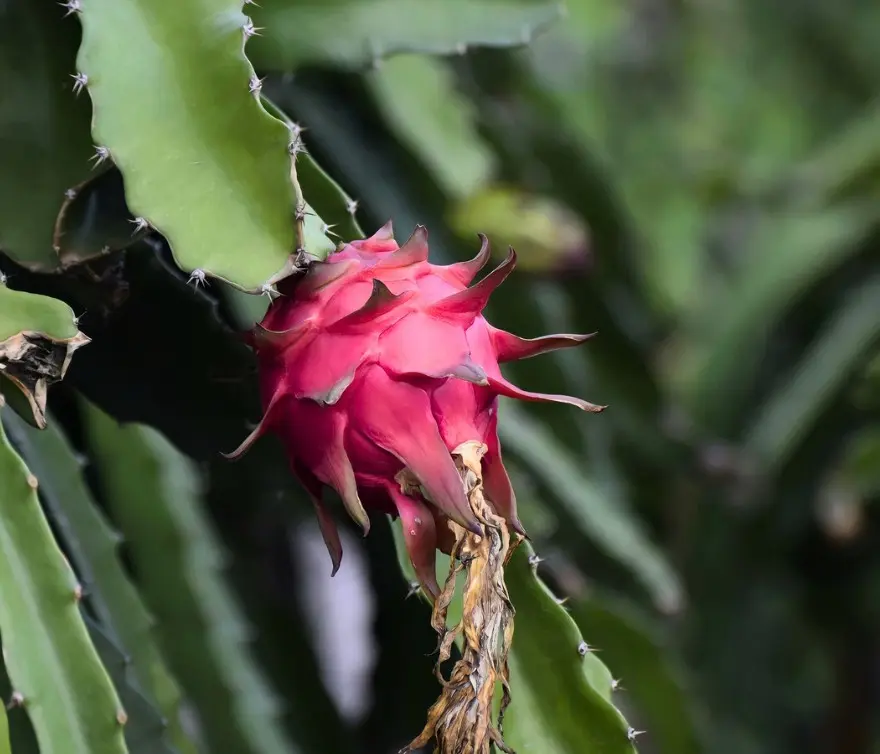
Buah Naga
Dragon Fruit
Selenicereus undatus
Known as Hylocereus undatus as old name, Selenicereus undatus is a climbing cactus that produces spectacular, night-blooming flowers and vibrant pink fruit. It is a high-yield superfood that thrives in the Malaysian sun.
Care Guide
Light Requirements
Full, unobstructed sun is essential for fruiting. Dragonfruit is a climbing cactus that evolved in dry, sun-drenched environments. The plant needs intense light to build the carbohydrates required for those large, energy-expensive fruits and spectacular blooms. Shaded plants produce long green growth but will completely fail to flower or fruit.
Temperature
20°C - 38°C. Extremely heat-tolerant. One of the few fruiting plants that actively thrives in Malaysia intense daytime heat. Below 10°C, the succulent stem tissue is damaged by cold stress. not a concern in most of Malaysia, but avoid cold AC drafts on young plants.
Humidity
40% - 70%. Unlike most tropical plants, Dragonfruit actually prefers LOWER humidity because it is a cactus. High humidity combined with poor drainage causes stem rot. The most common cause of death for this plant in Malaysia.
🌧️ Good news for Malaysia: Your home's natural humidity is already helping. Focus on airflow instead to prevent fungal issues.
Soil Preference
Very well-draining sandy or loamy cactus mix with added organic compost. The key is drainage. This plant stores water inside its thick stems (stem succulence), so it does NOT need wet soil. Good drainage prevents the stem base from sitting in moisture that causes rot.
Watering & Fertilizer
Treat it as a succulent: water deeply only when the soil is completely dry to the touch. The thick stems store water for dry periods. Overwatering is far more dangerous than underwatering. Apply a balanced fertiliser monthly during flowering and fruiting season; add compost once before the flowering period begins.
💭 Still unsure? Stick your finger 2 cm into the soil. If it feels dry, water. If it's moist, wait. You'll get it right.
General Care
Must be grown on a sturdy T-bar support or concrete post. Dragonfruit branches can grow over 5 metres long and weigh several kilograms when loaded with fruit. They will snap at the base without support. Train branches horizontally along the T-bar to encourage more fruiting side branches to develop downward.
Propagation
Very easy to grow from stem segments: cut a healthy segment 30-50cm long, let the cut end dry and callous over for 2-3 days (this seals the wound and prevents rot), then plant the calloused end in well-draining soil. New growth appears within weeks.
Pet Friendly?
The fruit and plant are safe for pets. The fruit flesh and skin contain no harmful compounds.
Medicinal Benefits
Rich in magnesium, phosphorus, and fiber. The betalain pigments (which give the red flesh its colour) act as antioxidants. Excellent for gut health due to prebiotic oligosaccharides that feed beneficial gut bacteria.
Other Uses
The spectacular white night-blooming flowers are edible and can be lightly cooked in soups or stir-fried. The flowers open only at night and last only one night. They are pollinated by moths and bats in the wild.
Pests & Diseases
Ants are drawn to nectar in the flowers and can prevent proper pollination by consuming nectar before pollinators arrive. Stem rot from poor drainage is the most serious disease. Cut out affected brown sections and let the wound dry completely before replanting.
Smart Tanam Tip
"If the plant flowers but produces no fruit, pollination may be the issue. Some Dragonfruit varieties are self-fertile, while others set better with cross-pollination. Hand-pollinate at 10pm-midnight using a small soft brush: collect pollen from the stamens (the yellow dusty parts) of one flower and brush onto the stigma (the central sticky part) of another open flower."
Common Mistakes in Malaysia
- Overwatering due to high humidity: Malaysia's moisture-rich air means soil dries slower. Most plant deaths come from root rot, not underwatering.
- Poor airflow: High humidity + still air = fungal issues. Move plants where air circulates naturally (near windows, not in corners).
- Ignoring the monsoon season: During heavy rain, reduce watering. Your plant is already getting moisture from the environment.
- Direct afternoon sun: Malaysian midday sun is intense. Even sun-loving plants can scorch. Morning sun is best.
Tips for Malaysia's Climate
- Use well-draining soil: Add perlite or cocopeat. Heavy soil + humidity = rot. Your soil should dry out between waterings.
- Water in the morning: Wet foliage at night is a recipe for fungal problems in humid climates. Early morning watering lets leaves dry quickly.
- Repot in spring: Before the dry season, refresh soil to prevent salt buildup and improve drainage.
- Watch for pests during monsoon: Wet season brings aphids, spider mites, and scale insects. Check undersides of leaves weekly.
- Increase airflow: Place a small fan nearby if the plant is indoors. Circulating air prevents humidity-related issues.
© 2026 Tanam Je. All rights reserved.
Disclaimer: Tanam Je is an educational resource. Plant care outcomes vary by environment, weather, and handling. Tanam Je is not liable for plant loss or related damages.