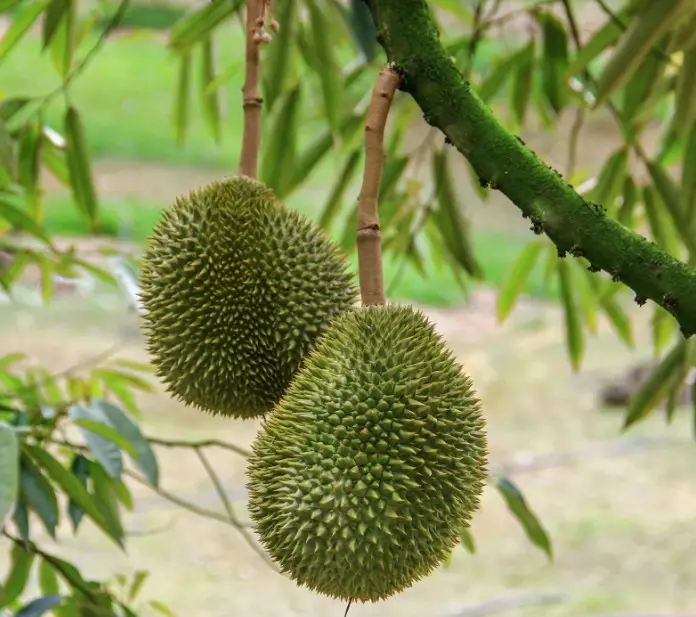
Durian
Durian
Durio zibethinus
Durian is Malaysia's "King of Fruits". A large tropical tree producing fruits with a distinctive pungent aroma and rich, custard-like flesh. The most economically important and culturally prized fruit in Southeast Asia.
Care Guide
Light Requirements
Young durian prefers some protection, but mature trees need full sun to support flowering and heavy fruit loads. Seedlings are softer and can burn more easily than older trees.
Temperature
24°C - 32°C with steady warmth is ideal. Durian does not like sudden cold because it is built for deep tropical conditions.
Humidity
High humidity suits durian well, but that does not mean the soil should stay waterlogged. The tree likes moist conditions, not suffocated roots.
🌧️ Good news for Malaysia: Your home's natural humidity is already helping. Focus on airflow instead to prevent fungal issues.
Soil Preference
Use deep, rich, well-draining loam. Durian roots need moisture, but they are extremely sensitive to standing water, especially near the trunk base.
Watering & Fertilizer
Keep the soil evenly moist, especially when the tree is flowering and filling fruit. Increase potassium before flowering because it supports flowering and fruit holding better than pushing only leaf growth.
💭 Still unsure? Stick your finger 2 cm into the soil. If it feels dry, water. If it's moist, wait. You'll get it right.
General Care
Protect young trees from wind, prune for structure, and mulch well. Good canopy shape and healthy roots matter because durian is a long-term tree that invests slowly before paying back heavily.
Propagation
Seeds can be used, but grafting is preferred because it gives earlier fruit and keeps the fruit quality true to the chosen variety.
Pet Friendly?
Durian flesh is not known to be toxic to pets, but the high fat and sugar content can cause digestive upset. The large seeds and sharp thorny husk pose physical hazards. Best to keep pets away from fallen fruits.
Medicinal Benefits
Rich in vitamins B, C, potassium, and manganese. Used in traditional Malay medicine as a "warming" food. The flesh contains tryptophan and is nutritionally dense. Traditional advice often cautions against combining durian with alcohol, though strong clinical evidence for a specific metabolic interaction is limited.
Other Uses
Fresh fruit consumed as a delicacy; also used in cakes, ice cream, tempoyak (fermented durian paste), and dodol. Seeds edible when cooked. Timber used for light construction and furniture. Malaysia is one of the world's largest durian exporters.
Pests & Diseases
Fruit borers, scale insects, and bark pests can attack the tree, but poor drainage is often the bigger long-term danger because root disease can kill the whole plant from below.
Smart Tanam Tip
"For durian, drainage is not a small detail. Many trees die not from drought, but from “wet feet” where water sits around the roots and invites deadly root disease."
Common Mistakes in Malaysia
- Overwatering due to high humidity: Malaysia's moisture-rich air means soil dries slower. Most plant deaths come from root rot, not underwatering.
- Poor airflow: High humidity + still air = fungal issues. Move plants where air circulates naturally (near windows, not in corners).
- Ignoring the monsoon season: During heavy rain, reduce watering. Your plant is already getting moisture from the environment.
- Direct afternoon sun: Malaysian midday sun is intense. Even sun-loving plants can scorch. Morning sun is best.
Tips for Malaysia's Climate
- Use well-draining soil: Add perlite or cocopeat. Heavy soil + humidity = rot. Your soil should dry out between waterings.
- Water in the morning: Wet foliage at night is a recipe for fungal problems in humid climates. Early morning watering lets leaves dry quickly.
- Repot in spring: Before the dry season, refresh soil to prevent salt buildup and improve drainage.
- Watch for pests during monsoon: Wet season brings aphids, spider mites, and scale insects. Check undersides of leaves weekly.
- Increase airflow: Place a small fan nearby if the plant is indoors. Circulating air prevents humidity-related issues.
© 2026 Tanam Je. All rights reserved.
Disclaimer: Tanam Je is an educational resource. Plant care outcomes vary by environment, weather, and handling. Tanam Je is not liable for plant loss or related damages.