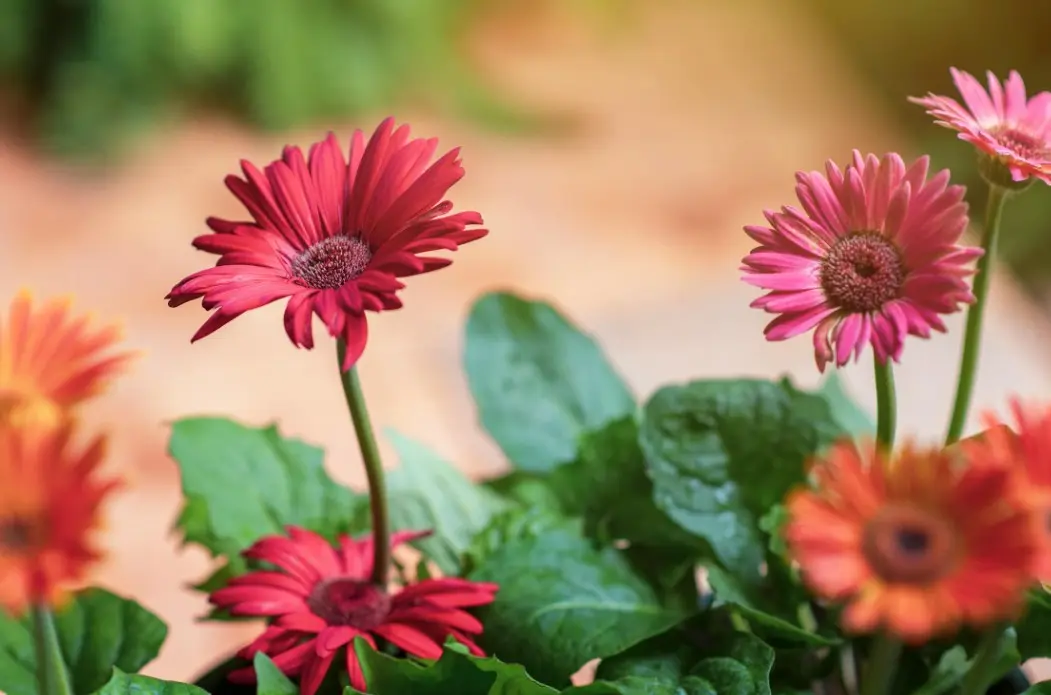
Gerbera Daisy
Gerbera Daisy
Gerbera × hybrida
Gerbera Daisy (Gerbera × hybrida) is the most reliable daisy-type ornamental for many Malaysian gardens, especially when grown in raised beds, airy pots, or rain-sheltered sunny spots. It produces large, bold flower heads in red, orange, yellow, pink, white, and bi-colors, and is widely used as both a bedding plant and cut flower.
Care Guide
Light Requirements
Bright light with direct morning sun or very light afternoon shade. Gerbera flowers best with strong light, but in Malaysia lowlands harsh late-day sun can scorch petals and overheat the crown.
Temperature
18°C - 32°C. Gerbera handles Malaysian warmth better than temperate daisies, though flowering stays stronger when nights are not excessively hot and the root zone is kept cool and airy.
Humidity
Moderate to high humidity is acceptable if air circulation is good. The real risk in Malaysia is stagnant moisture around leaves and crowns, which encourages fungal disease.
🌧️ Good news for Malaysia: Your home's natural humidity is already helping. Focus on airflow instead to prevent fungal issues.
Soil Preference
Loose, fertile, sharply well-draining soil or potting mix enriched with compost. Gerbera crowns are highly sensitive to rot, so never bury the crown deeply or let it sit in soggy media.
Watering & Fertilizer
Water at the soil level when the top layer begins to dry, keeping moisture even but never waterlogged. Feed every 2-4 weeks with a balanced flowering fertilizer; excess nitrogen produces soft leaves and fewer blooms.
💭 Still unsure? Stick your finger 2 cm into the soil. If it feels dry, water. If it's moist, wait. You'll get it right.
General Care
Remove spent blooms at the base to keep new flower stems coming. In Malaysia, raised beds, airy balcony pots, and rain-sheltered sunny areas usually give better results than flat, poorly drained garden soil.
Propagation
Division of healthy clumps is the simplest way to keep good flowering plants. Commercial types are also produced from tissue culture for uniform flower colour and vigor.
Pet Friendly?
Gerbera is generally considered non-toxic to cats and dogs, though chewing large amounts of leaves or flowers can still cause mild stomach upset.
Medicinal Benefits
No major medicinal use; it is grown mainly for ornamental value and cut flowers.
Other Uses
Excellent for pots, borders, event planting, and cut-flower production. It is one of the world's most important commercial cut flowers.
Pests & Diseases
Aphids, thrips, spider mites, powdery mildew, botrytis, and crown rot can occur. In Malaysia, poor drainage and wet crowns are usually the fastest way to lose the plant.
Smart Tanam Tip
"If you want the classic bold florist-style daisy look in Malaysia, Gerbera is the best first choice. The single biggest success factor is keeping the crown dry and the root zone sharply drained."
Common Mistakes in Malaysia
- Overwatering due to high humidity: Malaysia's moisture-rich air means soil dries slower. Most plant deaths come from root rot, not underwatering.
- Poor airflow: High humidity + still air = fungal issues. Move plants where air circulates naturally (near windows, not in corners).
- Ignoring the monsoon season: During heavy rain, reduce watering. Your plant is already getting moisture from the environment.
- Direct afternoon sun: Malaysian midday sun is intense. Even sun-loving plants can scorch. Morning sun is best.
Tips for Malaysia's Climate
- Use well-draining soil: Add perlite or cocopeat. Heavy soil + humidity = rot. Your soil should dry out between waterings.
- Water in the morning: Wet foliage at night is a recipe for fungal problems in humid climates. Early morning watering lets leaves dry quickly.
- Repot in spring: Before the dry season, refresh soil to prevent salt buildup and improve drainage.
- Watch for pests during monsoon: Wet season brings aphids, spider mites, and scale insects. Check undersides of leaves weekly.
- Increase airflow: Place a small fan nearby if the plant is indoors. Circulating air prevents humidity-related issues.
© 2026 Tanam Je. All rights reserved.
Disclaimer: Tanam Je is an educational resource. Plant care outcomes vary by environment, weather, and handling. Tanam Je is not liable for plant loss or related damages.