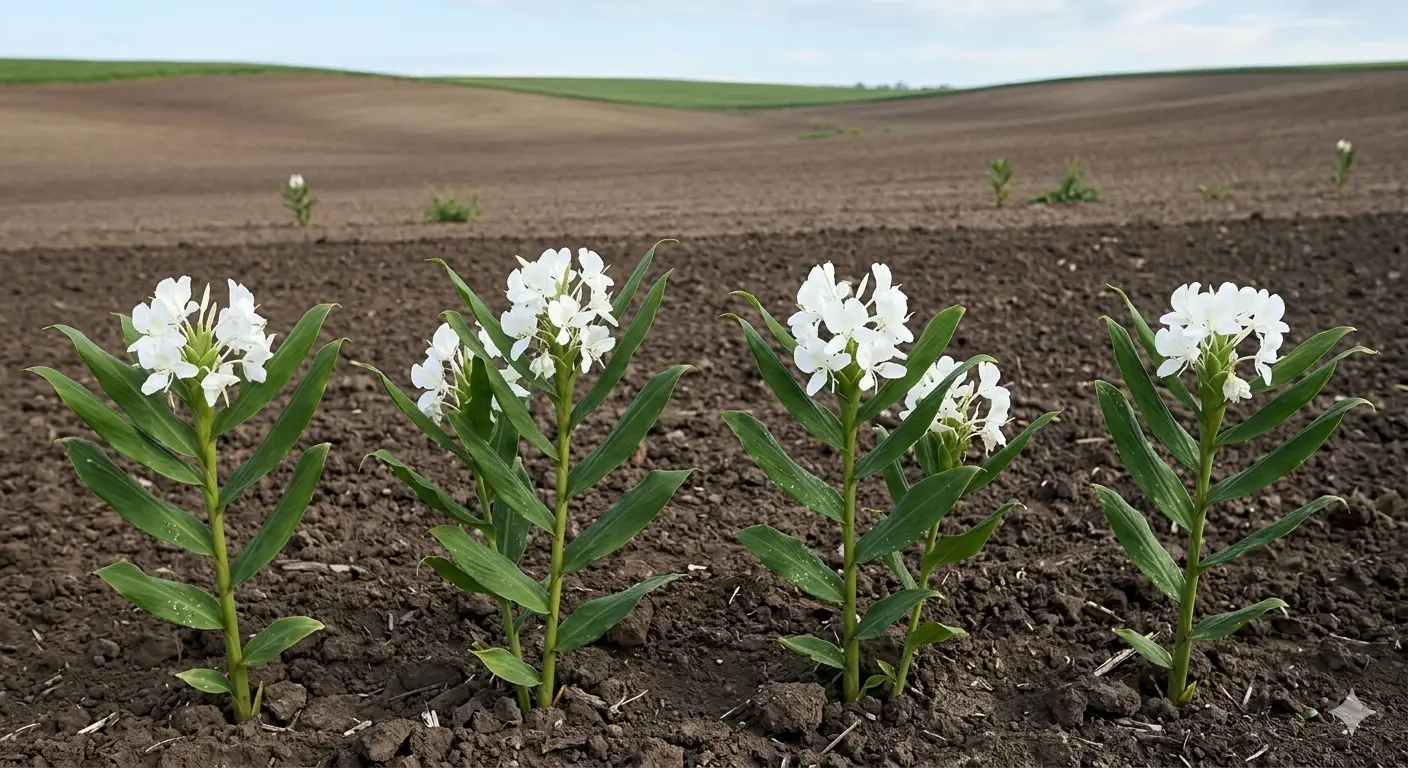
White Ginger Lily
White Ginger Lily
Hedychium coronarium
White Ginger Lily (Hedychium coronarium), also known as Butterfly Lily, is an upright herbaceous perennial in the ginger family (Zingiberaceae) that can grow 1–3 metres tall. It is specifically a white-flowered species and each bloom is pure white with a small yellow base, produces an intensely sweet fragrance likened to jasmine, strongest at dusk when it attracts moth pollinators. Native to the forest understorey of the Eastern Himalayas and tropical Asia, it naturalises easily in moist environments and is well-suited to Malaysian gardens and waterside planting.
Care Guide
Light Requirements
Partial shade to bright filtered light is ideal, reflecting its origin in the shaded forest understorey. It tolerates morning sun in moist, sheltered spots, but prolonged harsh direct sun scorches leaves and dulls flower production.
Temperature
20°C - 32°C. It thrives in Malaysian warmth, remains evergreen, and grows actively throughout the year where moisture is consistent.
Humidity
High humidity is preferred and well-tolerated. Good airflow between clumps reduces fungal leaf spot pressure in dense plantings.
🌧️ Good news for Malaysia: Your home's natural humidity is already helping. Focus on airflow instead to prevent fungal issues.
Soil Preference
Moist, fertile, humus-rich soil with reasonable drainage. The rhizomes like consistent moisture at root level but will rot if soil stays waterlogged for extended periods.
Watering & Fertilizer
Keep soil evenly moist, especially during active growth and flower spike development. Apply a balanced fertilizer monthly; a slightly higher potassium ratio during bud and bloom stages supports stronger flower spike production.
💭 Still unsure? Stick your finger 2 cm into the soil. If it feels dry, water. If it's moist, wait. You'll get it right.
General Care
Remove spent flower stalks at the base to keep clumps tidy and redirect energy into new growth. Divide crowded clumps every 1–2 years to maintain vigor, open up airflow, and prevent the rhizomes from spreading too widely. Near drainage channels or stream edges, monitor spread as it can naturalise aggressively.
Propagation
Rhizome division is the easiest and most reliable method. Each section needs at least one healthy growing bud for reliable establishment.
Pet Friendly?
Hedychium coronarium is not listed as toxic to dogs or cats by major horticultural references. As with all ornamental plants, discourage pets from chewing large amounts of any plant material.
Medicinal Benefits
Cultivated in China for aromatic oil extracted from the flowers for use in perfumery and traditional medicine. The flower buds and young flowers are edible and used in some Southeast Asian cuisines.
Other Uses
National flower of Cuba, where it is called Mariposa (butterfly). Used in landscape borders, pond and stream edges, tropical garden screening (grows to 3 m), and as a fragrant cut flower. Aromatic oil from the flowers is used in perfumery.
Pests & Diseases
Leaf spot, caterpillars, mealybugs, and rhizome rot in poorly drained or persistently waterlogged soil. Routine clump division and adequate drainage are the most effective long-term controls.
Smart Tanam Tip
"The fragrance peaks at dusk and draws pollinating moths in its native range. Plant near walkways, outdoor seating, or open windows so the evening scent can be fully appreciated. The bold upright clumps also work well as a natural screen between garden zones."
Common Mistakes in Malaysia
- Overwatering due to high humidity: Malaysia's moisture-rich air means soil dries slower. Most plant deaths come from root rot, not underwatering.
- Poor airflow: High humidity + still air = fungal issues. Move plants where air circulates naturally (near windows, not in corners).
- Ignoring the monsoon season: During heavy rain, reduce watering. Your plant is already getting moisture from the environment.
- Direct afternoon sun: Malaysian midday sun is intense. Even sun-loving plants can scorch. Morning sun is best.
Tips for Malaysia's Climate
- Use well-draining soil: Add perlite or cocopeat. Heavy soil + humidity = rot. Your soil should dry out between waterings.
- Water in the morning: Wet foliage at night is a recipe for fungal problems in humid climates. Early morning watering lets leaves dry quickly.
- Repot in spring: Before the dry season, refresh soil to prevent salt buildup and improve drainage.
- Watch for pests during monsoon: Wet season brings aphids, spider mites, and scale insects. Check undersides of leaves weekly.
- Increase airflow: Place a small fan nearby if the plant is indoors. Circulating air prevents humidity-related issues.
© 2026 Tanam Je. All rights reserved.
Disclaimer: Tanam Je is an educational resource. Plant care outcomes vary by environment, weather, and handling. Tanam Je is not liable for plant loss or related damages.