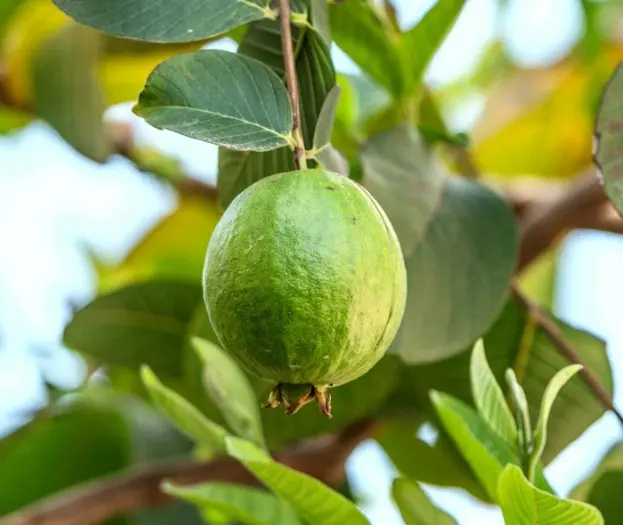
Jambu Batu
Guava
Psidium guajava
Guava is a hardy tropical fruit tree producing abundant sweet fruits with white or pink flesh. One of the most productive and low-maintenance fruit trees for Malaysian home gardens.
Care Guide
Light Requirements
Full sun means better flowering, better fruit set, and sweeter fruit. Guava can survive with less, but it will not perform at its best.
Temperature
20°C - 35°C fits it well. This is a tough tropical fruit tree that keeps producing under normal Malaysian heat.
Humidity
Malaysia's humidity is not a problem for guava, especially if the tree is pruned so air can move through the canopy.
🌧️ Good news for Malaysia: Your home's natural humidity is already helping. Focus on airflow instead to prevent fungal issues.
Soil Preference
Use deep, fertile, well-draining soil. Guava is forgiving, but better soil gives stronger roots and heavier harvests.
Watering & Fertilizer
Young plants need regular water while they establish. Mature trees can handle short dry spells, but regular feeding and timely watering before fruiting improve fruit size, yield, and quality.
💭 Still unsure? Stick your finger 2 cm into the soil. If it feels dry, water. If it's moist, wait. You'll get it right.
General Care
Prune after harvest to encourage fresh fruiting shoots. Guava often bears on newer growth, so smart pruning helps keep the tree productive instead of just bigger.
Propagation
Seeds grow easily but give variable results. Cuttings or air layering are better when you want fruit quality similar to the parent tree.
Pet Friendly?
Ripe guava fruit is non-toxic to pets and safe in small amounts. Leaves and unripe fruit in large quantities may cause digestive upset.
Medicinal Benefits
Exceptionally high in vitamin C (up to 4x more than oranges). Guava leaves have well-documented anti-diarrheal properties and are used in traditional medicine for managing blood sugar levels in diabetes. Studies support antimicrobial and anti-inflammatory activity of leaf extracts.
Other Uses
Fruit eaten fresh, juiced, made into jam, jelly, or guava paste. Guava leaf tea is a popular traditional remedy for diarrhea and diabetes management in Malaysia. Young leaves eaten as ulam (raw salad). Popular for fruit orchards and home gardens across Malaysia.
Pests & Diseases
Fruit flies are one of the biggest problems because they ruin fruit directly. Scale, mealybugs, rot, and wilt also appear when the tree is stressed or drainage is poor.
Smart Tanam Tip
"For home growers, fruit fly control matters more than buying stronger fertilizer. A healthy tree still gives poor harvests if the fruit gets stung before ripening."
Common Mistakes in Malaysia
- Overwatering due to high humidity: Malaysia's moisture-rich air means soil dries slower. Most plant deaths come from root rot, not underwatering.
- Poor airflow: High humidity + still air = fungal issues. Move plants where air circulates naturally (near windows, not in corners).
- Ignoring the monsoon season: During heavy rain, reduce watering. Your plant is already getting moisture from the environment.
- Direct afternoon sun: Malaysian midday sun is intense. Even sun-loving plants can scorch. Morning sun is best.
Tips for Malaysia's Climate
- Use well-draining soil: Add perlite or cocopeat. Heavy soil + humidity = rot. Your soil should dry out between waterings.
- Water in the morning: Wet foliage at night is a recipe for fungal problems in humid climates. Early morning watering lets leaves dry quickly.
- Repot in spring: Before the dry season, refresh soil to prevent salt buildup and improve drainage.
- Watch for pests during monsoon: Wet season brings aphids, spider mites, and scale insects. Check undersides of leaves weekly.
- Increase airflow: Place a small fan nearby if the plant is indoors. Circulating air prevents humidity-related issues.
© 2026 Tanam Je. All rights reserved.
Disclaimer: Tanam Je is an educational resource. Plant care outcomes vary by environment, weather, and handling. Tanam Je is not liable for plant loss or related damages.