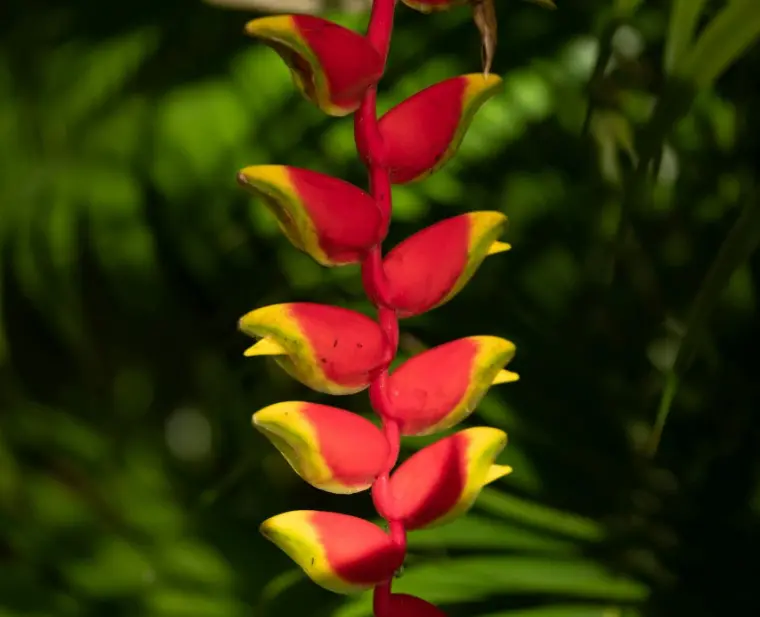
Heliconia
Lobster Claw
Heliconia spp.
Heliconia is known for its striking, lobster claw-shaped bracts in vibrant red, orange, yellow, and pink. A tropical showpiece plant that adds exotic drama to Malaysian gardens and attracts sunbirds and other nectar-feeding pollinators.
Care Guide
Light Requirements
Partial shade to bright filtered sun is best. The leaves are broad and soft, so strong afternoon sun can scorch them quickly.
Temperature
20°C - 30°C is ideal and matches Malaysia well. Warmth keeps the clump producing new shoots and flower stalks.
Humidity
High humidity suits it because the large leaves lose water quickly. The plant looks freshest when both soil moisture and air moisture stay fairly steady.
🌧️ Good news for Malaysia: Your home's natural humidity is already helping. Focus on airflow instead to prevent fungal issues.
Soil Preference
Rich, well-draining soil works best. Heliconia feeds heavily and likes moisture, but waterlogged roots still lead to rot.
Watering & Fertilizer
Keep the soil evenly moist because Heliconia grows fast and has a lot of leaf area to support. Regular feeding helps it build the strength needed for those large flower stalks.
💭 Still unsure? Stick your finger 2 cm into the soil. If it feels dry, water. If it's moist, wait. You'll get it right.
General Care
Mulch around the base, remove spent stalks, and divide crowded clumps. Old crowded clumps compete with themselves, which reduces air movement and flower quality.
Propagation
Divide the rhizomes because that is how the plant naturally spreads underground. Each healthy section can quickly grow into a new clump.
Pet Friendly?
Generally considered non-toxic to cats and dogs. No documented toxicity to pets.
Medicinal Benefits
Some Heliconia species are used in traditional medicine in Central and South America for treating infections and fevers, though scientific evidence is limited.
Other Uses
Highly prized as a long-lasting tropical cut flower for arrangements. Bracts can last 1-3 weeks in a vase. Attracts sunbirds in Malaysia. Widely used in tropical landscape design and resort gardens.
Pests & Diseases
Spider mites, aphids, and caterpillars can attack the big leaves. Fungal spotting and root rot become more likely when crowded plants stay wet for too long.
Smart Tanam Tip
"The bright “lobster claw” part is not the true flower. It is a protective bract, and the real flowers are hidden inside it."
Common Mistakes in Malaysia
- Overwatering due to high humidity: Malaysia's moisture-rich air means soil dries slower. Most plant deaths come from root rot, not underwatering.
- Poor airflow: High humidity + still air = fungal issues. Move plants where air circulates naturally (near windows, not in corners).
- Ignoring the monsoon season: During heavy rain, reduce watering. Your plant is already getting moisture from the environment.
- Direct afternoon sun: Malaysian midday sun is intense. Even sun-loving plants can scorch. Morning sun is best.
Tips for Malaysia's Climate
- Use well-draining soil: Add perlite or cocopeat. Heavy soil + humidity = rot. Your soil should dry out between waterings.
- Water in the morning: Wet foliage at night is a recipe for fungal problems in humid climates. Early morning watering lets leaves dry quickly.
- Repot in spring: Before the dry season, refresh soil to prevent salt buildup and improve drainage.
- Watch for pests during monsoon: Wet season brings aphids, spider mites, and scale insects. Check undersides of leaves weekly.
- Increase airflow: Place a small fan nearby if the plant is indoors. Circulating air prevents humidity-related issues.
© 2026 Tanam Je. All rights reserved.
Disclaimer: Tanam Je is an educational resource. Plant care outcomes vary by environment, weather, and handling. Tanam Je is not liable for plant loss or related damages.