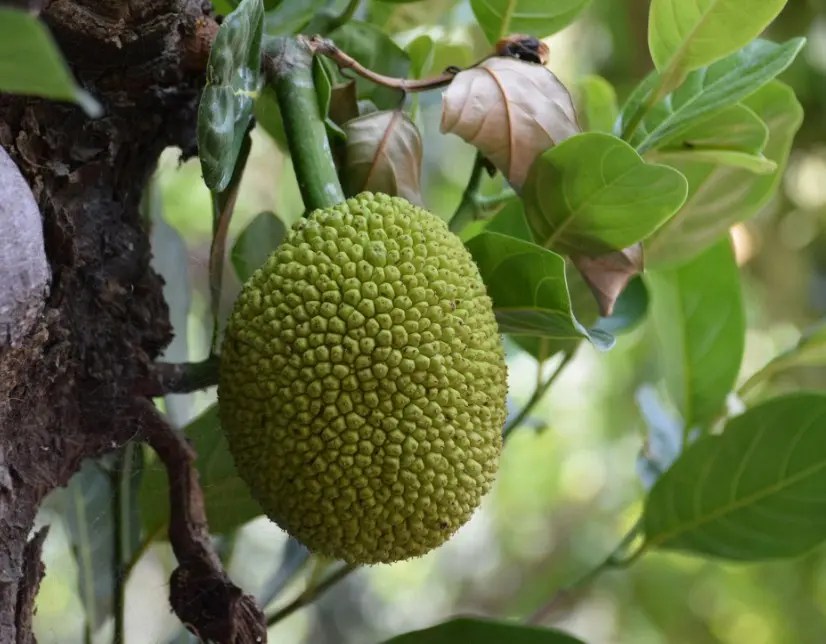
Nangka
Jackfruit
Artocarpus heterophyllus
The world's largest tree-borne fruit. In Malaysia, it is a staple; young jackfruit is used in savory curries, while the ripe fruit is famous for its honey-sweet bulbs.
Care Guide
Light Requirements
Full sun (at least 6 hours daily) is mandatory for fruit sweetness. Jackfruit is a sun-hungry fruiting tree. The sugars that make the arils (the yellow edible sections) sweet and honey-like come entirely from photosynthesis. Shaded trees produce starchy, bland fruit.
Temperature
22°C - 35°C. One of the most heat-tolerant tropical fruit trees. Temperatures below 15°C cause the sap to thicken and slow nutrient transport, leading to yellowing leaves and fruit drop.
Humidity
70% - 90%. Consistent humidity prevents the outer rind from drying and cracking while the inner sections are still developing.
🌧️ Good news for Malaysia: Your home's natural humidity is already helping. Focus on airflow instead to prevent fungal issues.
Soil Preference
Deep, well-draining loamy soil. Jackfruit taproots can reach 3-4 metres deep to anchor the massive trunk and heavy fruit. Waterlogged roots suffocate quickly because roots need oxygen. Jackfruit roots are especially sensitive to prolonged wet conditions.
Watering & Fertilizer
Water deeply but infrequently during fruit development. Shallow frequent watering encourages weak surface roots that cannot support the weight of large fruit. Organic fertiliser every 3 months provides nitrogen for leaf mass, phosphorus for root development, and potassium for fruit sugar and size.
💭 Still unsure? Stick your finger 2 cm into the soil. If it feels dry, water. If it's moist, wait. You'll get it right.
General Care
Fruit thinning: remove weaker fruits in large bunches to prevent branches from snapping under weight. Wrap fruits in hessian sacks or newspaper early to protect from fruit borers. Insects are attracted by the sweet scent when fruit begins to ripen, so wrapping before that stage is key.
Propagation
Grafting preserves parent genetics more reliably, helping keep fruit size, flavour, and fruiting timeline more consistent. Seeds take 5-8 years to first fruit and the quality is unpredictable. Grafted trees bear fruit in 3-4 years from planting.
Pet Friendly?
The large seeds can cause intestinal blockage in pets. The white latex sap contains ficin, a proteolytic enzyme that digests protein. Direct skin contact causes irritation and burning in animals and humans.
Medicinal Benefits
High in fiber, vitamin B6, and potassium. The latex is used in some traditional remedies to treat skin ulcers. The ficin enzyme breaks down damaged tissue. Young fruit is high in protein and is an excellent meat substitute for vegetarians.
Other Uses
The wood contains a yellow pigment (morindon) used to dye the robes of Buddhist monks. It is highly termite-resistant, making it one of the most durable tropical hardwoods for furniture and traditional instruments like the Gambus.
Pests & Diseases
Jackfruit borer (Diaxenes confluella) lays eggs in the fruit rind. Larvae tunnel into the flesh and are only discovered when you cut the fruit open. Pink disease is a fungal coating on bark caused by Erythricium salmonicolor, commonly seen in wet, shaded conditions. Improve air circulation to prevent it.
Smart Tanam Tip
"To check ripeness, tap the fruit. A hollow "thud" means it is ripe (the arils have separated from the inner walls). A solid "thwack" means still unripe. The sweet heavy aroma confirms ripeness. That is the volatile esters the fruit releases as sugars convert to aromatic compounds."
Common Mistakes in Malaysia
- Overwatering due to high humidity: Malaysia's moisture-rich air means soil dries slower. Most plant deaths come from root rot, not underwatering.
- Poor airflow: High humidity + still air = fungal issues. Move plants where air circulates naturally (near windows, not in corners).
- Ignoring the monsoon season: During heavy rain, reduce watering. Your plant is already getting moisture from the environment.
- Direct afternoon sun: Malaysian midday sun is intense. Even sun-loving plants can scorch. Morning sun is best.
Tips for Malaysia's Climate
- Use well-draining soil: Add perlite or cocopeat. Heavy soil + humidity = rot. Your soil should dry out between waterings.
- Water in the morning: Wet foliage at night is a recipe for fungal problems in humid climates. Early morning watering lets leaves dry quickly.
- Repot in spring: Before the dry season, refresh soil to prevent salt buildup and improve drainage.
- Watch for pests during monsoon: Wet season brings aphids, spider mites, and scale insects. Check undersides of leaves weekly.
- Increase airflow: Place a small fan nearby if the plant is indoors. Circulating air prevents humidity-related issues.
© 2026 Tanam Je. All rights reserved.
Disclaimer: Tanam Je is an educational resource. Plant care outcomes vary by environment, weather, and handling. Tanam Je is not liable for plant loss or related damages.