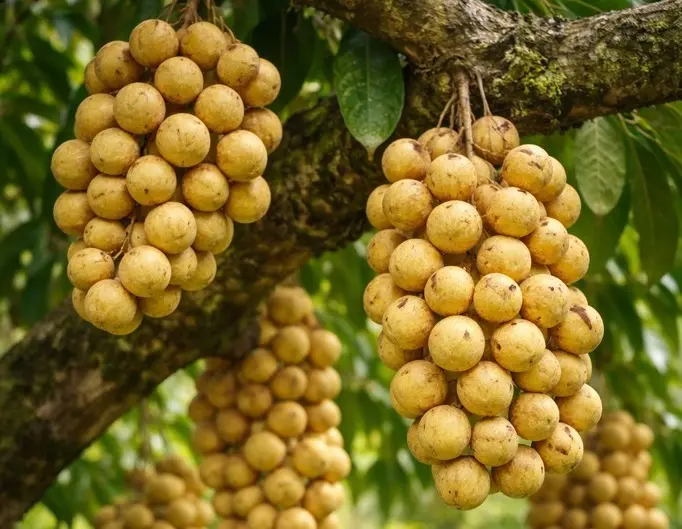
Langsat
Langsat
Lansium parasiticum
A seasonal Malaysian favorite. These grape-like fruits grow in clusters. The skin is thin and contains a sticky white latex when unripe. Langsat has thinner skin and more latex; Duku has thicker skin and less latex.
Care Guide
Light Requirements
Young trees need partial shade (50-70%) for the first 2-3 years. Their thin leaves scorch easily in full sun before the root system is established enough to replace water quickly. Mature trees fruit best in full sun, which provides the energy needed for sweet fruit clusters.
Temperature
22°C - 35°C. A true lowland tropical tree that does not tolerate temperatures below 15°C. Malaysia climate is nearly ideal year-round.
Humidity
70% - 90% (high humidity preferred). Langsat evolved in humid rainforests and requires consistent moisture in both air and soil. A dry spell during fruit development causes the thin skin to tighten and fruit to drop prematurely.
🌧️ Good news for Malaysia: Your home's natural humidity is already helping. Focus on airflow instead to prevent fungal issues.
Soil Preference
Deep, fertile, well-draining loamy soil. Langsat roots go deep for both anchorage and consistent water access. Organic mulch on the soil surface retains moisture, keeps soil temperature stable, and gradually adds nutrients as it decomposes.
Watering & Fertilizer
Keep soil consistently moist but never waterlogged. Apply mulch around the base (30cm from trunk) to retain moisture between rains and prevent the soil surface from drying and cracking. Apply balanced fertiliser twice a year during the active growing period.
💭 Still unsure? Stick your finger 2 cm into the soil. If it feels dry, water. If it's moist, wait. You'll get it right.
General Care
Prune interior branches to improve air circulation and light penetration into the canopy. Dense, unpruned canopies trap humidity around the fruit clusters, encouraging fungal disease. Remove crossing or inward-growing branches first.
Propagation
Seeds germinate readily but produce trees that may take 8-12 years to fruit. Grafting (budding) onto seedling rootstock produces fruiting trees in 3-5 years and is the commercial standard in Malaysia.
Pet Friendly?
Not well-studied for pet safety. The latex in unripe skin and the seeds are best kept away from pets as a precaution. Ripe fruit flesh is eaten safely by humans.
Medicinal Benefits
Dried langsat peel, when burnt like incense, releases volatile compounds that effectively repel mosquitoes. A traditional practice in Malay kampung households. The seeds have been used in traditional remedies for fever and intestinal parasites, though evidence is limited.
Other Uses
Ripe fruit clusters are a beloved seasonal snack in Malaysia and Indonesia. The powdered seed is used in some traditional fever remedies. The dried peel is used as a natural mosquito repellent when burned.
Pests & Diseases
Fruit borers (moth larvae) tunnel into developing fruit clusters from the stalk end. Scale insects attach to bark and weaken the tree over time. Bagging individual fruit clusters when they begin developing protects against borers.
Smart Tanam Tip
"At the market, choose fruits with uniform pale yellow skin. Green tints mean the fruit is still converting starches to sugars (under-ripe and very sour). Fully pale yellow means maximum sugar development. Langsat is juicier and more tart than Duku; Duku has thicker skin and less latex when unripe."
Common Mistakes in Malaysia
- Overwatering due to high humidity: Malaysia's moisture-rich air means soil dries slower. Most plant deaths come from root rot, not underwatering.
- Poor airflow: High humidity + still air = fungal issues. Move plants where air circulates naturally (near windows, not in corners).
- Ignoring the monsoon season: During heavy rain, reduce watering. Your plant is already getting moisture from the environment.
- Direct afternoon sun: Malaysian midday sun is intense. Even sun-loving plants can scorch. Morning sun is best.
Tips for Malaysia's Climate
- Use well-draining soil: Add perlite or cocopeat. Heavy soil + humidity = rot. Your soil should dry out between waterings.
- Water in the morning: Wet foliage at night is a recipe for fungal problems in humid climates. Early morning watering lets leaves dry quickly.
- Repot in spring: Before the dry season, refresh soil to prevent salt buildup and improve drainage.
- Watch for pests during monsoon: Wet season brings aphids, spider mites, and scale insects. Check undersides of leaves weekly.
- Increase airflow: Place a small fan nearby if the plant is indoors. Circulating air prevents humidity-related issues.
© 2026 Tanam Je. All rights reserved.
Disclaimer: Tanam Je is an educational resource. Plant care outcomes vary by environment, weather, and handling. Tanam Je is not liable for plant loss or related damages.