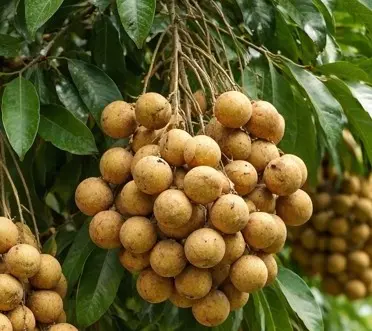
Longan / Mata Kucing
Longan
Dimocarpus longan
Longan (Dimocarpus longan) means "Dragon Eye" in Cantonese, named for the way the translucent white flesh resembles an eyeball when the fruit is shelled. A beloved tropical fruit tree that reliably produces clusters of sweet, floral fruits in Malaysian lowlands and highland areas alike.
Care Guide
Light Requirements
Full sun is required for fruit production. The tree needs maximum light to build enough carbohydrates (sugars) for the dense, heavy fruit clusters. A shaded longan grows beautiful leaves but struggles to ripen sweet fruit.
Temperature
20°C - 35°C during the day. Flowering requires cooler nights (below 22°C for 2-3 weeks). This "cold trigger" mimics highland conditions and signals the tree to reproduce. Lowland Malaysian trees often never receive these cool nights, which is why highland varieties (Cameron Highlands area) fruit more reliably than lowland ones.
Humidity
70% - 90%. Consistent humidity during ripening prevents the thin fruit skin from cracking as the juicy arils (the edible flesh) inside swell with liquid.
🌧️ Good news for Malaysia: Your home's natural humidity is already helping. Focus on airflow instead to prevent fungal issues.
Soil Preference
Deep, fertile, well-draining loamy soil. Longan roots anchor deep for both stability and water access. Shallow soils produce weak, unstable trees that fruit irregularly and often produce small, bland fruit.
Watering & Fertilizer
During flower and fruit development, the tree water demand nearly doubles. Any drought stress at this stage triggers abscission. The tree will drop flowers or immature fruit to conserve resources for survival. Organic compost feeds soil microbes that release nutrients slowly and steadily, which is better for fruit quality than sudden chemical fertiliser spikes.
💭 Still unsure? Stick your finger 2 cm into the soil. If it feels dry, water. If it's moist, wait. You'll get it right.
General Care
Pruning the center of the canopy (crown thinning) allows sunlight to reach inner branches where fruits develop. Without light penetrating into the interior canopy, inner fruits stay small and pale. They never ripen to full sweetness because photosynthesis only happens at the outer edges.
Propagation
Air layering (marcotting in Malaysia) forces a branch to grow roots while still attached to the mother tree. Once rooted and cut free, you get a tree with proven genetics that will fruit in 2-3 years. Compared to 8-10 years from seed, with less predictable fruit quality.
Pet Friendly?
Longan seeds are not safe for pets and can cause choking or digestive upset if swallowed. Keep seeds and whole fruits away from dogs and cats.
Medicinal Benefits
Dried longan (longyan rou) is used in Traditional Chinese Medicine to calm the mind and support the heart. Modern studies show it contains polyphenols that reduce oxidative stress, though it is not a substitute for medical treatment.
Other Uses
The dense, termite-resistant heartwood is prized for high-quality furniture and tool handles in Southeast Asia. Longan honey, produced by bees feeding on longan flowers, has a distinctive floral taste popular in Malaysia and China.
Pests & Diseases
Scale insects attach to bark and feed on the phloem sap. The sugary liquid produced for the fruit. Fruit borers tunnel directly into developing fruits and are only discovered when you cut the fruit open. Regular inspection and neem oil sprays help prevent both.
Smart Tanam Tip
"The "stress period" trick works because reducing water plus cooler temperatures activates florigen. The flowering hormone. As a survival response. The tree "believes" conditions are worsening and tries to reproduce urgently. Then a flush of water mimics the monsoon arriving, triggering a synchronised burst of flowering."
Common Mistakes in Malaysia
- Overwatering due to high humidity: Malaysia's moisture-rich air means soil dries slower. Most plant deaths come from root rot, not underwatering.
- Poor airflow: High humidity + still air = fungal issues. Move plants where air circulates naturally (near windows, not in corners).
- Ignoring the monsoon season: During heavy rain, reduce watering. Your plant is already getting moisture from the environment.
- Direct afternoon sun: Malaysian midday sun is intense. Even sun-loving plants can scorch. Morning sun is best.
Tips for Malaysia's Climate
- Use well-draining soil: Add perlite or cocopeat. Heavy soil + humidity = rot. Your soil should dry out between waterings.
- Water in the morning: Wet foliage at night is a recipe for fungal problems in humid climates. Early morning watering lets leaves dry quickly.
- Repot in spring: Before the dry season, refresh soil to prevent salt buildup and improve drainage.
- Watch for pests during monsoon: Wet season brings aphids, spider mites, and scale insects. Check undersides of leaves weekly.
- Increase airflow: Place a small fan nearby if the plant is indoors. Circulating air prevents humidity-related issues.
© 2026 Tanam Je. All rights reserved.
Disclaimer: Tanam Je is an educational resource. Plant care outcomes vary by environment, weather, and handling. Tanam Je is not liable for plant loss or related damages.