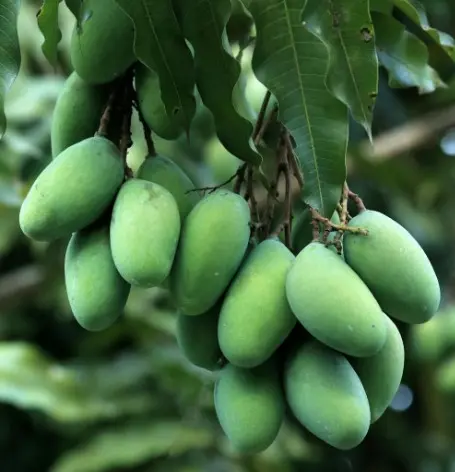
Mangga
Mango Tree
Mangifera indica
A majestic fruit tree that provides both shade and delicious tropical fruit. Mango trees are long-lived and become a centerpiece of any garden.
Care Guide
Light Requirements
Full direct sun is essential because mango needs strong light to build sugars for sweet fruit. Less sun usually means weaker flowering and poorer fruit quality.
Temperature
24°C - 35°C is ideal. Mango is a true tropical tree and grows best when warmth stays steady. Mango Tree performs best in stable warmth; sudden swings can interrupt active growth and delay flowering or fruit set.
Humidity
Moderate humidity is fine, but very wet air during flowering can spoil the bloom stage by encouraging fungal disease before fruit even forms.
🌧️ Good news for Malaysia: Your home's natural humidity is already helping. Focus on airflow instead to prevent fungal issues.
Soil Preference
Use deep, fertile, well-draining soil so the large root system can feed a big canopy without sitting in stagnant water.
Watering & Fertilizer
Water young trees regularly because they are still building roots. Older trees handle short dry periods better, but they still benefit from water during flowering and fruit set, when the tree is trying to hold onto young fruit instead of dropping it.
💭 Still unsure? Stick your finger 2 cm into the soil. If it feels dry, water. If it's moist, wait. You'll get it right.
General Care
Prune to keep the canopy open. More light and airflow inside the tree improves flowering, reduces disease, and helps fruit develop more evenly.
Propagation
Grafting is preferred because it copies a known good variety. Seed-grown trees are slower and may not give the same fruit quality as the parent tree.
Pet Friendly?
Ripe mango flesh is generally safe in small amounts, but sap, peel, and leaves can irritate skin and the digestive tract in sensitive pets. Keep pets away from fallen peels and sap.
Medicinal Benefits
Fruit is high in Vitamin A and C. Leaves are used in some cultures to manage blood sugar.
Other Uses
Wood is used for sustainable furniture; leaves are used in traditional Indian and Malay decorations.
Pests & Diseases
Mango hoppers and fruit flies are common, while anthracnose becomes serious in wet weather because it attacks flowers, leaves, and fruit surfaces.
Smart Tanam Tip
"A mango tree that grows too many leaves and too few flowers is often getting good conditions for growth, but not enough seasonal stress or pruning to shift into fruiting mode."
Common Mistakes in Malaysia
- Overwatering due to high humidity: Malaysia's moisture-rich air means soil dries slower. Most plant deaths come from root rot, not underwatering.
- Poor airflow: High humidity + still air = fungal issues. Move plants where air circulates naturally (near windows, not in corners).
- Ignoring the monsoon season: During heavy rain, reduce watering. Your plant is already getting moisture from the environment.
- Direct afternoon sun: Malaysian midday sun is intense. Even sun-loving plants can scorch. Morning sun is best.
Tips for Malaysia's Climate
- Use well-draining soil: Add perlite or cocopeat. Heavy soil + humidity = rot. Your soil should dry out between waterings.
- Water in the morning: Wet foliage at night is a recipe for fungal problems in humid climates. Early morning watering lets leaves dry quickly.
- Repot in spring: Before the dry season, refresh soil to prevent salt buildup and improve drainage.
- Watch for pests during monsoon: Wet season brings aphids, spider mites, and scale insects. Check undersides of leaves weekly.
- Increase airflow: Place a small fan nearby if the plant is indoors. Circulating air prevents humidity-related issues.
© 2026 Tanam Je. All rights reserved.
Disclaimer: Tanam Je is an educational resource. Plant care outcomes vary by environment, weather, and handling. Tanam Je is not liable for plant loss or related damages.