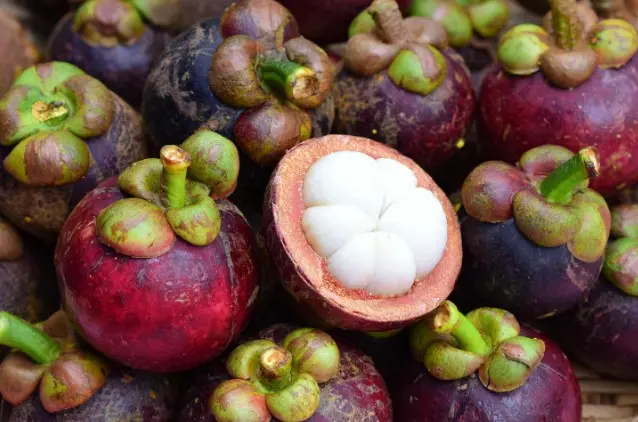
Manggis
Mangosteen
Garcinia mangostana
The "Queen of Fruits." A slow-growing, ultra-tropical tree that requires deep soil and a consistent environment to produce its prized snow-white fruit segments.
Care Guide
Light Requirements
Young trees (first 5 years) need 50% shade. Their root system is not yet developed enough to support full-sun transpiration. Mature trees thrive in full sun, which drives the carbohydrate production needed for the rich, dense fruit flesh.
Temperature
25°C - 35°C. Mangosteen is an ultra-tropical tree. Temperatures below 15°C can damage root cell membranes and effectively kill the tree. It requires consistent warmth year-round, which is why Malaysia is one of the few countries that can grow it successfully.
Humidity
High (80%+) is essential. Mangosteen originated in ultra-humid tropical rainforests. A dry season lasting more than 2-3 months without rainfall causes the tree to drop leaves and halt fruit development entirely.
🌧️ Good news for Malaysia: Your home's natural humidity is already helping. Focus on airflow instead to prevent fungal issues.
Soil Preference
Deep, fertile, well-draining loamy soil with abundant organic matter. Mangosteen roots are extremely sensitive. Heavy clay holds too much water and causes root rot, while sandy soil cannot hold enough moisture. The ideal is loam enriched with organic matter to balance moisture retention and drainage.
Watering & Fertilizer
Needs consistent moisture throughout the year. Irregular watering is the primary cause of Gamboge (yellow latex leaking into the fruit flesh, making it bitter and inedible). Fertilise twice a year with high-organic matter compost or manure. Mangosteen responds poorly to heavy synthetic fertilisers.
💭 Still unsure? Stick your finger 2 cm into the soil. If it feels dry, water. If it's moist, wait. You'll get it right.
General Care
Requires wind protection. The branches are brittle and heavy fruit can snap them in strong winds. Plant near a wall or other trees for shelter. Mangosteen grows only about 0.5-1 metre per year. Patience is essential. Grafted trees fruit after 5-7 years; seed-grown trees take 10-15 years.
Propagation
Mangosteen seeds are apomictic. They develop without fertilisation and are genetic clones of the mother tree. All seeds produce trees genetically identical to the parent. Grafting is possible but difficult because root and scion tissues are chemically incompatible unless carefully matched.
Pet Friendly?
The fruit flesh is safe for pets, though the thick tannic rind is indigestible and should not be consumed by animals in large amounts.
Medicinal Benefits
The rind (pericarp) is extraordinarily rich in xanthones. A class of polyphenol antioxidants. These compounds have shown anti-inflammatory, antifungal, and antibacterial properties in laboratory studies. The rind is traditionally used for skin infections and diarrhea in Southeast Asian medicine.
Other Uses
The dark purple rind contains mangostin dye, historically used to dye silk and cotton fabric. The bark was also used in traditional Malay medicine for treating various ailments and as a natural astringent.
Pests & Diseases
Gamboge disorder: yellow latex seeps into the fruit flesh making segments bitter and inedible. This is NOT a pathogen but a physiological stress response caused by irregular watering or physical damage. Prevention: consistent watering schedule and wind protection from the time fruit begins to develop.
Smart Tanam Tip
"The "petals" visible on the bottom of each fruit (the stigma lobes) form during the very first week of fruit development and directly correspond to the number of segments inside. A fruit with 6 lobes has exactly 6 white segments inside. This holds true in almost all cases. a reliable trick for curious gardeners!"
Common Mistakes in Malaysia
- Overwatering due to high humidity: Malaysia's moisture-rich air means soil dries slower. Most plant deaths come from root rot, not underwatering.
- Poor airflow: High humidity + still air = fungal issues. Move plants where air circulates naturally (near windows, not in corners).
- Ignoring the monsoon season: During heavy rain, reduce watering. Your plant is already getting moisture from the environment.
- Direct afternoon sun: Malaysian midday sun is intense. Even sun-loving plants can scorch. Morning sun is best.
Tips for Malaysia's Climate
- Use well-draining soil: Add perlite or cocopeat. Heavy soil + humidity = rot. Your soil should dry out between waterings.
- Water in the morning: Wet foliage at night is a recipe for fungal problems in humid climates. Early morning watering lets leaves dry quickly.
- Repot in spring: Before the dry season, refresh soil to prevent salt buildup and improve drainage.
- Watch for pests during monsoon: Wet season brings aphids, spider mites, and scale insects. Check undersides of leaves weekly.
- Increase airflow: Place a small fan nearby if the plant is indoors. Circulating air prevents humidity-related issues.
© 2026 Tanam Je. All rights reserved.
Disclaimer: Tanam Je is an educational resource. Plant care outcomes vary by environment, weather, and handling. Tanam Je is not liable for plant loss or related damages.