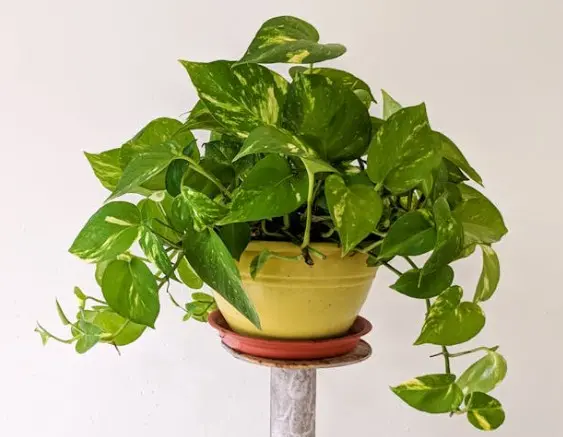
Money Plant
Golden Pothos
Epipremnum aureum
A fast-growing vine with heart-shaped, variegated leaves. It is versatile, growing well in soil or water, and is a staple in Malaysian homes and offices.
Care Guide
Light Requirements
Bright indirect light preserves the yellow variegation. Variegated leaves have fewer chlorophyll spots, so they need more light to make enough food. Shade = solid green because the plant adapts by losing the variegation pattern to maximize light capture.
Temperature
18°C - 32°C works well. Avoid air conditioner vents because rapid temperature drops stress the plant and cause leaf drop.
Humidity
Naturally climbs trees in rainforests (60%+), so it prefers humidity. But unlike tropical ferns, it adapts to drier indoor air. Vines are tough.
🌧️ Good news for Malaysia: Your home's natural humidity is already helping. Focus on airflow instead to prevent fungal issues.
Soil Preference
Loose soil drains fast but stays moist enough to feed roots. The balance mimics what happens on forest trees where vines root into loose bark-covered soil.
Watering & Fertilizer
Water when the top inch is dry. Vines are climbers so they don't sit in wet soil naturally. Balanced fertilizer every 2 months feeds the constant new growth (money plant grows year-round in the right conditions).
💭 Still unsure? Stick your finger 2 cm into the soil. If it feels dry, water. If it's moist, wait. You'll get it right.
General Care
Trimming triggers branching by removing the apical (tip) growth hormone. New side shoots replace the cut vine, making it bushier instead of a long single vine.
Propagation
Nodes (the bumps on stems) already have latent root buds. Water wakes them up in days because water + warmth + humidity = perfect germination conditions for roots.
Pet Friendly?
Calcium oxalate crystals physically irritate mouth and throat. When chewed, these needle-like crystals pierce tissue, causing pain and swelling.
Medicinal Benefits
The plant itself has minimal medicinal value. It's celebrated for air purification, not healing.
Other Uses
Studies show it filters formaldehyde, xylene, and benzene from air in controlled labs, though real-world impact in homes is less dramatic.
Pests & Diseases
Mealybugs hide on nodes and leaf joints because it's warm and protected there. Overwatering = root rot = yellowing leaves + mushy stems (classic rot symptoms).
Smart Tanam Tip
"Climbing growth makes bigger leaves. When vines climb and mature, they shift into a more mature growth form that often produces larger leaves. Horizontal or hanging vines usually keep smaller juvenile-style leaves."
Common Mistakes in Malaysia
- Overwatering due to high humidity: Malaysia's moisture-rich air means soil dries slower. Most plant deaths come from root rot, not underwatering.
- Poor airflow: High humidity + still air = fungal issues. Move plants where air circulates naturally (near windows, not in corners).
- Ignoring the monsoon season: During heavy rain, reduce watering. Your plant is already getting moisture from the environment.
- Direct afternoon sun: Malaysian midday sun is intense. Even sun-loving plants can scorch. Morning sun is best.
Tips for Malaysia's Climate
- Use well-draining soil: Add perlite or cocopeat. Heavy soil + humidity = rot. Your soil should dry out between waterings.
- Water in the morning: Wet foliage at night is a recipe for fungal problems in humid climates. Early morning watering lets leaves dry quickly.
- Repot in spring: Before the dry season, refresh soil to prevent salt buildup and improve drainage.
- Watch for pests during monsoon: Wet season brings aphids, spider mites, and scale insects. Check undersides of leaves weekly.
- Increase airflow: Place a small fan nearby if the plant is indoors. Circulating air prevents humidity-related issues.
© 2026 Tanam Je. All rights reserved.
Disclaimer: Tanam Je is an educational resource. Plant care outcomes vary by environment, weather, and handling. Tanam Je is not liable for plant loss or related damages.