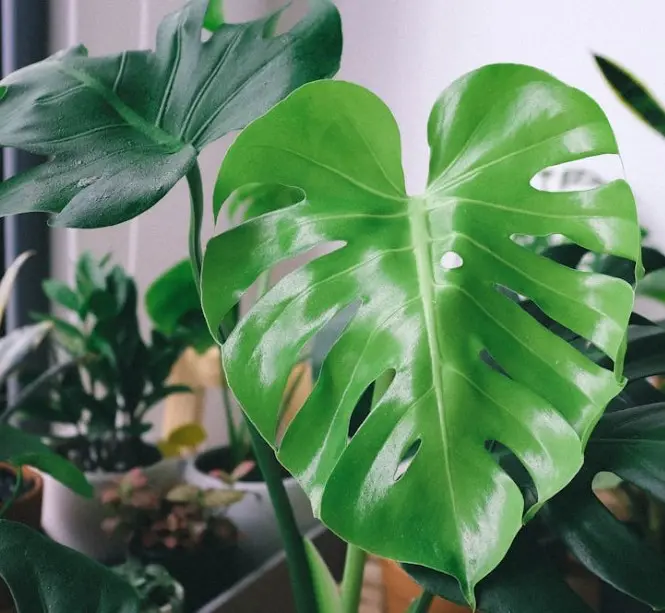
Monstera
Swiss Cheese Plant
Monstera deliciosa
Recognized by its iconic fenestrated (split) leaves, the Monstera is the ultimate statement plant for modern interiors. Native to Central American rainforests, it adapts vigorously to Malaysian indoor conditions and can develop dramatically large leaves given bright filtered light and support to climb.
Care Guide
Light Requirements
Bright indirect light helps the plant make large mature leaves. Too much direct sun burns the soft leaf surface, while too little light keeps the plant in a more juvenile stage with fewer or no splits.
Temperature
18°C - 30°C suits it well because Monstera is a tropical climber. Stable warmth keeps root growth and leaf expansion active.
Humidity
High humidity is best because broad thin leaves lose water faster than thick succulent leaves. If air is too dry, new leaves may unfurl slowly or tear.
🌧️ Good news for Malaysia: Your home's natural humidity is already helping. Focus on airflow instead to prevent fungal issues.
Soil Preference
Use loose, airy soil that drains well but still holds some moisture. That matches the rich, airy forest floor where its roots spread naturally.
Watering & Fertilizer
Water when the top 2 inches of soil feel dry. This keeps the roots evenly supplied without leaving them soggy. Feed monthly in active growth because large leaves need a steady nutrient supply.
💭 Still unsure? Stick your finger 2 cm into the soil. If it feels dry, water. If it's moist, wait. You'll get it right.
General Care
Clean the leaves and give it a moss pole. In nature it climbs trees, and climbing encourages stronger stems, larger leaves, and more mature-looking foliage.
Propagation
Stem cuttings need at least one node because nodes are the points where new roots and shoots can form. An aerial root gives the cutting a head start.
Pet Friendly?
Contains calcium oxalate crystals, tiny sharp structures the plant uses for defense. These irritate the mouth and throat if chewed.
Medicinal Benefits
No recognized medicinal benefits; primarily ornamental.
Other Uses
Its dramatic leaves are the main attraction indoors, though the species can produce edible fruit when fully mature in the right outdoor conditions.
Pests & Diseases
Thrips are a common problem because they feed on soft new growth and hide under leaves. Silver streaks and distorted young leaves are early warning signs.
Smart Tanam Tip
"If new leaves stay small and solid, the plant is usually telling you it wants more light, more support, or both."
Common Mistakes in Malaysia
- Overwatering due to high humidity: Malaysia's moisture-rich air means soil dries slower. Most plant deaths come from root rot, not underwatering.
- Poor airflow: High humidity + still air = fungal issues. Move plants where air circulates naturally (near windows, not in corners).
- Ignoring the monsoon season: During heavy rain, reduce watering. Your plant is already getting moisture from the environment.
- Direct afternoon sun: Malaysian midday sun is intense. Even sun-loving plants can scorch. Morning sun is best.
Tips for Malaysia's Climate
- Use well-draining soil: Add perlite or cocopeat. Heavy soil + humidity = rot. Your soil should dry out between waterings.
- Water in the morning: Wet foliage at night is a recipe for fungal problems in humid climates. Early morning watering lets leaves dry quickly.
- Repot in spring: Before the dry season, refresh soil to prevent salt buildup and improve drainage.
- Watch for pests during monsoon: Wet season brings aphids, spider mites, and scale insects. Check undersides of leaves weekly.
- Increase airflow: Place a small fan nearby if the plant is indoors. Circulating air prevents humidity-related issues.
© 2026 Tanam Je. All rights reserved.
Disclaimer: Tanam Je is an educational resource. Plant care outcomes vary by environment, weather, and handling. Tanam Je is not liable for plant loss or related damages.