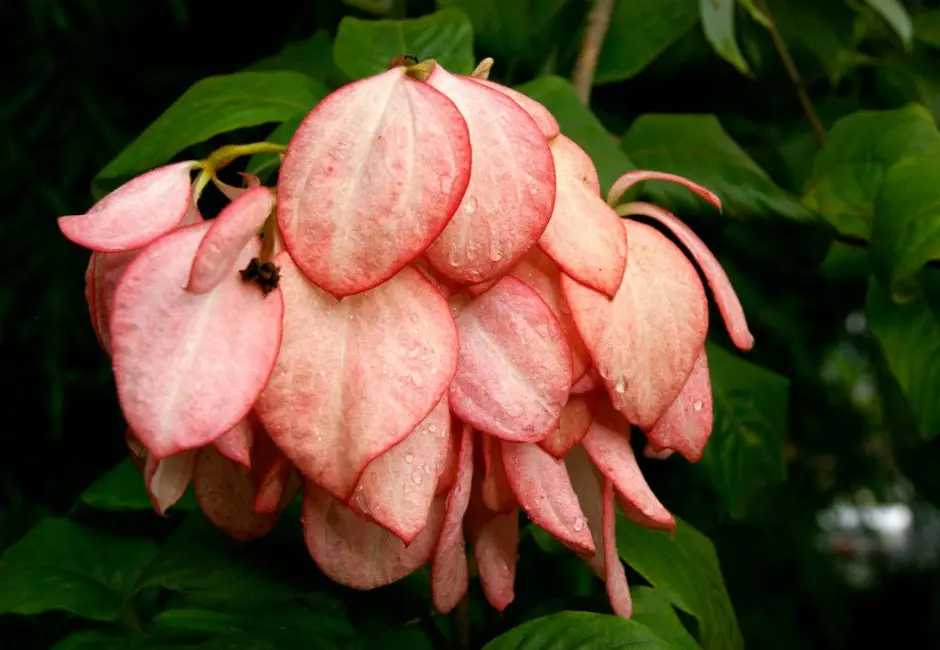
Mussaenda
Mussaenda
Mussaenda spp.
Mussaenda is a tropical flowering shrub producing oversized, colorful sepals (bracts) in pink, white, red, or yellow that surround small yellow flowers. A low-maintenance ornamental widely planted along Malaysian roadsides, in parks, and in home gardens for its long, showy flowering season.
Care Guide
Light Requirements
Full sun is ideal for maximum bract colour and density. The colourful "petals" you see are actually enlarged sepals (bracts), not true petals. More sun intensifies the pigment in these bracts. In partial shade, bracts become paler and fewer in number, though the plant still survives and blooms.
Temperature
20°C - 30°C. Thrives in Malaysia year-round climate. Mussaenda is a tropical shrub that naturally grows in humid tropical forests. Malaysia climate matches its native conditions almost perfectly.
Humidity
60% - 80%. Tolerates Malaysia typical outdoor humidity. Excessively dry conditions cause bract edges to become papery and brown, reducing the visual impact.
🌧️ Good news for Malaysia: Your home's natural humidity is already helping. Focus on airflow instead to prevent fungal issues.
Soil Preference
Well-draining, fertile soil slightly acidic to neutral (pH 6.0-6.8). Slightly acidic conditions help with nutrient uptake, particularly iron and manganese needed for the vivid pigments in the bracts.
Watering & Fertilizer
Water regularly to keep soil moist but not waterlogged. Roots need oxygen between waterings. Fertilise monthly with a phosphorus-rich blend, as phosphorus supports flower and bract development. A potassium boost before blooming season improves bract size and colour intensity.
💭 Still unsure? Stick your finger 2 cm into the soil. If it feels dry, water. If it's moist, wait. You'll get it right.
General Care
Prune immediately after the main flowering season ends. Mussaenda blooms on new wood (growth produced in the current season). Hard pruning after flowering triggers a vigorous flush of new stems that will carry the next season bracts. Without regular pruning, the plant becomes tall, woody, and sparse.
Propagation
Semi-hardwood stem cuttings (15-20cm) root readily in 3-4 weeks in Malaysia warmth. Take cuttings just below a node (the point where a leaf joins the stem) and remove all but the top 2-3 leaves to reduce water loss during rooting.
Pet Friendly?
Not well-studied for pet safety. Some Mussaenda species contain alkaloids as a chemical defence mechanism. Keep away from pets as a precaution until more data is available.
Medicinal Benefits
Leaves and roots of some Mussaenda species are used in traditional African and Asian medicine for fever treatment. Research has identified alkaloid compounds with some antimicrobial activity, though clinical evidence is limited.
Other Uses
Widely used as a landscape ornamental shrub and low hedge in Malaysian gardens, parks, and roadsides. The large, colourful bracts last weeks on the plant and are also used in floral arrangements.
Pests & Diseases
Aphids colonise new shoot tips and flower buds in dense clusters, feeding on phloem sap and excreting sticky honeydew. Whiteflies congregate on leaf undersides and fly up in clouds when disturbed. Both are controlled with regular neem oil spray applied in the evening.
Smart Tanam Tip
"The colourful "flower" in Mussaenda is actually an enlarged bract. A modified leaf that surrounds and advertises the tiny true flowers at the center. This bract evolved specifically to attract pollinators from a distance. The white-bracted variety (known as "Queen Sirikit" in Malaysia) is the most popular for garden landscaping."
Common Mistakes in Malaysia
- Overwatering due to high humidity: Malaysia's moisture-rich air means soil dries slower. Most plant deaths come from root rot, not underwatering.
- Poor airflow: High humidity + still air = fungal issues. Move plants where air circulates naturally (near windows, not in corners).
- Ignoring the monsoon season: During heavy rain, reduce watering. Your plant is already getting moisture from the environment.
- Direct afternoon sun: Malaysian midday sun is intense. Even sun-loving plants can scorch. Morning sun is best.
Tips for Malaysia's Climate
- Use well-draining soil: Add perlite or cocopeat. Heavy soil + humidity = rot. Your soil should dry out between waterings.
- Water in the morning: Wet foliage at night is a recipe for fungal problems in humid climates. Early morning watering lets leaves dry quickly.
- Repot in spring: Before the dry season, refresh soil to prevent salt buildup and improve drainage.
- Watch for pests during monsoon: Wet season brings aphids, spider mites, and scale insects. Check undersides of leaves weekly.
- Increase airflow: Place a small fan nearby if the plant is indoors. Circulating air prevents humidity-related issues.
© 2026 Tanam Je. All rights reserved.
Disclaimer: Tanam Je is an educational resource. Plant care outcomes vary by environment, weather, and handling. Tanam Je is not liable for plant loss or related damages.