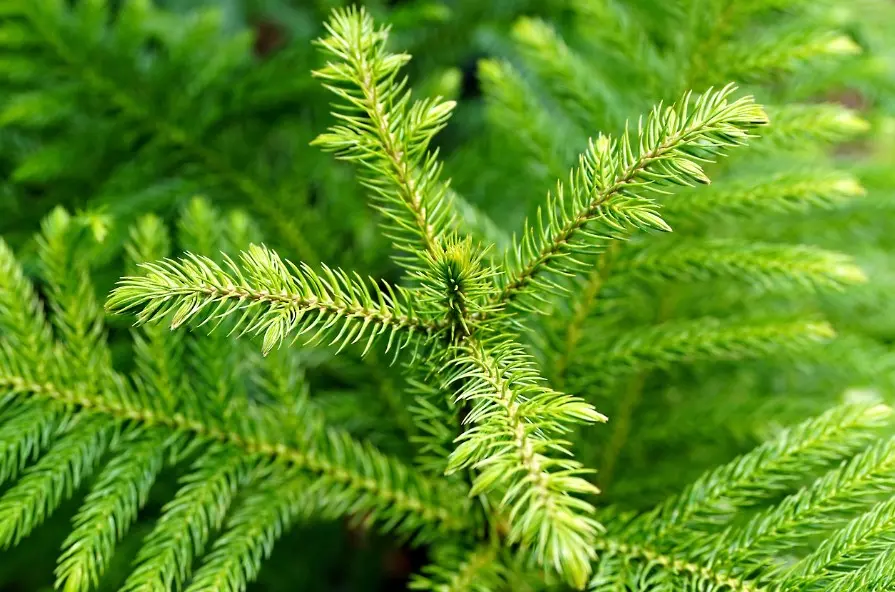
Norfolk Island Pine
Norfolk Island Pine
Araucaria heterophylla
A symmetrical, conifer-like tree with soft, needle-like foliage arranged in neat horizontal layers. Native to subtropical regions, it is commonly grown indoors as a decorative plant and sometimes used as a living Christmas tree. Although it resembles a pine, it is not a true pine and prefers warmer, humid environments.
Care Guide
Light Requirements
Bright indirect light; can tolerate some direct morning sun. Norfolk Island Pine can survive lower light for a while, but performance drops as energy production falls, so growth becomes slower and softer.
Temperature
16°C - 24°C indoors; avoid extreme heat or cold. Norfolk Island Pine handles Malaysian warmth well, but sudden cold drafts or heat spikes can shock tissues and slow recovery.
Humidity
Moderate to high (50% - 70%). Norfolk Island Pine benefits from humid air, but leaves should still dry between wet periods to reduce fungal pressure.
🌧️ Good news for Malaysia: Your home's natural humidity is already helping. Focus on airflow instead to prevent fungal issues.
Soil Preference
Loose, well-draining potting mix (e.g., cocopeat or peat-based mix with perlite). Norfolk Island Pine roots need both moisture and oxygen, so drainage and structure are as important as fertility.
Watering & Fertilizer
Keep soil evenly moist but not waterlogged; reduce watering in cooler months. Use moisture checks for Norfolk Island Pine instead of routine overwatering. Root systems need fresh oxygen between watering cycles to stay healthy.
💭 Still unsure? Stick your finger 2 cm into the soil. If it feels dry, water. If it's moist, wait. You'll get it right.
General Care
Sensitive to dry air and sudden changes; may drop lower branches if stressed. Cannot regenerate new branches once lost (important!).
Propagation
Seeds (difficult indoors). Norfolk Island Pine establishes faster when propagation material is fresh and disease-free, with gentle humidity and no waterlogging.
Pet Friendly?
Generally considered non-toxic to pets.
Medicinal Benefits
None.
Other Uses
Indoor decoration and seasonal ornamental tree.
Pests & Diseases
Spider mites, scale insects, root rot from overwatering. Norfolk Island Pine is easier to protect with routine scouting and airflow management, because pests and fungal spots spread fast in stagnant humid conditions.
Smart Tanam Tip
"Increase humidity with misting or a humidifier to prevent browning tips."
Common Mistakes in Malaysia
- Overwatering due to high humidity: Malaysia's moisture-rich air means soil dries slower. Most plant deaths come from root rot, not underwatering.
- Poor airflow: High humidity + still air = fungal issues. Move plants where air circulates naturally (near windows, not in corners).
- Ignoring the monsoon season: During heavy rain, reduce watering. Your plant is already getting moisture from the environment.
- Direct afternoon sun: Malaysian midday sun is intense. Even sun-loving plants can scorch. Morning sun is best.
Tips for Malaysia's Climate
- Use well-draining soil: Add perlite or cocopeat. Heavy soil + humidity = rot. Your soil should dry out between waterings.
- Water in the morning: Wet foliage at night is a recipe for fungal problems in humid climates. Early morning watering lets leaves dry quickly.
- Repot in spring: Before the dry season, refresh soil to prevent salt buildup and improve drainage.
- Watch for pests during monsoon: Wet season brings aphids, spider mites, and scale insects. Check undersides of leaves weekly.
- Increase airflow: Place a small fan nearby if the plant is indoors. Circulating air prevents humidity-related issues.
© 2026 Tanam Je. All rights reserved.
Disclaimer: Tanam Je is an educational resource. Plant care outcomes vary by environment, weather, and handling. Tanam Je is not liable for plant loss or related damages.