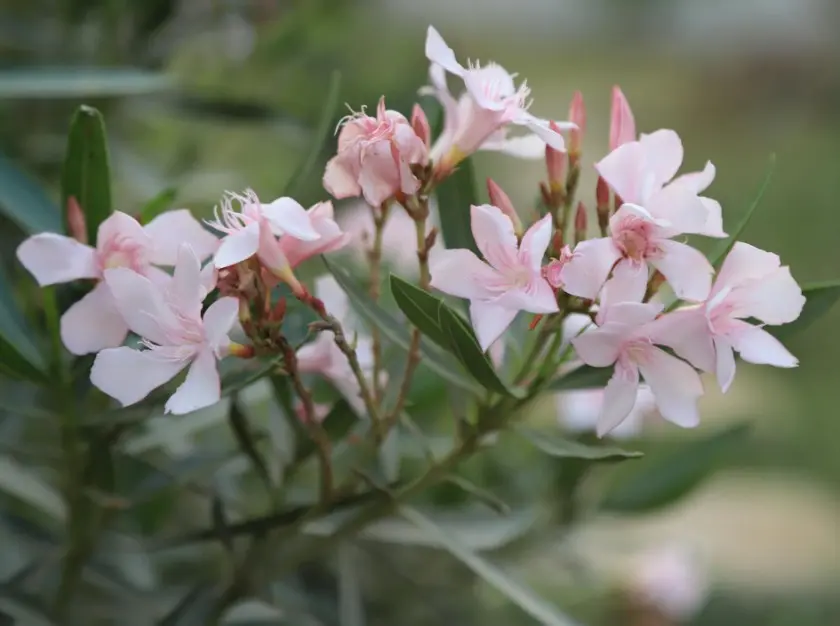
Oleander
Oleander
Nerium oleander
Oleander (Nerium oleander) is a resilient, drought-tolerant flowering shrub producing showy clusters of blooms in red, pink, white, or yellow. It thrives in full Malaysian sun and is commonly planted along highway dividers and in public parks. Beautiful but extremely toxic. all parts are dangerous if ingested.
Care Guide
Light Requirements
Full sun (4-6+ hours daily). Oleander blooms prolifically only in strong light. Shaded plants grow leggy and flower sparsely.
Temperature
15°C - 38°C. Oleander is extraordinarily heat-tolerant and handles even extreme tropical conditions better than almost any ornamental plant. This makes it a popular landscape choice in arid and hot regions worldwide.
Humidity
Very adaptable. Oleander tolerates both high and low humidity equally well. Once established, it is very drought-tolerant, making it suitable for xeriscaping (water-wise landscaping).
🌧️ Good news for Malaysia: Your home's natural humidity is already helping. Focus on airflow instead to prevent fungal issues.
Soil Preference
Well-draining, fertile soil. Oleander is not fussy about soil type and actually grows in poor soils where other plants struggle. It does not tolerate waterlogged or compacted soil.
Watering & Fertilizer
Water deeply during establishment. Once established (6+ months), oleander is extremely drought-tolerant and needs water only during extended dry seasons. Overfertilising produces lush foliage but fewer flowers. Fertilise sparingly or not at all once mature.
💭 Still unsure? Stick your finger 2 cm into the soil. If it feels dry, water. If it's moist, wait. You'll get it right.
General Care
Wear gloves ALWAYS when handling oleander. Every single cell contains cardiac glycosides (toxins that affect the heart). Sap can cause skin irritation. Prune after the main flush of flowering by removing crossing branches, deadwood, and weak growth.
Propagation
Stem cuttings root easily in 2-3 weeks. Dip in rooting hormone and keep moist. Rooted cuttings are typically ready to plant out within 1-2 months.
Pet Friendly?
Highly toxic to all animals and humans. A single leaf or small piece contains enough poison to seriously harm or kill a dog or child. Symptoms appear within hours: drooling, vomiting, abdominal pain, irregular heartbeat, and potentially death. There is no antidote. Only supportive care.
Medicinal Benefits
Not safe for any medicinal use. The cardiac glycosides are dangerous even in tiny amounts.
Other Uses
One of the most popular landscape shrubs in hot, dry climates for its heat tolerance, low maintenance, and continuous long-lasting flowers. Widely used for hedges, windbreaks, and erosion control.
Pests & Diseases
Oleander caterpillars are bright yellow and black; they feed on leaves. Aphids may cluster on tender shoots. Scale insects can appear on older stems. Oleander is generally disease-resistant.
Smart Tanam Tip
"Never EVER burn pruned oleander material. The smoke contains vaporised toxins that can cause severe respiratory irritation. Dispose of trimmings in solid waste or deep bury. This is one of the few plants where safe disposal is as important as safe handling."
Common Mistakes in Malaysia
- Overwatering due to high humidity: Malaysia's moisture-rich air means soil dries slower. Most plant deaths come from root rot, not underwatering.
- Poor airflow: High humidity + still air = fungal issues. Move plants where air circulates naturally (near windows, not in corners).
- Ignoring the monsoon season: During heavy rain, reduce watering. Your plant is already getting moisture from the environment.
- Direct afternoon sun: Malaysian midday sun is intense. Even sun-loving plants can scorch. Morning sun is best.
Tips for Malaysia's Climate
- Use well-draining soil: Add perlite or cocopeat. Heavy soil + humidity = rot. Your soil should dry out between waterings.
- Water in the morning: Wet foliage at night is a recipe for fungal problems in humid climates. Early morning watering lets leaves dry quickly.
- Repot in spring: Before the dry season, refresh soil to prevent salt buildup and improve drainage.
- Watch for pests during monsoon: Wet season brings aphids, spider mites, and scale insects. Check undersides of leaves weekly.
- Increase airflow: Place a small fan nearby if the plant is indoors. Circulating air prevents humidity-related issues.
© 2026 Tanam Je. All rights reserved.
Disclaimer: Tanam Je is an educational resource. Plant care outcomes vary by environment, weather, and handling. Tanam Je is not liable for plant loss or related damages.