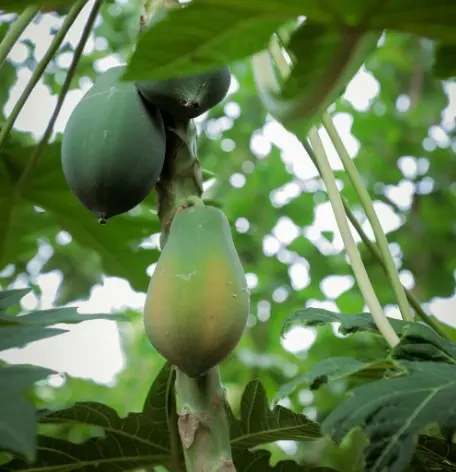
Betik
Papaya
Carica papaya
Papaya is a fast-growing tropical fruit tree that produces sweet, orange-fleshed fruits rich in vitamins A and C. One of the fastest and most productive fruit trees to grow in Malaysia.
Care Guide
Light Requirements
Full sun is essential because papaya grows fast and fruits early, which means it needs a lot of energy almost all the time.
Temperature
22°C - 32°C is ideal and matches Malaysian weather well. This plant grows quickly when warmth is steady.
Humidity
Malaysia's humidity is fine for papaya, but the roots must still have air. Humid air is not the problem; soggy soil is.
🌧️ Good news for Malaysia: Your home's natural humidity is already helping. Focus on airflow instead to prevent fungal issues.
Soil Preference
Use deep, fertile, well-draining soil. Papaya roots are fast-growing but sensitive, so they need both moisture and oxygen around them.
Watering & Fertilizer
Water regularly when young because papaya grows like a plant in a hurry. Once established, water deeply but do not keep the soil constantly wet. The trunk is soft and the roots rot easily if drainage is poor. Feed often because fast growth and constant fruiting use nutrients quickly.
💭 Still unsure? Stick your finger 2 cm into the soil. If it feels dry, water. If it's moist, wait. You'll get it right.
General Care
Stake young plants, remove extra suckers, and keep one strong trunk. That helps the plant focus its energy upward and support fruit better.
Propagation
Usually grown from seed because it germinates easily and grows fast, but it prefers to stay where it is planted because transplanting can shock the roots.
Pet Friendly?
Ripe fruit is generally safe in small amounts. Avoid unripe fruit and sap which may cause irritation.
Medicinal Benefits
Papaya contains papain (a proteolytic enzyme) used traditionally to support digestion. Leaves are widely used in traditional medicine, and early studies have explored possible effects on platelet trends in dengue, but clinical evidence remains inconclusive. Rich in vitamins A, C, and folate.
Other Uses
Ripe fruit eaten fresh or used in smoothies and desserts. Unripe green papaya used in salads (kerabu pepaya) and pickles. Leaves used as a vegetable or tea. Papain enzyme extracted commercially for meat tenderizers and pharmaceutical digestive supplements.
Pests & Diseases
Fruit flies, aphids, and mites are common, while papaya ringspot virus is especially serious because it weakens both leaves and fruit quality at the same time.
Smart Tanam Tip
"Papaya is fast-growing and fast-producing, but very sensitive. If your soil stays too wet, it can die quickly."
Common Mistakes in Malaysia
- Overwatering due to high humidity: Malaysia's moisture-rich air means soil dries slower. Most plant deaths come from root rot, not underwatering.
- Poor airflow: High humidity + still air = fungal issues. Move plants where air circulates naturally (near windows, not in corners).
- Ignoring the monsoon season: During heavy rain, reduce watering. Your plant is already getting moisture from the environment.
- Direct afternoon sun: Malaysian midday sun is intense. Even sun-loving plants can scorch. Morning sun is best.
Tips for Malaysia's Climate
- Use well-draining soil: Add perlite or cocopeat. Heavy soil + humidity = rot. Your soil should dry out between waterings.
- Water in the morning: Wet foliage at night is a recipe for fungal problems in humid climates. Early morning watering lets leaves dry quickly.
- Repot in spring: Before the dry season, refresh soil to prevent salt buildup and improve drainage.
- Watch for pests during monsoon: Wet season brings aphids, spider mites, and scale insects. Check undersides of leaves weekly.
- Increase airflow: Place a small fan nearby if the plant is indoors. Circulating air prevents humidity-related issues.
© 2026 Tanam Je. All rights reserved.
Disclaimer: Tanam Je is an educational resource. Plant care outcomes vary by environment, weather, and handling. Tanam Je is not liable for plant loss or related damages.