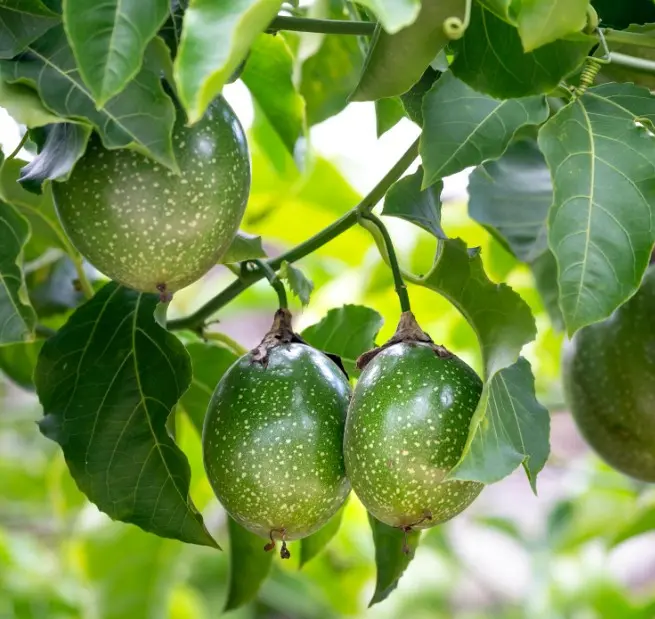
Markisa
Passion Fruit
Passiflora edulis
Passionfruit (Passiflora edulis) is a fast-growing tropical vine producing exotic, deeply aromatic fruits with a sweet-tart, seed-filled pulp. Malaysia's year-round warmth allows near-continuous fruiting, and the vine doubles as an ornamental climber with intricate purple and white flowers.
Care Guide
Light Requirements
Full sun (6+ hours daily) is required for good fruiting. Passionfruit needs strong light to fuel the intensive energy demand of producing both its dramatic flowers AND its fruit simultaneously. In partial shade, the plant grows vigorously as a vine but rarely fruits.
Temperature
18°C - 30°C. Thrives in Malaysia lowland and highland areas. In very hot lowland conditions (above 32°C consistently), flowering may reduce. Some afternoon shade helps in the hottest months.
Humidity
60% - 80%. Tolerates Malaysia typical outdoor humidity. Good air circulation around the vine is important. Stagnant humid air encourages fungal diseases, especially in dense, unpruned vines.
🌧️ Good news for Malaysia: Your home's natural humidity is already helping. Focus on airflow instead to prevent fungal issues.
Soil Preference
Deep, fertile, well-draining loamy soil. Passionfruit is a vigorous vine with deep, searching roots. Deep soil preparation (dig to 50cm) before planting improves establishment speed and fruit yield significantly.
Watering & Fertilizer
Keep soil consistently moist during the fruiting period. Moisture stress during fruit development causes premature fruit drop. Fertilise every 2-3 weeks with a high-potassium blend during flowering and fruiting. Potassium is the key nutrient for fruit size, juice content, and sweetness.
💭 Still unsure? Stick your finger 2 cm into the soil. If it feels dry, water. If it's moist, wait. You'll get it right.
General Care
Provide a strong trellis or fence. Passionfruit tendrils grip most surfaces, but the weight of fruit clusters can pull down weak supports. Prune annually after the main fruiting season by cutting back all the long, bare old growth. New vigorous shoots carry the most flowers and fruit.
Propagation
Stem cuttings root easily in 3-4 weeks in Malaysia warmth. Seeds germinate readily but produce variable plants where the parent variety characteristics may not be preserved. Cuttings are preferred for maintaining a known variety.
Pet Friendly?
Ripe fruit flesh is safe for pets. However, unripe fruit, leaves, and stems contain cyanogenic glycosides that can release cyanide when chewed. Keep pets from grazing on the vine.
Medicinal Benefits
Rich in Vitamin C, B vitamins, and dietary fiber. The juice has documented calming properties. The flavonoids chrysin and benzoflavone in passionfruit have mild sedative and anxiolytic (anxiety-reducing) effects. Traditionally used across Southeast Asia for anxiety and insomnia.
Other Uses
The juice is widely used in Malaysia for drinks, desserts, and cocktails. The dramatic flower is also ornamental. Nicknamed "Passion Flower" by Spanish missionaries who saw the flower structure as representing the Crucifixion (passio = suffering in Latin).
Pests & Diseases
Fruit borers tunnel into developing fruits. Aphids cluster on new shoot tips. Fusarium wilt is the most serious disease. A soil fungus that blocks water-conducting vessels in the stem, causing sudden wilting of entire sections. Good drainage and site rotation help prevent it.
Smart Tanam Tip
"Passionfruit vines tend to produce masses of growth but reduced fruit after 3-5 years as the main stems become woody and less productive. Renew the vine by taking cuttings from new green growth and starting fresh. Or prune hard to 30cm from the base to stimulate entirely new growth from the crown."
Common Mistakes in Malaysia
- Overwatering due to high humidity: Malaysia's moisture-rich air means soil dries slower. Most plant deaths come from root rot, not underwatering.
- Poor airflow: High humidity + still air = fungal issues. Move plants where air circulates naturally (near windows, not in corners).
- Ignoring the monsoon season: During heavy rain, reduce watering. Your plant is already getting moisture from the environment.
- Direct afternoon sun: Malaysian midday sun is intense. Even sun-loving plants can scorch. Morning sun is best.
Tips for Malaysia's Climate
- Use well-draining soil: Add perlite or cocopeat. Heavy soil + humidity = rot. Your soil should dry out between waterings.
- Water in the morning: Wet foliage at night is a recipe for fungal problems in humid climates. Early morning watering lets leaves dry quickly.
- Repot in spring: Before the dry season, refresh soil to prevent salt buildup and improve drainage.
- Watch for pests during monsoon: Wet season brings aphids, spider mites, and scale insects. Check undersides of leaves weekly.
- Increase airflow: Place a small fan nearby if the plant is indoors. Circulating air prevents humidity-related issues.
© 2026 Tanam Je. All rights reserved.
Disclaimer: Tanam Je is an educational resource. Plant care outcomes vary by environment, weather, and handling. Tanam Je is not liable for plant loss or related damages.