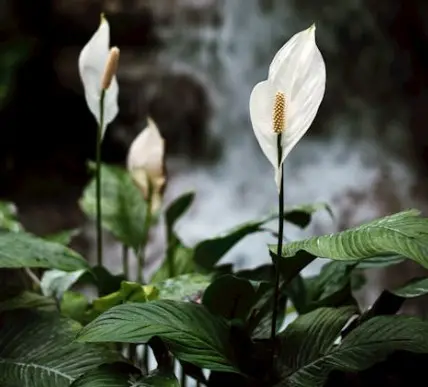
Peace Lily
Peace Lily
Spathiphyllum spp.
Peace Lilies are famous for their elegant white spathes and dark green foliage. They are communicative plants that let you know exactly when they are thirsty.
Care Guide
Light Requirements
Low to medium indirect light suits it because this plant naturally grows under a forest canopy. Direct sun easily scorches the soft leaves and white spathes.
Temperature
18°C - 27°C is ideal. Cold drafts stress the leaves and roots because this is a warm, shade-loving tropical plant.
Humidity
High humidity helps the leaves stay lush and prevents crispy edges. Grouping plants together works because nearby leaves release moisture into the surrounding air.
🌧️ Good news for Malaysia: Your home's natural humidity is already helping. Focus on airflow instead to prevent fungal issues.
Soil Preference
Use loose soil that stays lightly moist but still drains well. Peace Lily likes a steady drink, but stagnant wet soil quickly turns into root rot.
Watering & Fertilizer
Keep the soil evenly moist, not soggy. This plant wilts fast when thirsty because its large leaves lose water quickly, but it also hates roots sitting in mud.
💭 Still unsure? Stick your finger 2 cm into the soil. If it feels dry, water. If it's moist, wait. You'll get it right.
General Care
Remove old flowers at the base so the plant stops wasting energy on fading blooms and pushes that energy into fresh leaves and new flowers.
Propagation
Division is easiest because the plant grows in clumps. Each divided section already has roots and shoots, so it establishes quickly.
Pet Friendly?
Not a true lily, but it still contains irritating crystals that can cause pain, drooling, and mouth irritation in pets.
Medicinal Benefits
None. Primarily used for air purification.
Other Uses
Commonly used indoors to soften a room visually while also handling shaded corners better than many flowering houseplants.
Pests & Diseases
Usually low-maintenance, but fungus gnats and root rot appear fast if the soil stays waterlogged for too long.
Smart Tanam Tip
"A slight droop means “water me soon.” A full collapse means the plant was stressed harder than necessary."
Common Mistakes in Malaysia
- Overwatering due to high humidity: Malaysia's moisture-rich air means soil dries slower. Most plant deaths come from root rot, not underwatering.
- Poor airflow: High humidity + still air = fungal issues. Move plants where air circulates naturally (near windows, not in corners).
- Ignoring the monsoon season: During heavy rain, reduce watering. Your plant is already getting moisture from the environment.
- Direct afternoon sun: Malaysian midday sun is intense. Even sun-loving plants can scorch. Morning sun is best.
Tips for Malaysia's Climate
- Use well-draining soil: Add perlite or cocopeat. Heavy soil + humidity = rot. Your soil should dry out between waterings.
- Water in the morning: Wet foliage at night is a recipe for fungal problems in humid climates. Early morning watering lets leaves dry quickly.
- Repot in spring: Before the dry season, refresh soil to prevent salt buildup and improve drainage.
- Watch for pests during monsoon: Wet season brings aphids, spider mites, and scale insects. Check undersides of leaves weekly.
- Increase airflow: Place a small fan nearby if the plant is indoors. Circulating air prevents humidity-related issues.
© 2026 Tanam Je. All rights reserved.
Disclaimer: Tanam Je is an educational resource. Plant care outcomes vary by environment, weather, and handling. Tanam Je is not liable for plant loss or related damages.