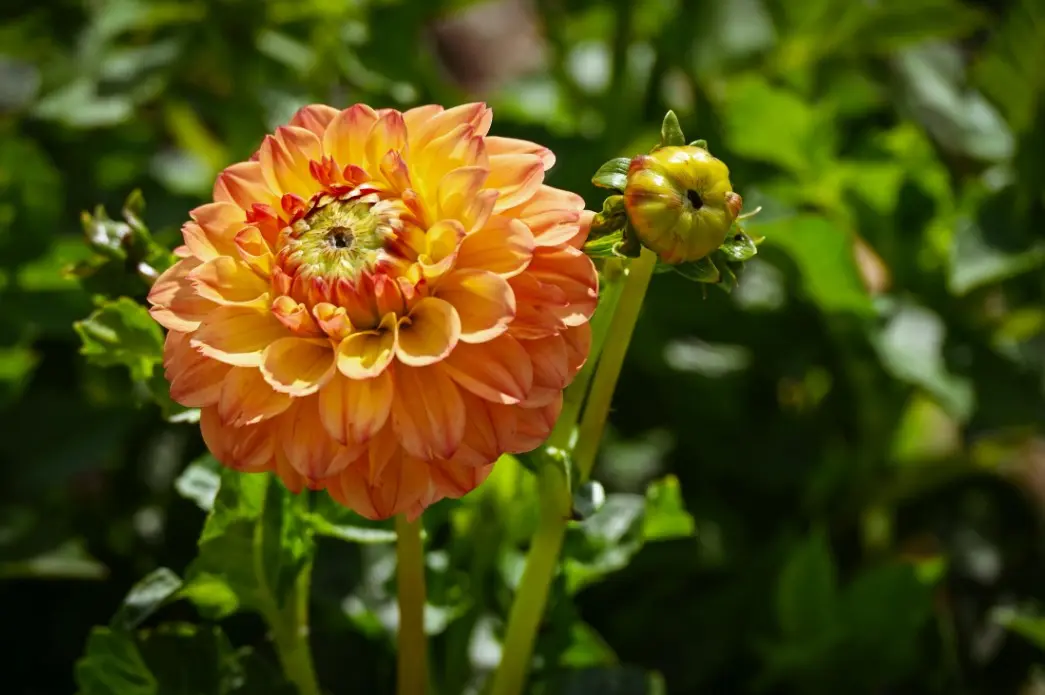
Pokok Dahlia
Dahlia
Dahlia pinnata
Pokok Dahlia is grown for its large, layered flowers in many colors. In Malaysia, it performs best in cooler highland areas or in lowlands with strong morning sun, afternoon shade, and excellent airflow.
Care Guide
Light Requirements
Full morning sun with light afternoon shade in hotter lowland areas. Dahlia needs strong light for bud formation, but harsh late-day heat can stress petals and shorten bloom life.
Temperature
18°C - 28°C is ideal. In Malaysia lowlands above 32°C for long periods, growth and flowering may decline unless the site is cooler and breezy.
Humidity
50% - 70%. High humidity is manageable if air movement is good; still humid air greatly increases fungal disease pressure on leaves and flower buds.
🌧️ Good news for Malaysia: Your home's natural humidity is already helping. Focus on airflow instead to prevent fungal issues.
Soil Preference
Loose, fertile, very well-draining soil rich in compost. Tubers are sensitive to prolonged wet soil and can rot quickly in compact, waterlogged media.
Watering & Fertilizer
Water deeply when the topsoil starts to dry, then let excess water drain fully. Feed every 2-3 weeks with a bloom-focused fertilizer higher in phosphorus and potassium during active flowering.
💭 Still unsure? Stick your finger 2 cm into the soil. If it feels dry, water. If it's moist, wait. You'll get it right.
General Care
Stake taller varieties early to prevent stem snapping in wind and rain. Remove spent blooms (deadheading) to redirect energy into continuous new flower production.
Propagation
Division of healthy tubers or stem cuttings. Divide only when each section has a clear growing eye for reliable regrowth.
Pet Friendly?
Dahlia is generally considered mildly toxic to pets and may cause stomach upset if chewed.
Medicinal Benefits
No major medicinal use in modern practice.
Other Uses
Excellent cut flower for home display, events, and bouquet work.
Pests & Diseases
Aphids, thrips, spider mites, powdery mildew, and botrytis in wet conditions. Preventive spacing, staking, and pruning for airflow are the most effective controls in Malaysia.
Smart Tanam Tip
"For lowland Malaysia, choose heat-tolerant cultivars and grow in raised beds or large pots to keep roots cooler and better drained."
Common Mistakes in Malaysia
- Overwatering due to high humidity: Malaysia's moisture-rich air means soil dries slower. Most plant deaths come from root rot, not underwatering.
- Poor airflow: High humidity + still air = fungal issues. Move plants where air circulates naturally (near windows, not in corners).
- Ignoring the monsoon season: During heavy rain, reduce watering. Your plant is already getting moisture from the environment.
- Direct afternoon sun: Malaysian midday sun is intense. Even sun-loving plants can scorch. Morning sun is best.
Tips for Malaysia's Climate
- Use well-draining soil: Add perlite or cocopeat. Heavy soil + humidity = rot. Your soil should dry out between waterings.
- Water in the morning: Wet foliage at night is a recipe for fungal problems in humid climates. Early morning watering lets leaves dry quickly.
- Repot in spring: Before the dry season, refresh soil to prevent salt buildup and improve drainage.
- Watch for pests during monsoon: Wet season brings aphids, spider mites, and scale insects. Check undersides of leaves weekly.
- Increase airflow: Place a small fan nearby if the plant is indoors. Circulating air prevents humidity-related issues.
© 2026 Tanam Je. All rights reserved.
Disclaimer: Tanam Je is an educational resource. Plant care outcomes vary by environment, weather, and handling. Tanam Je is not liable for plant loss or related damages.