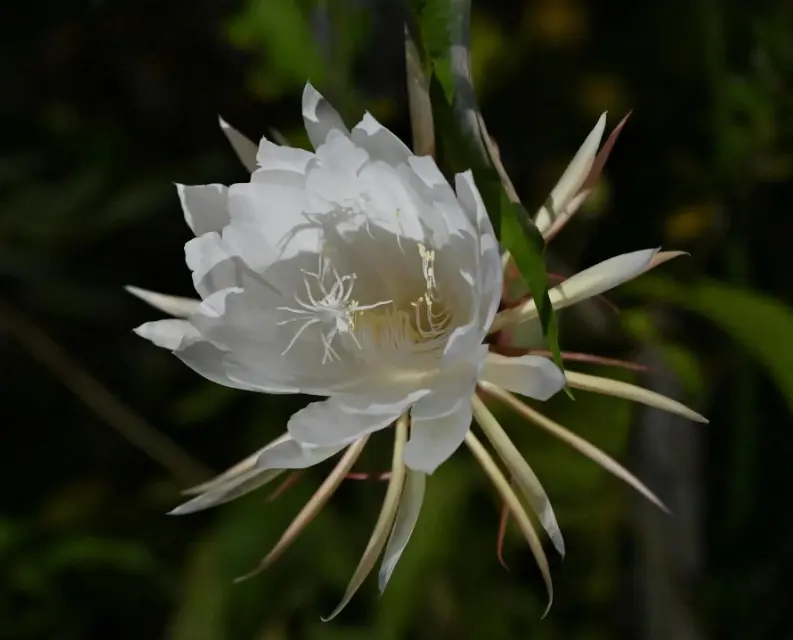
Ratu Malam
Queen of the Night
Epiphyllum oxypetalum
Queen of the Night (Epiphyllum oxypetalum) is a night-blooming epiphytic cactus that produces one of the most spectacular flowers in the plant world. large, pure-white, intensely fragrant blooms that open only after dark and wilt by dawn, lasting just a single night before fading.
Care Guide
Light Requirements
Bright filtered light. Queen of the Night is a tropical cactus that evolved in humid rainforest canopies, not deserts. It prefers dappled shade to direct sun, unlike typical cacti.
Temperature
18°C - 27°C. Tropical warmth is essential. Temperatures below 10°C can damage the tender stems.
Humidity
50% - 70%. Unlike desert cacti, Queen of the Night appreciates humidity and should never fully dry out.
🌧️ Good news for Malaysia: Your home's natural humidity is already helping. Focus on airflow instead to prevent fungal issues.
Soil Preference
Well-draining, airy soil with organic matter: cactus mix + compost. The soil must drain freely but retain some moisture. The roots are less adapted to severe drying than in desert cacti.
Watering & Fertilizer
Water when the top 2-3cm of soil is dry to the touch. Do not allow the soil to completely dry out for extended periods (unlike desert cacti). In Malaysia, slightly reduce watering during extended rainy or cloudy spells so the roots stay airy. Fertilise monthly with a diluted cactus/succulent fertiliser while the plant is actively producing new growth and buds.
💭 Still unsure? Stick your finger 2 cm into the soil. If it feels dry, water. If it's moist, wait. You'll get it right.
General Care
Queen of the Night grows well in Malaysia's warm, humid climate when it gets bright filtered light, good airflow, and a short rest from heavy watering before budding. Rather than needing a cold dormancy, mature plants usually flower better after a slightly drier period followed by regular watering and feeding. Protect it from harsh afternoon sun and from rainwater sitting around the roots for days.
Propagation
Cuttings root easily in 3-4 weeks in warm, humid conditions. Take 10-15cm segments, let the cut end dry and callous over for 1-2 days, then plant in moist, well-draining soil.
Pet Friendly?
Generally considered non-toxic, though the plant structure itself (spines, hard stems) poses a physical hazard to curious pets.
Medicinal Benefits
No proven medicinal benefits, though some traditional uses exist.
Other Uses
Prized by succulent collectors for the rare, extraordinary night-blooming flowers. The spectacular white blooms open only at night and close by dawn.
Pests & Diseases
Generally pest-free. Mealybugs can appear if humidity is too high or air circulation poor. Scale insects may cluster on stems.
Smart Tanam Tip
"The night-blooming cycle is an adaptation to bat pollination. The flowers open precisely at dusk, release their sweet fragrance, and allow nectar-feeding bats to pollinate them before the flowers close at dawn. If your Queen of the Night blooms, sit outside at dusk and watch the flowers open. It is a remarkable natural event. The blooms last only one night, but in Malaysia a mature plant often flowers in waves after periods of strong growth followed by a slightly drier spell."
Common Mistakes in Malaysia
- Overwatering due to high humidity: Malaysia's moisture-rich air means soil dries slower. Most plant deaths come from root rot, not underwatering.
- Poor airflow: High humidity + still air = fungal issues. Move plants where air circulates naturally (near windows, not in corners).
- Ignoring the monsoon season: During heavy rain, reduce watering. Your plant is already getting moisture from the environment.
- Direct afternoon sun: Malaysian midday sun is intense. Even sun-loving plants can scorch. Morning sun is best.
Tips for Malaysia's Climate
- Use well-draining soil: Add perlite or cocopeat. Heavy soil + humidity = rot. Your soil should dry out between waterings.
- Water in the morning: Wet foliage at night is a recipe for fungal problems in humid climates. Early morning watering lets leaves dry quickly.
- Repot in spring: Before the dry season, refresh soil to prevent salt buildup and improve drainage.
- Watch for pests during monsoon: Wet season brings aphids, spider mites, and scale insects. Check undersides of leaves weekly.
- Increase airflow: Place a small fan nearby if the plant is indoors. Circulating air prevents humidity-related issues.
© 2026 Tanam Je. All rights reserved.
Disclaimer: Tanam Je is an educational resource. Plant care outcomes vary by environment, weather, and handling. Tanam Je is not liable for plant loss or related damages.