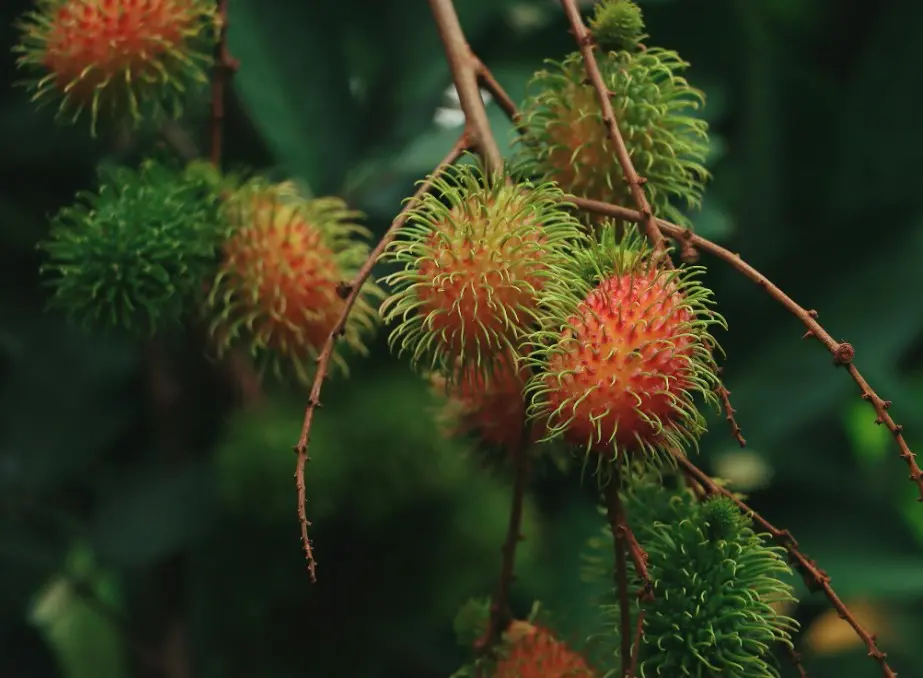
Rambutan
Rambutan
Nephelium lappaceum
Rambutan is a popular tropical fruit tree with distinctive hairy red or yellow skin and sweet, juicy translucent flesh. Closely related to lychee and longan, it's a staple of Malaysian home orchards and commercial plantations.
Care Guide
Light Requirements
Young trees appreciate some protection, but mature rambutan fruits best in full sun. Strong light helps the tree support heavy fruit clusters and sweeter flesh.
Temperature
22°C - 32°C is ideal. Rambutan likes steady tropical warmth and does not enjoy cold stress. Rambutan handles Malaysian warmth well, but sudden cold drafts or heat spikes can shock tissues and slow recovery.
Humidity
High humidity suits rambutan naturally, which is one reason it performs well in Malaysia. Still, airflow matters during flowering and fruiting.
🌧️ Good news for Malaysia: Your home's natural humidity is already helping. Focus on airflow instead to prevent fungal issues.
Soil Preference
Use deep, fertile, moisture-holding soil that still drains well. Rambutan likes steady moisture, but stagnant water weakens roots and disease resistance.
Watering & Fertilizer
Keep the soil moist, especially when flowers and fruit are forming. At those stages the tree needs a steady water and nutrient supply so it does not drop fruit early.
💭 Still unsure? Stick your finger 2 cm into the soil. If it feels dry, water. If it's moist, wait. You'll get it right.
General Care
Prune to open the canopy and keep the tree manageable. Better light and airflow improve flowering, reduce disease, and make harvesting easier.
Propagation
Air layering and grafting are preferred when you want reliable fruit quality. Seeds can grow well, but they are slower and less predictable.
Pet Friendly?
Rambutan flesh is not toxic to pets. However, the seed contains saponins and should not be consumed by pets or humans in raw form. Keep seeds away from animals.
Medicinal Benefits
Rich in vitamin C, copper, and manganese. Peel extracts have shown antioxidant and anti-diabetic activity in research. Seeds have been studied for fatty acid content. Leaves used in traditional medicine for headache relief.
Other Uses
Fruit eaten fresh or canned. Used in desserts, jams, and juices. Popular at Malaysian roadside stalls. Peel and seeds used in traditional medicine. Jenis R162, R3, and Ayer Mas are popular Malaysian commercial varieties.
Pests & Diseases
Fruit borers, mealybugs, and scale are common, while flower and fruit diseases become worse when the canopy stays too dense and damp.
Smart Tanam Tip
"Rambutan often fruits better when the tree is open and balanced, not overgrown. A crowded canopy traps moisture and reduces both fruit quality and flower health."
Common Mistakes in Malaysia
- Overwatering due to high humidity: Malaysia's moisture-rich air means soil dries slower. Most plant deaths come from root rot, not underwatering.
- Poor airflow: High humidity + still air = fungal issues. Move plants where air circulates naturally (near windows, not in corners).
- Ignoring the monsoon season: During heavy rain, reduce watering. Your plant is already getting moisture from the environment.
- Direct afternoon sun: Malaysian midday sun is intense. Even sun-loving plants can scorch. Morning sun is best.
Tips for Malaysia's Climate
- Use well-draining soil: Add perlite or cocopeat. Heavy soil + humidity = rot. Your soil should dry out between waterings.
- Water in the morning: Wet foliage at night is a recipe for fungal problems in humid climates. Early morning watering lets leaves dry quickly.
- Repot in spring: Before the dry season, refresh soil to prevent salt buildup and improve drainage.
- Watch for pests during monsoon: Wet season brings aphids, spider mites, and scale insects. Check undersides of leaves weekly.
- Increase airflow: Place a small fan nearby if the plant is indoors. Circulating air prevents humidity-related issues.
© 2026 Tanam Je. All rights reserved.
Disclaimer: Tanam Je is an educational resource. Plant care outcomes vary by environment, weather, and handling. Tanam Je is not liable for plant loss or related damages.