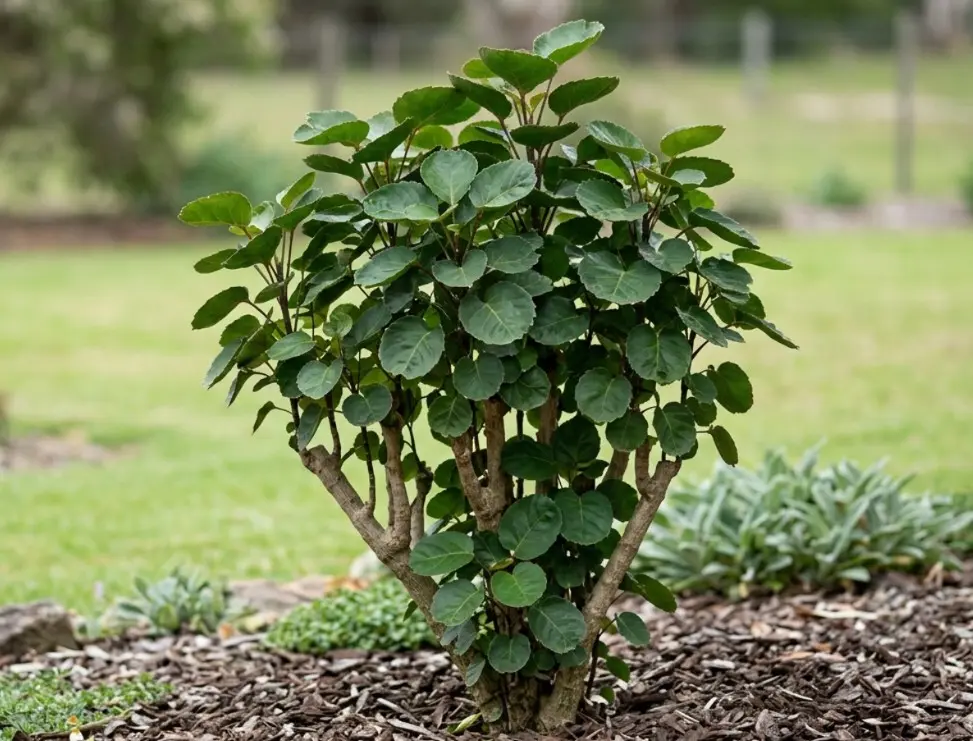
Shield Aralia
Shield Aralia
Polyscias scutellaria
A tropical ornamental plant with rounded, glossy leaves that resemble shields. It is often used as a decorative foliage plant and can be grown both indoors and outdoors in warm climates.
Care Guide
Light Requirements
Bright indirect light. Shield Aralia can survive lower light for a while, but performance drops as energy production falls, so growth becomes slower and softer.
Temperature
20°C - 32°C. Shield Aralia handles Malaysian warmth well, but sudden cold drafts or heat spikes can shock tissues and slow recovery.
Humidity
Moderate to high. Shield Aralia tolerates local humidity better when air movement is good; stale humid air is where fungal trouble usually starts.
🌧️ Good news for Malaysia: Your home's natural humidity is already helping. Focus on airflow instead to prevent fungal issues.
Soil Preference
Loose, well-draining potting mix (e.g., cocopeat or peat-based mix with perlite). For Shield Aralia, loose structure prevents root suffocation; compact wet soil traps water and cuts off root oxygen.
Watering & Fertilizer
Keep soil slightly moist. Shield Aralia does better with wet-dry balance than constant saturation. Overwatering blocks root aeration, then yellowing and stunting follow.
💭 Still unsure? Stick your finger 2 cm into the soil. If it feels dry, water. If it's moist, wait. You'll get it right.
General Care
Sensitive to sudden changes in environment and pruning helps maintain compact shape. For Shield Aralia, timely pruning and hygiene are preventive care: better airflow, fewer weak shoots, and steadier growth quality.
Propagation
Cuttings. Shield Aralia establishes faster when propagation material is fresh and disease-free, with gentle humidity and no waterlogging.
Pet Friendly?
May be toxic.
Medicinal Benefits
Limited traditional uses.
Other Uses
Ornamental foliage plant.
Pests & Diseases
Spider mites. With Shield Aralia, prevention beats rescue: inspect undersides regularly and keep airflow moving to slow pest and fungal escalation.
Smart Tanam Tip
"Avoid drafts and sudden temperature changes."
Common Mistakes in Malaysia
- Overwatering due to high humidity: Malaysia's moisture-rich air means soil dries slower. Most plant deaths come from root rot, not underwatering.
- Poor airflow: High humidity + still air = fungal issues. Move plants where air circulates naturally (near windows, not in corners).
- Ignoring the monsoon season: During heavy rain, reduce watering. Your plant is already getting moisture from the environment.
- Direct afternoon sun: Malaysian midday sun is intense. Even sun-loving plants can scorch. Morning sun is best.
Tips for Malaysia's Climate
- Use well-draining soil: Add perlite or cocopeat. Heavy soil + humidity = rot. Your soil should dry out between waterings.
- Water in the morning: Wet foliage at night is a recipe for fungal problems in humid climates. Early morning watering lets leaves dry quickly.
- Repot in spring: Before the dry season, refresh soil to prevent salt buildup and improve drainage.
- Watch for pests during monsoon: Wet season brings aphids, spider mites, and scale insects. Check undersides of leaves weekly.
- Increase airflow: Place a small fan nearby if the plant is indoors. Circulating air prevents humidity-related issues.
© 2026 Tanam Je. All rights reserved.
Disclaimer: Tanam Je is an educational resource. Plant care outcomes vary by environment, weather, and handling. Tanam Je is not liable for plant loss or related damages.