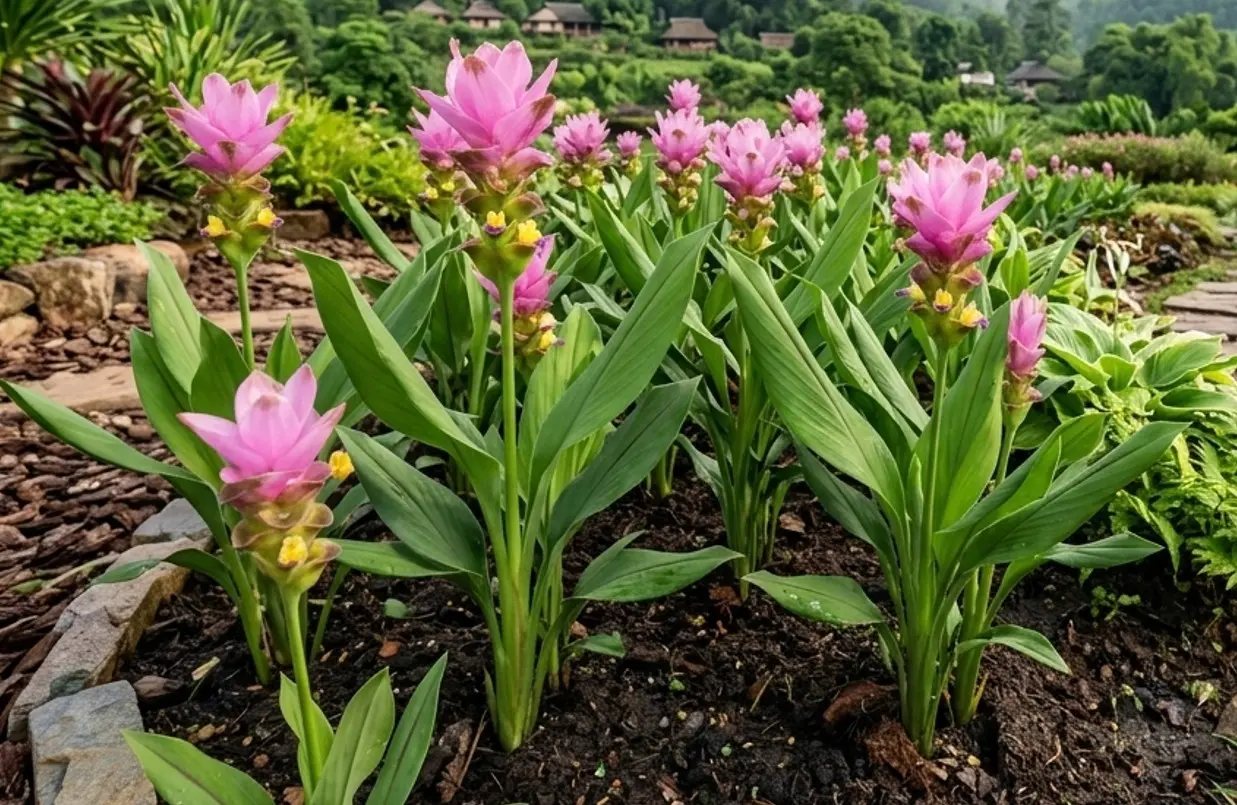
Siam Tulip
Siam Tulip
Curcuma alismatifolia
Siam Tulip (Curcuma alismatifolia) is a tropical ornamental in the ginger family (Zingiberaceae) native to Laos, northern Thailand, and Cambodia, where it is listed as Near Threatened in the wild. Despite the name, it is not related to the tulip at all. The showy "flowers" that attract attention are actually coloured bracts — modified leaves — in pink, purple, or white, while the true tiny flowers emerge briefly from between the bracts. Plants grow to about 40–60 cm from underground rhizomes and are widely cultivated across Southeast Asia including Malaysia as a pot plant and garden ornamental.
Care Guide
Light Requirements
Bright filtered light or gentle morning sun with afternoon shade is ideal. Prolonged harsh direct sun bleaches and scorches the bracts, reducing colour intensity and display life.
Temperature
22°C - 32°C. Siam Tulip is fully at home in Malaysian tropical warmth. Unlike in its native seasonal climate, it does not need a forced dry dormancy in Malaysia and can produce multiple flush cycles per year.
Humidity
Moderate to high humidity suits it well. Good airflow around pots and clumps reduces fungal pressure on leaves during wet periods.
🌧️ Good news for Malaysia: Your home's natural humidity is already helping. Focus on airflow instead to prevent fungal issues.
Soil Preference
Loose, fertile, well-draining soil high in organic matter. The rhizomes are highly sensitive to waterlogging and will rot quickly in compact, soggy media. Raised beds or well-structured pot mixes with perlite or coarse sand are strongly recommended.
Watering & Fertilizer
Water consistently during active growth and when bracts are developing, then reduce slightly after a bract flush to allow a short rest before the next cycle. Apply balanced fertilizer every 3-4 weeks; higher phosphorus supports stronger bract production. Stop feeding if the plant goes into a resting phase.
💭 Still unsure? Stick your finger 2 cm into the soil. If it feels dry, water. If it's moist, wait. You'll get it right.
General Care
In Malaysia's year-round warmth, Siam Tulip can rebloom several times if given a short drier rest period between flushes. Remove spent bract stems at the base once colour fades completely. Divide rhizomes every 2-3 years to refresh the planting and produce more plants.
Propagation
Rhizome division is the standard method. Each section needs at least one healthy growing eye. Divisions establish quickly in warm, humid conditions with moderate moisture.
Pet Friendly?
Curcuma species are not listed as toxic to dogs or cats. The genus includes edible culinary plants such as turmeric. As a general precaution, avoid letting pets consume large quantities of any ornamental plant.
Medicinal Benefits
No significant medicinal use for this ornamental species specifically. The Curcuma genus includes turmeric (C. longa), which is widely used medicinally and culinarily, but C. alismatifolia is grown purely as an ornamental.
Other Uses
Excellent and long-lasting cut flower — the bracts hold their colour well in a vase. Widely used in floral arrangements, events, and as a potted gift plant across Southeast Asia.
Pests & Diseases
Rhizome rot from overwatering or poor drainage is the most common problem. Spider mites, thrips, and mealybugs can appear especially on stressed plants. Leaf spot can occur in overly humid, stagnant conditions. Good drainage and airflow address most issues.
Smart Tanam Tip
"The showy part is the bract, not a true flower — this is why colour lasts weeks rather than days. For the best display, keep pots in a bright shaded spot and reduce watering slightly after each bract flush to trigger the next blooming cycle."
Common Mistakes in Malaysia
- Overwatering due to high humidity: Malaysia's moisture-rich air means soil dries slower. Most plant deaths come from root rot, not underwatering.
- Poor airflow: High humidity + still air = fungal issues. Move plants where air circulates naturally (near windows, not in corners).
- Ignoring the monsoon season: During heavy rain, reduce watering. Your plant is already getting moisture from the environment.
- Direct afternoon sun: Malaysian midday sun is intense. Even sun-loving plants can scorch. Morning sun is best.
Tips for Malaysia's Climate
- Use well-draining soil: Add perlite or cocopeat. Heavy soil + humidity = rot. Your soil should dry out between waterings.
- Water in the morning: Wet foliage at night is a recipe for fungal problems in humid climates. Early morning watering lets leaves dry quickly.
- Repot in spring: Before the dry season, refresh soil to prevent salt buildup and improve drainage.
- Watch for pests during monsoon: Wet season brings aphids, spider mites, and scale insects. Check undersides of leaves weekly.
- Increase airflow: Place a small fan nearby if the plant is indoors. Circulating air prevents humidity-related issues.
© 2026 Tanam Je. All rights reserved.
Disclaimer: Tanam Je is an educational resource. Plant care outcomes vary by environment, weather, and handling. Tanam Je is not liable for plant loss or related damages.