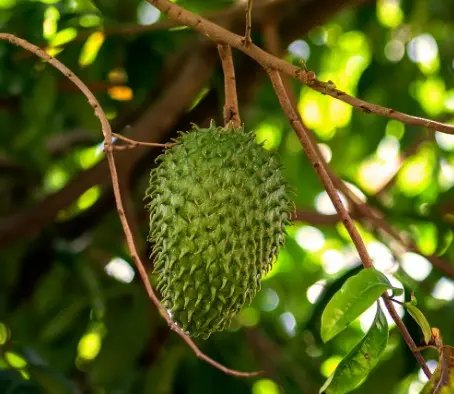
Durian Belanda
Soursop
Annona muricata
Soursop (Annona muricata), known locally as Durian Belanda, produces large, spiny green fruits with creamy, fibrous white flesh and a distinctive sweet-tart flavor. Widely grown in Malaysian home gardens, the fruit is eaten fresh, blended into juice, and used in traditional remedies.
Care Guide
Light Requirements
Full sun preferred for fruiting. At least 6 hours daily. Soursop needs strong sunlight to support sugar production and the aromatic compounds that give the fruit its creamy sweet-tart taste. Partial shade is tolerated for young trees still developing their root system.
Temperature
20°C - 32°C. A true lowland tropical tree that is sensitive to cooler highland temperatures. Keep it at sea level to lowland elevations (below 300m altitude) for best fruit production and growth rate.
Humidity
60% - 80%. Soursop prefers moderate to high humidity. However, excessive humidity combined with poor soil drainage causes Phytophthora root rot. The most serious disease of this species in Malaysia. Ensure good soil drainage before planting.
🌧️ Good news for Malaysia: Your home's natural humidity is already helping. Focus on airflow instead to prevent fungal issues.
Soil Preference
Deep, fertile, well-draining loamy soil with organic matter. Soursop roots grow in a wide, shallow pattern rather than deep. Ensure the top 50cm of soil is rich and well-draining. Waterlogged soil at any depth will cause root rot and sudden wilting.
Watering & Fertilizer
Keep soil moist between waterings but never waterlogged. The shallow root zone is very susceptible to oxygen deprivation from standing water. Fertilise monthly with a balanced NPK fertiliser, increasing potassium (K) during fruit set to improve fruit size and flavour development.
💭 Still unsure? Stick your finger 2 cm into the soil. If it feels dry, water. If it's moist, wait. You'll get it right.
General Care
Prune the canopy to open up air circulation and allow light into the center of the tree. Remove dead or crossing branches. Soursop is a relatively fast grower and benefits from regular light pruning to maintain manageable size. Bag developing fruits to protect them from fruit borers.
Propagation
Seeds germinate readily within 30 days but produce trees with variable fruit quality. Grafting (approach grafting or T-budding) onto seedling rootstock produces trees with known fruit quality and fruits 2-3 years earlier than seedlings. Grafted trees are the commercial standard in Malaysia.
Pet Friendly?
Seeds and bark contain annonacin. A neurotoxin that in large amounts can cause neurological damage. Ripe fruit flesh is considered safe in normal human consumption amounts. Keep seeds and plant parts away from pets entirely.
Medicinal Benefits
Soursop leaves are widely used in traditional herbal medicine across Southeast Asia for fever, respiratory issues, and as a sleep aid. Scientific research has identified acetogenin compounds with potential anti-tumour properties in laboratory studies. No clinical trials have confirmed efficacy in humans. Not a substitute for medical treatment.
Other Uses
The creamy, fibrous flesh is used in juices, smoothies, ice cream, and the popular soursop juice found throughout Malaysia. The aroma comes from ester compounds including methyl hexanoate that develop as the fruit ripens.
Pests & Diseases
Fruit borers can lay eggs in young fruits and the larvae feed from inside, often unnoticed until harvest. Mealybugs cluster at fruit junctions and shoot tips. Phytophthora root rot from poor drainage causes sudden tree wilting and death. Improve drainage as the primary prevention.
Smart Tanam Tip
"Soursop flowers are protogynous. The female part matures before the male part on the same flower, preventing self-pollination. To maximise fruit yield, hand-pollinate in the early morning: collect fresh pollen from partially opened flowers using a soft brush and transfer it to the exposed sticky stigma (the central protruding part) of another flower."
Common Mistakes in Malaysia
- Overwatering due to high humidity: Malaysia's moisture-rich air means soil dries slower. Most plant deaths come from root rot, not underwatering.
- Poor airflow: High humidity + still air = fungal issues. Move plants where air circulates naturally (near windows, not in corners).
- Ignoring the monsoon season: During heavy rain, reduce watering. Your plant is already getting moisture from the environment.
- Direct afternoon sun: Malaysian midday sun is intense. Even sun-loving plants can scorch. Morning sun is best.
Tips for Malaysia's Climate
- Use well-draining soil: Add perlite or cocopeat. Heavy soil + humidity = rot. Your soil should dry out between waterings.
- Water in the morning: Wet foliage at night is a recipe for fungal problems in humid climates. Early morning watering lets leaves dry quickly.
- Repot in spring: Before the dry season, refresh soil to prevent salt buildup and improve drainage.
- Watch for pests during monsoon: Wet season brings aphids, spider mites, and scale insects. Check undersides of leaves weekly.
- Increase airflow: Place a small fan nearby if the plant is indoors. Circulating air prevents humidity-related issues.
© 2026 Tanam Je. All rights reserved.
Disclaimer: Tanam Je is an educational resource. Plant care outcomes vary by environment, weather, and handling. Tanam Je is not liable for plant loss or related damages.