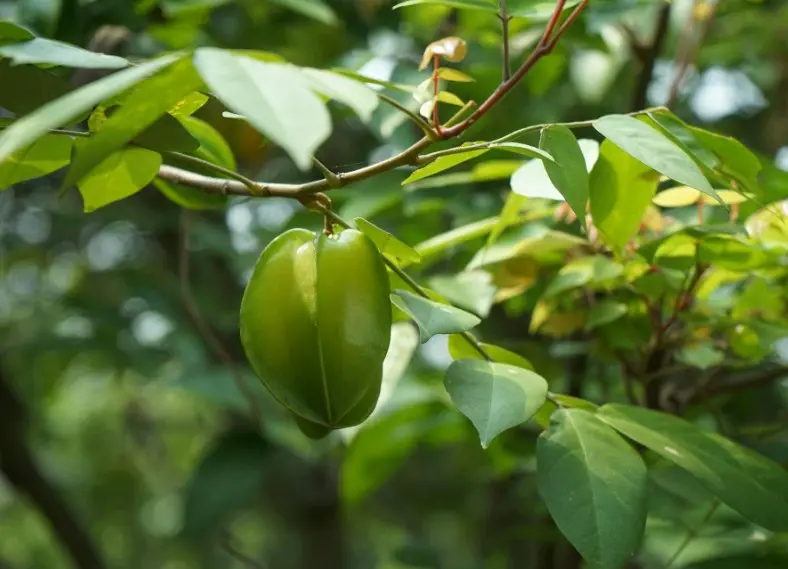
Belimbing Besi
Starfruit
Averrhoa carambola
Malaysia is one of the world's top exporters of Starfruit (Averrhoa carambola). This prolific fruiting tree produces sweet, waxy, ribbed fruits year-round in the tropics. Sliced crosswise, each piece forms a perfect star shape. a fruit closely associated with Malaysian horticulture and a staple in local markets.
Care Guide
Light Requirements
Full sun (minimum 6 hours of direct sun daily) is mandatory for sweet fruit. Sugar in the fruit is made through photosynthesis. Trees shaded for even part of the day produce watery, sour fruit because they cannot synthesise enough carbohydrates to sweeten it.
Temperature
20°C - 35°C. Below 18°C slows the enzymes inside the fruit that convert starch to sugar. Fruits stay tart instead of developing sweetness.
Humidity
60% - 80%. Consistent humidity prevents the fruit skin from cracking as it swells during development. Sudden drops in humidity dry out the outer skin before the inside finishes expanding.
🌧️ Good news for Malaysia: Your home's natural humidity is already helping. Focus on airflow instead to prevent fungal issues.
Soil Preference
Deep, fertile, well-draining loamy soil with steady organic matter. Starfruit roots grow deep to anchor the heavy fruit clusters. Shallow or compacted soil leads to poor anchorage and uneven nutrient uptake.
Watering & Fertilizer
Consistent watering during fruiting is critical. Irregular watering makes the fruit absorb water unevenly, causing the skin to crack. Potassium (the K in NPK) regulates sugar transport into the fruit and thickens the skin to prevent cracking. Fertilise monthly with a high-potassium blend.
💭 Still unsure? Stick your finger 2 cm into the soil. If it feels dry, water. If it's moist, wait. You'll get it right.
General Care
"Fruit thinning" means removing 30-40% of small developing fruits. The tree has a fixed energy supply from its leaves. If 200 fruits compete for it, all stay small and sour. By removing some, you redirect that energy to fewer fruits, making them grow large, sweet, and market-worthy.
Propagation
Grafting copies the exact genetics of a known high-quality mother tree, improving consistency of fruit size and sweetness. Seeds may revert to wild type (smaller, sourer) and take 5-7 years longer to fruit.
Pet Friendly?
Contains caramboxin and high oxalate content. People and animals with kidney disease are at serious risk and should avoid exposure. Healthy adults can usually consume ripe fruit in moderation, but overconsumption is not recommended.
Medicinal Benefits
Very high in Vitamin C and polyphenol antioxidants. However, those with kidney disease should eat it sparingly or avoid entirely due to the high oxalate content.
Other Uses
The acidic juice (rich in oxalic acid) reacts chemically with copper oxide. The green tarnish on brass and copper items. This makes it a natural, chemical-free metal polish.
Pests & Diseases
Fruit flies (Bactrocera spp.) detect the scent of ripening fruits and lay eggs inside. Larvae eat from the inside out. Wrapping fruits in paper bags BEFORE they start to ripen creates a physical barrier before flies can detect the ripening scent.
Smart Tanam Tip
"Starfruit leaves fold up at night and respond to touch. Called nyctinasty (night movement) and thigmonasty (touch response). The leaves fold to reduce water loss as temperatures cool at night. A responsive, active plant is a healthy, well-watered one!"
Common Mistakes in Malaysia
- Overwatering due to high humidity: Malaysia's moisture-rich air means soil dries slower. Most plant deaths come from root rot, not underwatering.
- Poor airflow: High humidity + still air = fungal issues. Move plants where air circulates naturally (near windows, not in corners).
- Ignoring the monsoon season: During heavy rain, reduce watering. Your plant is already getting moisture from the environment.
- Direct afternoon sun: Malaysian midday sun is intense. Even sun-loving plants can scorch. Morning sun is best.
Tips for Malaysia's Climate
- Use well-draining soil: Add perlite or cocopeat. Heavy soil + humidity = rot. Your soil should dry out between waterings.
- Water in the morning: Wet foliage at night is a recipe for fungal problems in humid climates. Early morning watering lets leaves dry quickly.
- Repot in spring: Before the dry season, refresh soil to prevent salt buildup and improve drainage.
- Watch for pests during monsoon: Wet season brings aphids, spider mites, and scale insects. Check undersides of leaves weekly.
- Increase airflow: Place a small fan nearby if the plant is indoors. Circulating air prevents humidity-related issues.
© 2026 Tanam Je. All rights reserved.
Disclaimer: Tanam Je is an educational resource. Plant care outcomes vary by environment, weather, and handling. Tanam Je is not liable for plant loss or related damages.