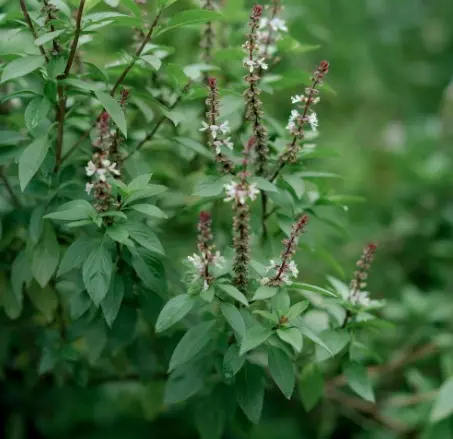
Thai Basil
Thai Basil
Ocimum basilicum var. thyrsiflora
Thai Basil (Ocimum basilicum var. thyrsiflora) has purple stems, glossy leaves, and a bold anise-clove flavor much stronger than sweet basil. It holds up well to cooking heat and is widely used in Thai green curries, Vietnamese pho, and Malaysian stir-fries. A vigorous grower in Malaysia's tropical warmth.
Care Guide
Light Requirements
Full sun (6+ hours daily). Thai Basil responds quickly to light quality; weak light usually gives lanky growth and slower recovery after pruning or harvest.
Temperature
20°C - 32°C (68°F - 90°F). This range keeps Thai Basil metabolically active, while abrupt temperature shifts often show up as stress, slower growth, or bud drop.
Humidity
60% - 80%. For Thai Basil, humidity is rarely the main issue in Malaysia; airflow is the real control point for disease prevention.
🌧️ Good news for Malaysia: Your home's natural humidity is already helping. Focus on airflow instead to prevent fungal issues.
Soil Preference
Loose, fertile, well-draining soil enriched with compost; avoid prolonged waterlogging. For Thai Basil, loose structure prevents root suffocation; compact wet soil traps water and cuts off root oxygen.
Watering & Fertilizer
Keep soil moist but well-drained. Fertilize every 2 weeks. Use moisture checks for Thai Basil instead of routine overwatering. Root systems need fresh oxygen between watering cycles to stay healthy.
💭 Still unsure? Stick your finger 2 cm into the soil. If it feels dry, water. If it's moist, wait. You'll get it right.
General Care
Pinch flowers to prolong leaf production. More heat-tolerant than sweet basil. Thai Basil responds well to consistent maintenance, because cleaner structure means less disease pressure and better energy allocation.
Propagation
Seeds or cuttings. For Thai Basil, propagation success rises when the parent stock is vigorous and new cuttings/divisions are kept warm and evenly moist.
Pet Friendly?
Generally considered non-toxic to pets.
Medicinal Benefits
Contains essential oils with antimicrobial properties; traditionally used for digestion.
Other Uses
Cooking (curries, stir-fries, soups).
Pests & Diseases
Aphids, downy mildew. With Thai Basil, prevention beats rescue: inspect undersides regularly and keep airflow moving to slow pest and fungal escalation.
Smart Tanam Tip
"Regular harvesting encourages bushier growth."
Common Mistakes in Malaysia
- Overwatering due to high humidity: Malaysia's moisture-rich air means soil dries slower. Most plant deaths come from root rot, not underwatering.
- Poor airflow: High humidity + still air = fungal issues. Move plants where air circulates naturally (near windows, not in corners).
- Ignoring the monsoon season: During heavy rain, reduce watering. Your plant is already getting moisture from the environment.
- Direct afternoon sun: Malaysian midday sun is intense. Even sun-loving plants can scorch. Morning sun is best.
Tips for Malaysia's Climate
- Use well-draining soil: Add perlite or cocopeat. Heavy soil + humidity = rot. Your soil should dry out between waterings.
- Water in the morning: Wet foliage at night is a recipe for fungal problems in humid climates. Early morning watering lets leaves dry quickly.
- Repot in spring: Before the dry season, refresh soil to prevent salt buildup and improve drainage.
- Watch for pests during monsoon: Wet season brings aphids, spider mites, and scale insects. Check undersides of leaves weekly.
- Increase airflow: Place a small fan nearby if the plant is indoors. Circulating air prevents humidity-related issues.
© 2026 Tanam Je. All rights reserved.
Disclaimer: Tanam Je is an educational resource. Plant care outcomes vary by environment, weather, and handling. Tanam Je is not liable for plant loss or related damages.